English
Master Expedition Route · 17 days 1 upcoming departure

The Edge of Wild Frontiers: South Georgia & Falkland Islands

Aurora Expeditions · 17 days · Buenos Aires

The Edge of Wild Frontiers: South Georgia & Falkland Islands — Key Facts At a Glance
Operator Aurora Expeditions
Available departures 1
Typical duration 17 days · Buenos Aires
Price range (per person, USD) $22,246 – $81,643
ships Greg Mortimer
Prices last verified 48-hour verification methodology

Upcoming departures — The Edge of Wild Frontiers: South Georgia & Falkland Islands

Departure Ship Duration Availability From Action
Feb 27, 2029 – Mar 15, 2029 Best price Greg Mortimer · 130 guests 17 days Available
$22,246

Day by day

Route 6 waypoints

Itinerary and landing sites are indicative and subject to change based on weather, sea ice, and wildlife conditions.

Daily schedule
DAY 1 Arrive in Buenos Aires

Arrive in Buenos Aires, where you’ll be met by a representative of Aurora Expeditions and transferred to our group hotel. Upon arrival at your included hotel, please visit the Aurora Expeditions hospitality desk to collect your luggage cabin tags and to speak with our ground operations team, who may have information to share with you about this evening’s information session, pre-embarkation procedures or to provide you with suggestions on where to dine, locate the nearest ATM to withdraw cash, or purchase last-minute items from a supermarket or local pharmacy. After check in, enjoy the remainder of the day at leisure. All meals today are at your own expense. Accommodation: TBC

DAY 2 Fly Buenos Aires to Ushuaia, Embark Ship

This morning, please ensure your cabin luggage is fitted with the provided cabin tags and are clearly labelled with your name and cabin number. Keep any valuables or personal items, such as medication, with you throughout the day. Depending on the departure time of your flight to Buenos Aires, breakfast may be enjoyed at your hotel or as a breakfast box provided by the hotel. A representative from Aurora Expeditions will accompany you to the airport where you will check in to your flight to Ushuaia, where your ship awaits. Upon arriving at Ushuaia airport, you will be met by a representative from Aurora Expeditions and transferred to a pre-boarding lounge, where you can relax prior to boarding the Greg Mortimer. Your luggage will be delivered directly to the ship and waiting for you in your cabin. Ushuaia is a vibrant port town and the major gateway to the Antarctic region. Depending on the arrival time of your flight from Buenos Aires, you may have time to discover Ushuaia at your leisure. Perhaps visit the Ushuaia Prison Museum, which offers a fascinating insight into Argentina’s penal history. Set within a former prison that operated from 1902 to 1947, its preserved cell blocks, exhibits and artefacts reveal the lives of inmates, prison staff and early settlers in remote Tierra del Fuego. Alternatively, stroll along the waterfront and surrounding streets, grabbing a snack or bite to eat at one of the many cafes and restaurants on offer or unwind at the pre-boarding lounge arranged by Aurora Expeditions. Later in the afternoon, be transferred to the Greg Mortimer for embarkation. Settle into your cabin and explore the ship before attending the important mandatory briefings. Afterwards, as the ship pulls away from port, gather on deck and bid farewell to Ushuaia as we commence our adventure east to the Falklands~Malvinas and South Georgia. This evening, get to know your fellow expeditioners and friendly expedition team and crew at a welcome dinner to celebrate the start of a thrilling adventure.

DAY 3 At sea

As you sail across the South Atlantic Ocean towards the Falklands~Malvinas, find a place on deck and watch pelagic seabirds including petrels, shearwaters, and albatross ride the ship’s wake and air currents, gliding effortlessly alongside the ship. Join the expedition team in the lecture theatre for informative talks and presentations on the history, wildlife and rich birdlife found along the Antarctic Convergence and in Falklands~Malvinas.

DAYS 4–5 Falklands~Malvinas

The Falklands~Malvinas comprises two large islands (East and West Falkland), with over 700 islands scattered off the coast. All but seven of these are uninhabited, with windswept coastlines, white-sand beaches and crystal-clear water. These beautifully barren islands are true wildlife havens, sheltering an impressive diversity of birdlife, including the largest black-browed albatross colony on earth. The cold, nutrient-rich waters surrounding the islands make this a prime location for spotting marine life. There are many beautiful areas to explore across the Falklands~Malvinas, each offering a unique perspective on this magnificent archipelago. Your experienced expedition team, who have made countless journeys to this area, will use their expertise to design your voyage from day to day, choosing the best options based on the prevailing winds, weather and wildlife opportunities. We generally make landings or Zodiac excursions twice a day. Even though we’re north of the Antarctic Convergence it can be quite chilly here, so you’ll want to layer up before joining Zodiac cruises into rocky coves or along sea cliffs, keeping watch for seals, sea lions, dolphins and porpoising penguins. Zodiacs will also transport you from the ship to land, where you may be able to visit albatross colonies, penguin rookeries and perhaps even have a traditional English ‘tea and scones’ at a local cottage. We also aim to land in historic Stanley, the capital of the Falklands~Malvinas. This charming town has a distinctly British character, with terraced town houses, pioneer cottages and even an iconic red telephone box! Colourful buildings house cosy cafes, English pubs, souvenir shops, a post office and the fascinating Historic Dockyard Museum, with displays on the maritime history of the Falkland Islands, natural history and links to Antarctica.

DAY 6 Falklands~Malvinas / At sea

If time and weather conditions permit, perhaps enjoy a final Zodiac cruise or landing this morning before bidding farewell to the Falklands~Malvinas and set sail to South Georgia.

DAYS 7–8 At sea

Once again, you’ll be entranced by the ceaseless flight of the many seabirds that follow our wake, skilfully using the air currents created by the ship to gain momentum. On this leg, we are usually travelling into the prevailing weather, making a precise arrival time in South Georgia difficult to predict. Our lecture program will continue highlighting all of the incredible sights we have witnessed over the past few days. You will have ample time to observe sea birds, whale-watching from the observation areas, or simply enjoying the ship’s array of amenities. Nearing South Georgia, we may pass close to Shag Rocks, a fascinating group of jagged rocky islets protruding from the sea. In 1775, Captain James Cook arrived here and believed it to be the northern tip of a great southern continent, but he had stumbled upon South Georgia! In fact, it’s a small island measuring only 176 kilmometres (110 miles) long, featuring a 3,000-metre (9,842-feet) snow-capped mountain range, some of the world’s largest congregations of wildlife and a truly fascinating human history. South Georgia is an island of incredible riches! On approach, jagged mountain peaks rise steeply, while seabirds are often spotted soaring around the ship. You’ll sail down the east coast, taking in the spectacular glaciated scenery and enjoying a bit of shelter from the prevailing westerly winds. The expedition team will provide a briefing in the lecture theatre to prepare you for the strict biosecurity requirements before stepping ashore to explore South Georgia.

DAYS 9–12 South Georgia

Over the next few days, your experienced expedition team will use their deep knowledge and extensive experience leading expeditions in South Georgia to plan your voyage from day to day, choosing the best options based on the prevailing weather, sea state and wildlife opportunities. We generally make landings or Zodiac excursions twice a day. Make sure you layer up before joining Zodiac cruises around craggy coves and along the rocky coastline in search of nesting penguins, seal haul-outs and bird cliffs. Keep an eye out for South Georgia’s kelp forests during Zodiac cruises. These remarkable underwater ecosystems are quite mesmerising as their fronds sway back and forth on the water’s surface. Trusty Zodiacs will also transport you from ship to shore, where you can visit some of the largest king penguin colonies on earth. Wander along pebbled streams and grassy glacial outwash plains, and embark on guided walks among fur seals and elephant seals, making sure you keep a safe distance from the wildlife and listening to the advice provided by your guides at all times. We also hope to visit the remnants of South Georgia’s thriving whaling stations and pay our respects to Sir Ernest Shackleton, whose incredible voyage of survival is synonymous with this island. If you have chosen an optional activity, you’ll have the option to do that whenever conditions allow. In addition to Zodiac cruises and shore excursions, we may sail through fjords with towering cliffs of ancient stone, or into deeply indented bays towards dramatic glacier fronts aboard our expedition ship. This is a great time to find a comfy spot in the observation lounge or make your way to the bridge to enjoy uninterrupted views of South Georgia’s majestic coast.

DAYS 13–16 At sea

After four days exploring South Georgia, it’s time to say goodbye to this incredible destination. If time allows, we may enjoy a morning landing in South Georgina before commencing our return sailing to Ushuaia. With ample time on board, you may choose to spend your time editing photos, enjoying the ship’s amenities, indulging in a massage or attending informative lectures.

DAY 17 Disembark Ushuaia, fly to Buenos Aires

During the early morning, we cruise up the Beagle Channel, before quietly slipping into dock in Ushuaia, where we will be free to disembark around 8.00 am. Farewell your expedition team and fellow passengers as we all continue our onward journeys, hopefully with a newfound sense of the immense power of nature. Transfer to Ushuaia airport for our return flight to Buenos Aires, where your Antarctic expedition comes to an end. Note: We strongly recommend booking an overnight stay in Buenos Aires at the conclusion of your voyage to allow for any potential disembarkation or flight delays and ensure a relaxed onward journey. If flying out of Buenos Aires on the day of disembarkation, we do not recommend booking flights departing prior to 21.00 pm.

Ships operating this itinerary

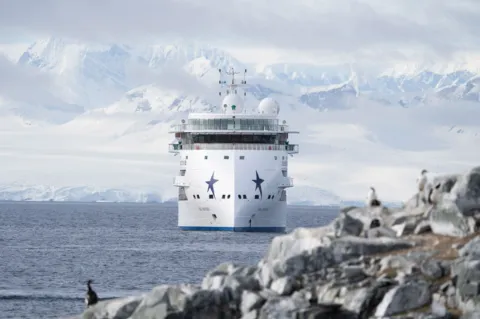
Greg Mortimer

Greg Mortimer

130 guests 2-group rotation Ice class: 1A / PC6 Dual-rated: Finnish-Swedish 1A/1A+ and Polar Class 6 for navigating medium first-year polar ice. Built 2019
Vessel profile →
Activities

2

2 optional add-ons

Polar adventure guide
Optional add-on from $1,950

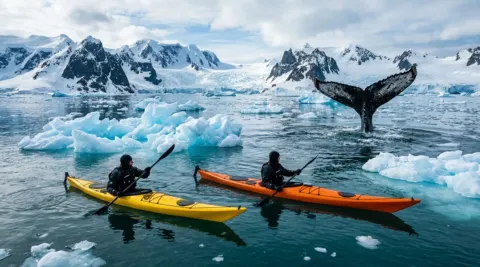
Kayaking & paddling

Paddle in near-silence through mirror-calm glacial bays, drifting alongside iridescent ice sculptures and listening to the deep exhales of surfacing humpback whales.

Water & Ice
Optional add-on from $1,450

Diving & snorkelling

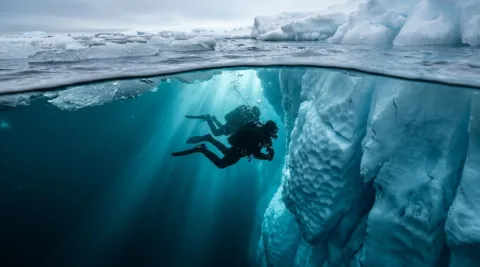
Drysuit diving and polar snorkeling reveal a cathedral of translucent blue sea ice, giant sea spiders, and penguins darting underwater with bird-like agility.

Water & Ice 2 options

Visited Regions

5
Polar destination guide
Australia · Active Adventure

Aurora Expeditions

Aurora Expeditions operates dedicated polar expedition voyages to Antarctica with experienced expedition teams.

IAATO Member 3 ships 29 itineraries
Fleet & all routes →

More Antarctic itineraries by Aurora Expeditions

6
Fleet & all routes

Wildlife on this route

Penguins

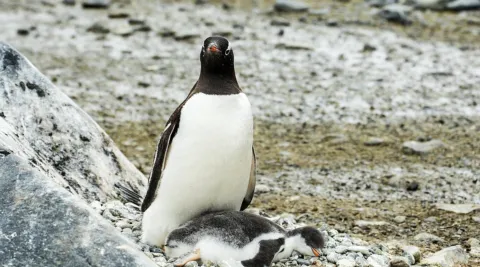
Gentoo Penguin

A stocky, orange-billed penguin of the genus Pygoscelis, closest kin to the Adélie and Chinstrap. Its loud, trumpeting call, delivered with head thrown back, carries across the shoreline colonies where expedition landings are made.

Whales & Dolphins

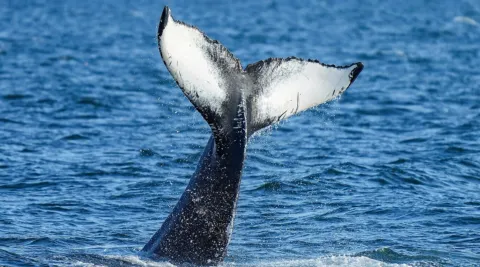
Humpback Whale

A 14–17 metre baleen whale known for breaching and long pectoral fins, often seen feeding on krill in loose groups along the ice edge.

Albatrosses & Seabirds

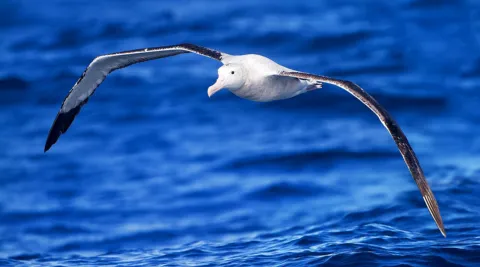
Wandering Albatross

The snowy albatross, better known as the wandering albatross, has the widest wingspan of any living bird alive today. Watch for it riding the wind for hours behind the ship without a single wingbeat.

Seals & Sea Lions

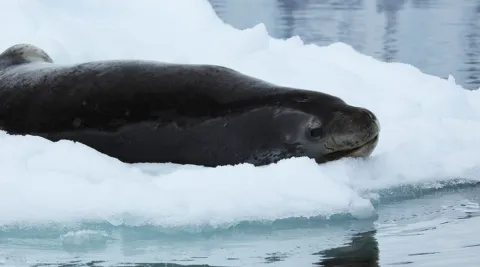
Leopard Seal

The leopard seal is the Antarctic's second-largest seal after the elephant seal, built long and muscular with a spotted, leopard-like coat. It is the region's top predator, hunting penguins, fish, and even other seals along the ice edge.