Wildlife
Wandering Albatross
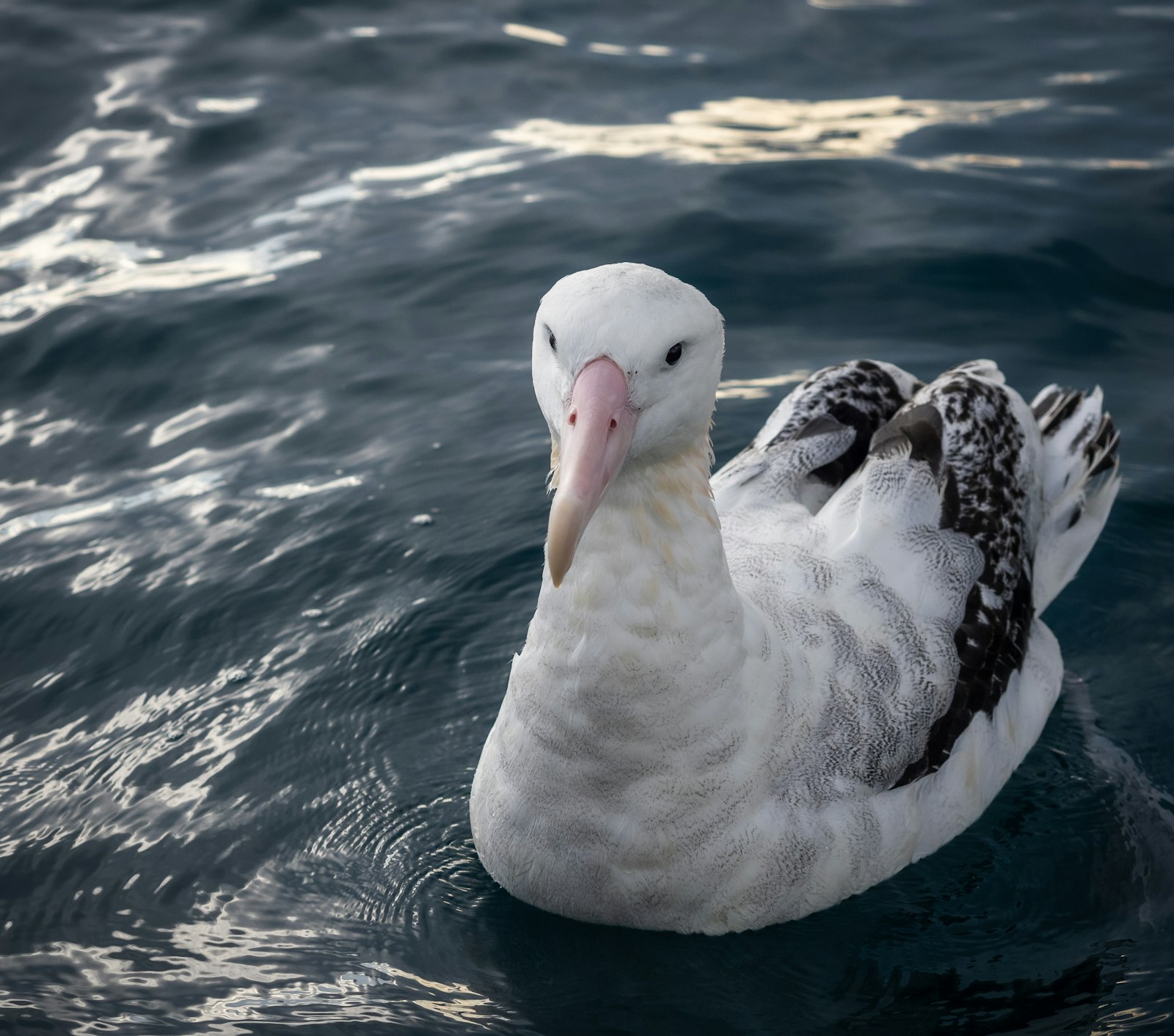
The snowy albatross, better known as the wandering albatross, has the widest wingspan of any living bird alive today. Watch for it riding the wind for hours behind the ship without a single wingbeat.
Itinerary and landing sites are indicative and subject to change based on weather, sea ice, and wildlife conditions.
Ezeiza International Airport, the airport for Buenos Aires. Referred to as the "Paris of South America", Buenos Aires is considered as one of the most livable cities in South America. Although the bustling capital city has just under 3,000,000 inhabitants and a population density of 13,680 inhabitants per square kilometer (34,800 per square mile), it was rated in 2018 as one of the top cities on the continent for its ‘quality of life’. Twinned with world cities such as Moscow and Miami, Buenos Aires displays through its architecture, a cultural past rooted in both the Old and New Worlds. A vibrancy for life can be seen everywhere. Crowded public markets, street performers dancing the tango, colorful graffiti-style street art, ultra-modern buildings, a dramatic skyline and a bustling port. Culturally, Buenos Aires has the busiest live theatre industry on Earth, outperforming New York, London and Paris. Every weekend, over 300 theatres are active with plays and productions. Buenos Aires was founded in 1580 by Spanish explorer Juan de Garay, and has changed hands many times during its history.
In 1580, Spanish explorer Juan de Garay planted the seeds of what would become Buenos Aires. Today, it flourishes as the captivating capital of Argentina and a cosmopolitan metropolis that elegantly straddles two worlds. Often hailed as the "Paris of South America," Buenos Aires enchants with its blend of European elegance and Latin American vibrancy. As a sister city to global hubs like Moscow and Miami, Buenos Aires wears its rich cultural heritage on its sleeve. Its architectural diversity is a testament to a past deeply rooted in both the Old and New Worlds, offering a visual narrative that spans centuries and continents.
In 1580, Spanish explorer Juan de Garay planted the seeds of what would become Buenos Aires. Today, it flourishes as the captivating capital of Argentina and a cosmopolitan metropolis that elegantly straddles two worlds. Often hailed as the "Paris of South America," Buenos Aires enchants with its blend of European elegance and Latin American vibrancy. As a sister city to global hubs like Moscow and Miami, Buenos Aires wears its rich cultural heritage on its sleeve. Its architectural diversity is a testament to a past deeply rooted in both the Old and New Worlds, offering a visual narrative that spans centuries and continents.
Once deemed too harsh for European settlement, Ushuaia's rugged beauty was the realm of its native inhabitants - the Yahgan People. Today, it holds the distinctive title of being the southernmost city on Earth, often referred to as "the end of the world." Situated along the banks of the Beagle Channel, Ushuaia unveils itself like an artist's masterpiece. A mosaic of vibrant houses adds a splash of color against the dramatic backdrop of snow-capped mountains. Dominating this breathtaking panorama is Monte Olivia, its jagged peaks soaring 4,530 feet above the landscape. The terrain transforms from dense forests of Southern beech trees at sea level to alpine ecosystems as you ascend. Thanks to its strategic location and proximity to the Antarctic Peninsula, Ushuaia has earned its status as the gateway to the Great White Continent. Yet, Ushuaia is more than just a stepping stone to Antarctica. It's a treasure trove of natural history, indigenous heritage, and the spirit of exploration. From embarking on awe-inspiring treks in the nearby Tierra del Fuego National Park to delving into the rich narratives at "The End of the World" museum, Ushuaia promises a plethora of experiences that cater to the curious and the adventurous alike.
This is no ordinary day— with no fixed itinerary, the day unfolds like a secret whispered by nature herself. Depending on weather, ice conditions and reported wildlife distribution during your voyage, your Expedition Leader will craft a bespoke adventure, guided by tides and instinct for you to discover.
This is no ordinary day— with no fixed itinerary, the day unfolds like a secret whispered by nature herself. Depending on weather, ice conditions and reported wildlife distribution during your voyage, your Expedition Leader will craft a bespoke adventure, guided by tides and instinct for you to discover.
This is no ordinary day— with no fixed itinerary, the day unfolds like a secret whispered by nature herself. Depending on weather, ice conditions and reported wildlife distribution during your voyage, your Expedition Leader will craft a bespoke adventure, guided by tides and instinct for you to discover.
This is no ordinary day— with no fixed itinerary, the day unfolds like a secret whispered by nature herself. Depending on weather, ice conditions and reported wildlife distribution during your voyage, your Expedition Leader will craft a bespoke adventure, guided by tides and instinct for you to discover.
This is no ordinary day— with no fixed itinerary, the day unfolds like a secret whispered by nature herself. Depending on weather, ice conditions and reported wildlife distribution during your voyage, your Expedition Leader will craft a bespoke adventure, guided by tides and instinct for you to discover.
Once deemed too harsh for European settlement, Ushuaia's rugged beauty was the realm of its native inhabitants - the Yahgan People. Today, it holds the distinctive title of being the southernmost city on Earth, often referred to as "the end of the world." Situated along the banks of the Beagle Channel, Ushuaia unveils itself like an artist's masterpiece. A mosaic of vibrant houses adds a splash of color against the dramatic backdrop of snow-capped mountains. Dominating this breathtaking panorama is Monte Olivia, its jagged peaks soaring 4,530 feet above the landscape. The terrain transforms from dense forests of Southern beech trees at sea level to alpine ecosystems as you ascend. Thanks to its strategic location and proximity to the Antarctic Peninsula, Ushuaia has earned its status as the gateway to the Great White Continent. Yet, Ushuaia is more than just a stepping stone to Antarctica. It's a treasure trove of natural history, indigenous heritage, and the spirit of exploration. From embarking on awe-inspiring treks in the nearby Tierra del Fuego National Park to delving into the rich narratives at "The End of the World" museum, Ushuaia promises a plethora of experiences that cater to the curious and the adventurous alike.
Perched on the wind-swept shores of Navarino Island, with the majestic Dientes de Navarino mountain range as its backdrop, Puerto Williams is a testament to resilience and beauty amidst the harshness of nature. It's a place where the air is crisp, the waters are pristine, and the views are breathtaking.
Cape Horn is the southernmost headland of the Tierra del Fuego Archipelago, located on Hornos Island in the Chilean Cabo de Hornos National Park. It is traditionally considered the southern extremity of South America and the place where the Atlantic and Pacific Oceans meet. Discovered in January of 1616 by the Dutch captain Willem Schouten, it was named by him Kaap Hoorn, honoring his home port of Hoorn in Holland. The Cape marks the northern edge of the Drake Passage, the strait separating South America from Antarctica. Weather and sea conditions are notoriously changeable in the region, and it quickly earned a reputation as a ship’s graveyard. Consequently, it was nearly 200 years before the Antarctic continent was discovered, less than 400 miles to the south of the Cape. The Chilean Navy maintains a base with a lighthouse and a monumental marker on an island a short distance from Cape Horn, although there is a small unmanned tower and light signal on the Cape itself, which is properly the Cape Horn Lighthouse.
Venture into the wild and windswept fjords of Chilean Patagonia — a remote frontier at the edge of South American. Carved by ancient glaciers and shaped by relentless winds, this region’s rhythms are dictated by tides, weather, and wilderness. Your Seabourn expedition navigates this seldom-visited region, weaving through a labyrinth of narrow channels, towering cliffs, and ice-strewn bays. The journey may also bring you to the face of the Pío XI Glacier — the largest glacier in the Southern Hemisphere outside Antarctica, and one of the few that has recently increased its size unlike most glaciers in the world, the ice regularly knocks down trees as it bulldozes the native forest— a true living river of ice that groans and calves into the sea. The landscape is a symphony of contrasts: emerald forests clinging to steep granite walls, waterfalls plunging from unseen heights, and snowcapped peaks piercing the clouds. Wildlife sightings may include Magellanic penguins, South American sea lions, and Andean condors soaring overhead, while dolphins and orcas may escort your Zodiac through the icy waters. This is Patagonia’s hidden coast — remote, majestic, and unforgettable. Zodiac cruising through glacier-carved fjords Opportunities for wildlife and landscape photography*
Venture into the wild and windswept fjords of Chilean Patagonia — a remote frontier at the edge of South American. Carved by ancient glaciers and shaped by relentless winds, this region’s rhythms are dictated by tides, weather, and wilderness. Your Seabourn expedition navigates this seldom-visited region, weaving through a labyrinth of narrow channels, towering cliffs, and ice-strewn bays. The journey may also bring you to the face of the Pío XI Glacier — the largest glacier in the Southern Hemisphere outside Antarctica, and one of the few that has recently increased its size unlike most glaciers in the world, the ice regularly knocks down trees as it bulldozes the native forest— a true living river of ice that groans and calves into the sea. The landscape is a symphony of contrasts: emerald forests clinging to steep granite walls, waterfalls plunging from unseen heights, and snowcapped peaks piercing the clouds. Wildlife sightings may include Magellanic penguins, South American sea lions, and Andean condors soaring overhead, while dolphins and orcas may escort your Zodiac through the icy waters. This is Patagonia’s hidden coast — remote, majestic, and unforgettable. Zodiac cruising through glacier-carved fjords Opportunities for wildlife and landscape photography*
Punta Arenas is the most important port and commercial center for the immense Patagonian agricultural area of Chile. The economy revolves around the sheep raised on the expansive pampas. Located on the Strait of Magellan separating the mainland from the island of Tierra del Fuego, the city proclaims itself the southernmost city in the world. Its colonial history may be explored in the splendid Plaza de Armas, in the magnificent tombs of the Pioneer Cemetery and the opulent Braun-Menendez Mansion. The heritage of Ferdinand Magellan’s exploration can be recaptured at the Nao Victoria ship museum. Fort Bulnes national monument memorializes the earliest colonial period, while the offshore Los Pinguinos Natural Monument preserves the thriving seabird and sea lion colonies around Magdalena Island. This is also the port from which a full-day flight excursion takes visitors to the majestic peaks and picturesque lakes and wildlife of the Torres del Paine National Park.
The Strait of Magellan is a 350-mile/570 km channel separating the mainland of South America from the large Isla Grande de Tierra del Fuego and connecting the Atlantic and Pacific Oceans. It was first navigated by the explorer Ferdinand Magellan during his circumnavigation voyage in 1520. He named it the Strait of All Saints, because his transit started on November 1, All Saints Day. It was also Magellan who name the southern island Tierra del Fuego, after seeing the smokes from fires in the camps of the native Yahgan people, whom he named the Patagones, meaning “big feet,” and their land Patagonia. The strait is between two and 20 miles wide, and earned the nickname Dragon’s Tail among sailors, for its tortuous path. Along with the Beagle Channel, it was one of two protected channels for sailing between the oceans prior to the construction of the Panama Canal The third alternative was the notoriously turbulent open ocean Drake Passage beyond Cape Horn. There is one sizeable port city in the strait, Punta Arenas, Chile, which has an interesting harbor breakwater consisting of two ship hulks, the Cavenga and an old iron four-mast sailing ship, the County of Peebles. There are several Chilean national parks and monuments in the strait, including Los Pinguinos National Monument and a sanctuary for protecting humpback whales. Southern right whales are also known to frequent the strait’s waters. There are 41 light signals in the strait, including the San Isidro Lighthouse that has been restored and is now a museum, and the Evangelistas Lighthouse at the western entrance. The strait was very difficult for sailing ships, due to unpredictable winds and tidal currents. Depending on tide conditions, even modern ships often opt for one of the alternative routes, because the tidal speeds are greatly exaggerated by the Venturi effect through narrows.
The Smyth Channel is another of the spectacular waterways threading the maze of islands off the coast of extreme southern Chile. At its northern end, it briefly parallels the Sarmiento Channel, then veers southward opening into the Strait of Magellan. Dotted with myriad small islands and corrugated with countless narrow fjords and bays, it makes a mesmerizing panorama as your ship plies between the islands on one side and the immense Peninsula Muñoz-Gamero on the other. Members of your expedition team will be on deck and in lounges to offer insights into the wild, unspoiled terrain you are passing.
Cruising Fiordo de las Montañas (Fjord of the Mountains) is a highlight of your Chilean Patagonia voyage. This narrow channel, located west of Puerto Natales, stretches more than 40 miles north to south, ending in a glacially carved valley at the far end of the Southern Patagonian Ice Field. Bordered by two mountain ranges, the fjord is bestrewed with glaciers that have broken off from the snow-topped peaks while a series of waterfalls cascade down the jagged cliff walls. On a clear day you can see 5,750-foot-high Mount Burney, an inactive, ice-covered stratovolcano located about 50 miles away. Fiordo de las Montañas lies within Kawésqar National Park, Chile’s second-largest, which protects a vast swath of the country’s southern coast. The 7-million-acre park takes its named from the ancient Kawésqar people who once inhabited this region. The park is home to the endangered huemul (South Andean deer), culpeo fox, and puma, as well as more than 125 bird species, including southern giant petrel and imperial shag spotted while cruising the channel.
Cutting eastward from the Sarmiento Channel in Southern Chile, this fjord divides into three separate fjords, called Amalia, Asia and Calvo Fjords. Amalia leads to Amalia Glacier, the El Brujo Glacier is in Asia Fjord, and Calvo boasts several small glaciers of its own. The mainland to the east is all part of the huge Torres del Paine National Park. The area is a fascinating geological panorama, and your expedition team members will be available to interpret the sights, as well as identify wildlife spotted while cruising the scenic waterways.
At the head of scenic Eyre Fjord is situated the longest glacier in the southern hemisphere outside of Antarctica. The monumental ice-mass of the Brüggen Glacier fills the fjord to a width of 4.5 kilometers (3 miles) and covers an area of 1,265 square kilometers (488 square miles). Colossal ice cliffs rise to a height 75 meters (246’) and are cut by deep-blue crevasses, and free-standing ice pillars known as seracs. Some 66 kilometers (41 miles) upstream of where it meets the ocean, the Brüggen Glacier merges with the ice of the Southern Patagonian Ice Field. Unlike other glaciers worldwide, it advanced significantly from 1945 to 1976 adding nearly 60 square kilometers (23 square miles) to its toe. Located deep within the boundaries of Bernardo O'Higgins National Park, it was named after the German-Chilean geologist Juan Brüggen Messtorff. Bernardo O'Higgins National Park is one of the last refuges for the small Chilean deer known as a huemul and species such as the Andean condor and marine otter may also be found here.
At the meeting point of the Baker River and the fjords of Chilean Patagonia, Caleta Tortel extends along the shoreline on stilts, its buildings and walkways constructed entirely from local cypress. There are no streets. Instead, a network of wooden paths traces the contours of the coast, rising and falling with the terrain and connecting homes, docks, and hillside trails. The village was established in the mid-20th century as a timber outpost, and that origin remains visible in both its materials and layout. Everything is built in response to the landscape rather than imposed upon it. The result is a settlement that feels integrated into the shoreline, shaped by water levels, weather, and the steepness of the surrounding hills. Beyond the village, the geography becomes increasingly complex. Fjords narrow and widen without pattern, islands break the horizon, and channels lead toward the Northern and Southern Patagonian Ice Fields. Boat journeys from Tortel move through this network of waterways, where glaciers such as Jorge Montt continue to calve into remote lagoons. Time here is spent moving through the village on foot, following the boardwalks as they curve along the water and climb into the forest, with each turn revealing another section of coastline or channel beyond.
PRONOUNCED: CHILL-OH-EYVisit Castro -- one of the most interesting cities on Chiloé Island. The town is largely built of abundant local woods, and many houses are elaborately shingled in intricate designs. Even the cathedral is a beautiful, vaulted structure crafted of local hardwoods. The forest and the sea are the source of livelihood and much more in this rustic outpost. Chiloé Island sits about 1/3 of the way up the length of the country of Chile. It is about 100 miles long and about 40 miles wide, and it's unique within the country of Chile. First settled over 7,000 years ago, the island has seen its fair share of changing populations since that time. It was the arrival of Jesuit missionaries in the 1600's which really shaped and changed the culture and the look of the island. There are now over 150 wooden churches scattered across the island and 16 of these were designated as UNESCO World Heritage Sites. In addition, there are colorful houses on stilts in the main city of Castro; there are penguins, ponies, and even a tiny species of deer.
Puerto Montt sits beneath a skyline of snow-capped volcanoes. Volcan Osorno towering 2,652-meter (8,701’) above the town, erupted in 1835 and was described by naturalist Charles Darwin. The town sits at the gateway to a myriad of outdoor adventures including an exhilarating white-water rafting trip, tranquil fly fishing and scenic hiking in Alerce Andino National Park. Petrohue Rapids and Lake Llanquihue, are set within a rural landscape of sheep farms. A walk around town allows for an encounter into the South American way of life. A vibrant fish market, selling everything from seaweed to salmon to spiny crabs sits astride a street lined with craft stalls packed to the brim with brightly colored woolen ponchos. South American fur seals lounge along the seawall promenade as colorful fishing boats lay at anchor offshore. Puerto Montt is an eclectic mix of new and old, refined and rustic. Reloncaví Sound is a panoramic vista of high volcanoes. To the south, is scenic Moraleda Channel and the entrance to the picturesque Chilean Fjords.
This large, modern port serves Chile’s capital, Santiago, a city with Spanish colonial charm and a vivacious spirit. Encircled by the Andes and the Coastal Range, Santiago is centered around the Plaza de Armas, with several of the city’s landmarks: the 18th-century Metropolitan Cathedral the Palacio de la Real Audencia from 1808, the City Hall and the National Museum of History. North of San Antonio lie the picturesque old port and university town of Valparaíso and the colorful seaside resort of Viña del Mar. In between the coast and the capital are valleys filled with some of Chile’s most famous wineries, all inviting you to come and taste.
The Juan Fernandez (Robinson Crusoe) archipelago is a Chilean island group consisting of 3 main islands (Selkirk, Santa Clara and Juan Fernandez/Robinson Crusoe, as well as several smaller islets. Juan Fernandez/Robinson Crusoe Island is the only island to have permanent residents. The primary focus of this experience is the main island and the small village of San Juan Bautista. Expedition experiences there include guided walks through the township including the natural history center to learn about the archipelago's unique ecosystems. Other walks/hikes venture into the hilly and lush forests to search for the endemic hummingbirds. This experience will also focus on wilderness exploration and the fauna rich marine environment thriving in the area. The expedition team chooses the island based upon winds and sea state at the time, seeking ideal conditions for Zodiac cruises and kayaking experiences to see, among other things, the large, gregarious rookeries of endemic Juan Fernandez fur seals.
The Juan Fernandez (Robinson Crusoe) archipelago is a Chilean island group consisting of 3 main islands (Selkirk, Santa Clara and Juan Fernandez/Robinson Crusoe, as well as several smaller islets. Juan Fernandez/Robinson Crusoe Island is the only island to have permanent residents. The primary focus of this experience is the main island and the small village of San Juan Bautista. Expedition experiences there include guided walks through the township including the natural history center to learn about the archipelago's unique ecosystems. Other walks/hikes venture into the hilly and lush forests to search for the endemic hummingbirds. This experience will also focus on wilderness exploration and the fauna rich marine environment thriving in the area. The expedition team chooses the island based upon winds and sea state at the time, seeking ideal conditions for Zodiac cruises and kayaking experiences to see, among other things, the large, gregarious rookeries of endemic Juan Fernandez fur seals.
Located in the southeastern Pacific Ocean, Easter Island is a remote Polynesian paradise that offers a truly unique and awe-inspiring experience. Famous for its enigmatic Moai statues, this Chilean territory boasts a rich history and cultural significance. Explore the mysterious archaeological sites, marvel at the colossal stone sculptures, and delve into the stories and legends that surround this extraordinary destination.
This uninhabited atoll is a hidden gem in the South Pacific Ocean. With its pristine beaches, crystal-clear waters, and abundant marine life, Ducie Island offers an unparalleled paradise for nature lovers and adventure seekers. Due to its remote location and lack of predators, it boasts a population of nesting seabirds, who will lay their eggs right onto the branches of the low shrubs ashore. Snorkel the nearly intact coral reef surrounding the island. If conditions permit, make a landing at this remote destination to look for tropicbirds, white terns, frigatebirds, noddies, and boobies. INCLUDED EXPEDITIONS: Zodiac® Cruise Snorkeling Landing Ashore (only if conditions permit)
This captivating destination holds a special place in history as the final home of the mutineers from the HMS Bounty in 1790. Immerse yourself in the intriguing tales of their journey as you explore the island's rich cultural heritage. A truly remote island with rugged steep cliffs, the island is only 2 miles long and 1 mile wide. The population of the island is only around 50 people, descended from the mutineers and Tahitians. A unique location with a remarkable history, this destination is one not easily reached, or easily forgotten.
PRONOUNCED:FAH-KAH-RAH-VAHFakarava is a very large, rectangular atoll in the Tuamotu Group of French Polynesia. Atolls are the most common island formation in the Tuamotus. They are the remnants of volcanic islands that once existed in these locations. The islands, over time, formed coral reefs around their outer margins, in the way that many existing islands do today. After long periods of time, the islands themselves sank below the surface of the ocean and all that remains now is the fringing reef. Fakarava is a beautiful island with long sandy beaches and a stunning lagoon. Due to the protected waters of the lagoon, Fakarava has a great deal of pearl farming. The small main town at the northeast side of the atoll is called Rotoava and its population is just under 400 inhabitants. The people of Fakarava farm coconuts for copra on shore and pearls in the lagoons. They also host the travelers who flock here to bask on the beaches and snorkel or dive in the luxuriant coral gardens along the shore. At the long spit of Les Sables Roses, the pink blush of the sand reveals its coral origin. The sleepy towns of Rotoava and Tetamanu offer scant attractions for visitors, except for their distinctive rock lighthouses shaped like stepped pyramids. Tetamanu does boast a 19th Century church built of coral rock by missionaries, and an adjoining cemetery with coral rock headstones. Aside from snorkeling or beach-basking, some visitors enjoy a visit to a lagoon pearl farm, to see how the large, flat bivalves are coaxed into creating the treasured gems formed by the lustrous nacre inside their shells.
Anaa is a small atoll in the Tuamotu Islands of French Polynesia. Known for its friendly people and its stunningly beautiful lagoon, Anaa is a lovely place to visit. The exterior of the atoll has beautiful coral and a variety of fish life. The interior of the atoll is calm and perfect for a comfortable swim. The community of Tuuhora has a population of around 350 people. Much of the island's current economy is based on the production of copra, but several initiatives have been introduced to create more opportunities for sustainable tourism. These initiatives will hopefully create a more stable population of fish and will create local jobs and opportunities for the community. INCLUDED EXPEDITIONS: Visit to the village of Tuuhora. Music and dance performance and then time to explore and walk around. Snorkeling
Papeete, on the island of Tahiti, is the capital of French Polynesia and is the largest island in this chain. With a population of over 136,000 inhabitants, French is the main language used in the city, followed by Tahitian. A bustling, lively city with colorful market, parks, shops and cafes, you can buy fresh fish, sarongs, vanilla beans or pearls among other delights. A waterfront promenade with music and food, and a multicultural population add to the city’s allure. Papeete, meaning “water basket” was once the place where Tahitians came to collect fresh water. Polynesian culture, its art, and the history of the island that includes French nuclear weapons testing and the mutiny on the HMS Bounty, can be explored in various museums and cultural centers. With the capital situated on the coast, this means most of the island’s inhabitants are also residing near the shore. The interior of Tahiti is mountainous and rugged with cascading waterfalls, caves and lush foliage. OPTIONAL EXCURSIONS AVAILABLE
Seabourn operates dedicated polar expedition voyages to the White Continent with seasoned expedition teams.
Abundant whale encounters, playful fur seal pups, and dramatic golden-hour polar light.

End of the World • Subpolar Forests & Gateway Port

Maritime Legend • Collision of Two Great Oceans

Scenic Fjord • Sea Lion Colonies & Les Eclaireurs

Granite Spires • Chilean Fjords & Glacial Steppe
Cheapest cabin across all tracked offers — 4 price changes since Jul 21, 2026
Cheapest per-person price across all cabins and operators, captured over time. Past changes don't predict future prices.
| Cabin | Occupancy | Price (per person) | Promo | Availability | Source | detail.action |
|---|---|---|---|---|---|---|
Veranda Suite
Best price
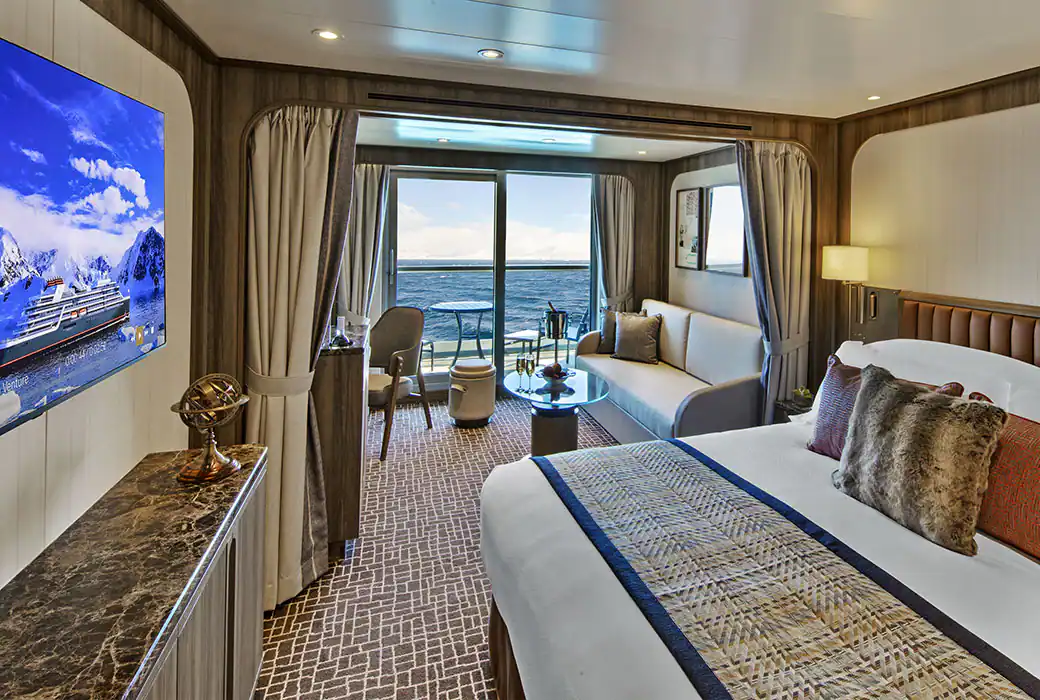
Approx. 355 sq ft (33 m2) including a 75 sq ft (7 m2) private veranda; living area with dining table, queen-size bed or two twin beds, walk-in closet and bathroom with separate tub and shower. Folds in Seabourn's Veranda Suite tiers OB and V1-V4 (some veranda sizes vary).
In your cabin
|
double | €32,129 | Reduced from 41,399 EUR | available | Seabourn | View at operator |
Panorama Penthouse Suite
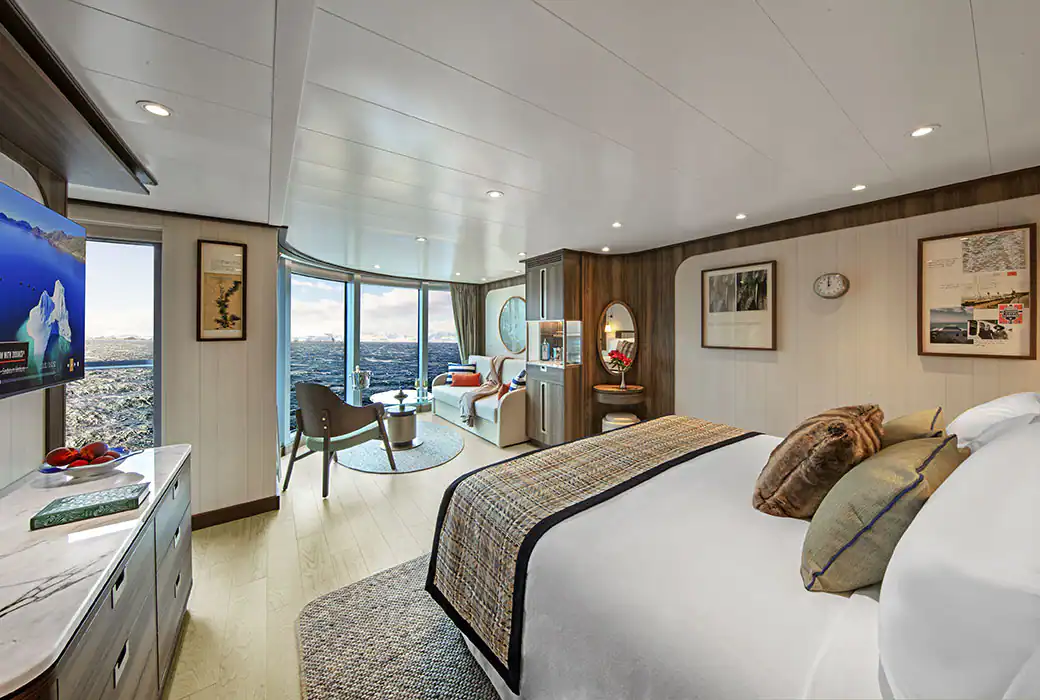
Suites 513-516, 611-614, 711-714 and 802-805 on Decks 5-8; approx. 417 sq ft (39 m2) including an 85 sq ft (8 m2) veranda, with living area, queen-size bed or two twin beds, ocean views from the bed and bathroom with tub and shower. Single site tier (PA).
In your cabin
|
double | — | — | sold out | Seabourn | |
Penthouse Suite
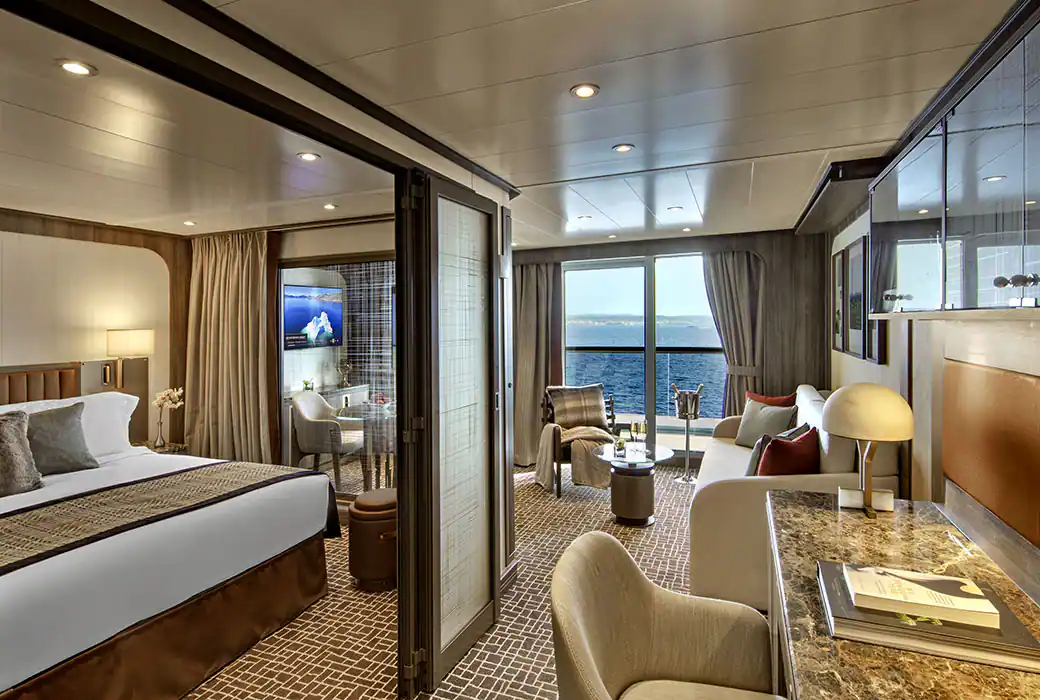
Approx. 527 sq ft (49 m2) including a 97 sq ft (9 m2) veranda; living area with dining table for two to four plus a separate bedroom with queen-size bed or two twin beds. Folds in Penthouse Suite (PH) and Penthouse Suite Guarantee (PG).
In your cabin
|
double | — | — | sold out | Seabourn | |
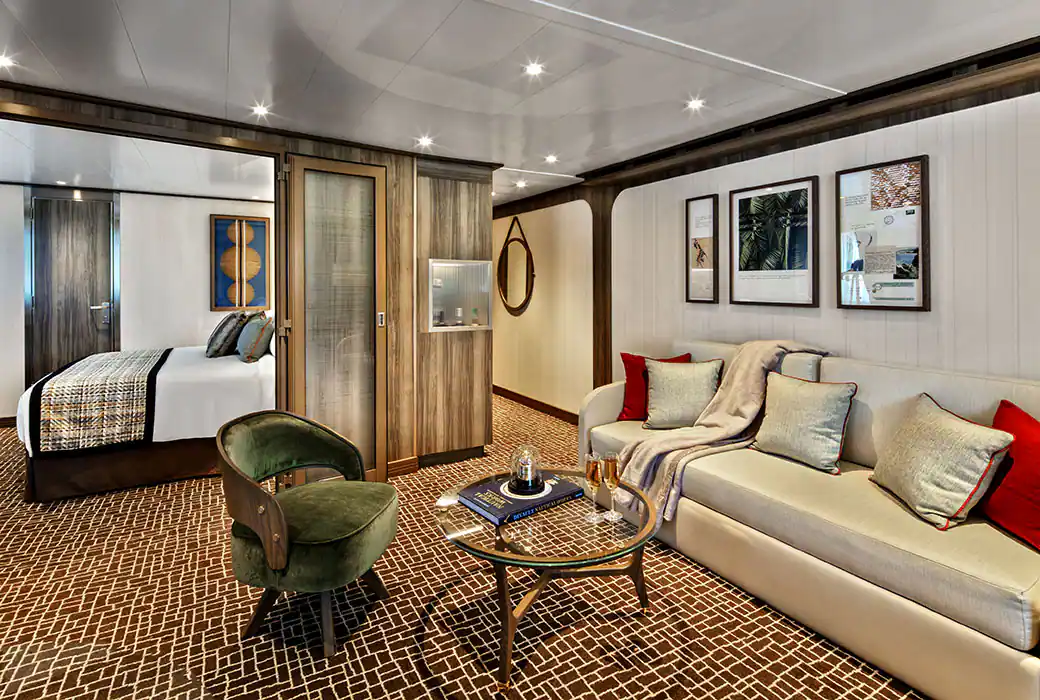
Owners Suite And Above
Aggregates Seabourn's top tiers: Owner's Suite (suites 700-701, approx. 1,023 sq ft / 95 m2 including a 484 sq ft curved forward-facing veranda, separate bedroom, dining for four, pantry with wet bar, whirlpool bathtub), plus the Signature Suite (foyer entry, guest bath, large curved veranda), Wintergarden Suite (split-level with glass-enclosed solarium and upstairs master bedroom) and Grand Wintergarden Suite; Seabourn does not state square footage for the latter three on this page.
In your cabin
|
double | — | — | sold out | Seabourn |
Prices are captured from operator websites and may change — the operator's site is authoritative. Captured Sep 3, 2026 06:38 UTC.
Everything worth bringing on an Antarctic expedition — an interactive checklist you can tick off as you pack, keep as a personal link and download as a PDF.
Wildlife
The snowy albatross, better known as the wandering albatross, has the widest wingspan of any living bird alive today. Watch for it riding the wind for hours behind the ship without a single wingbeat.
Wildlife
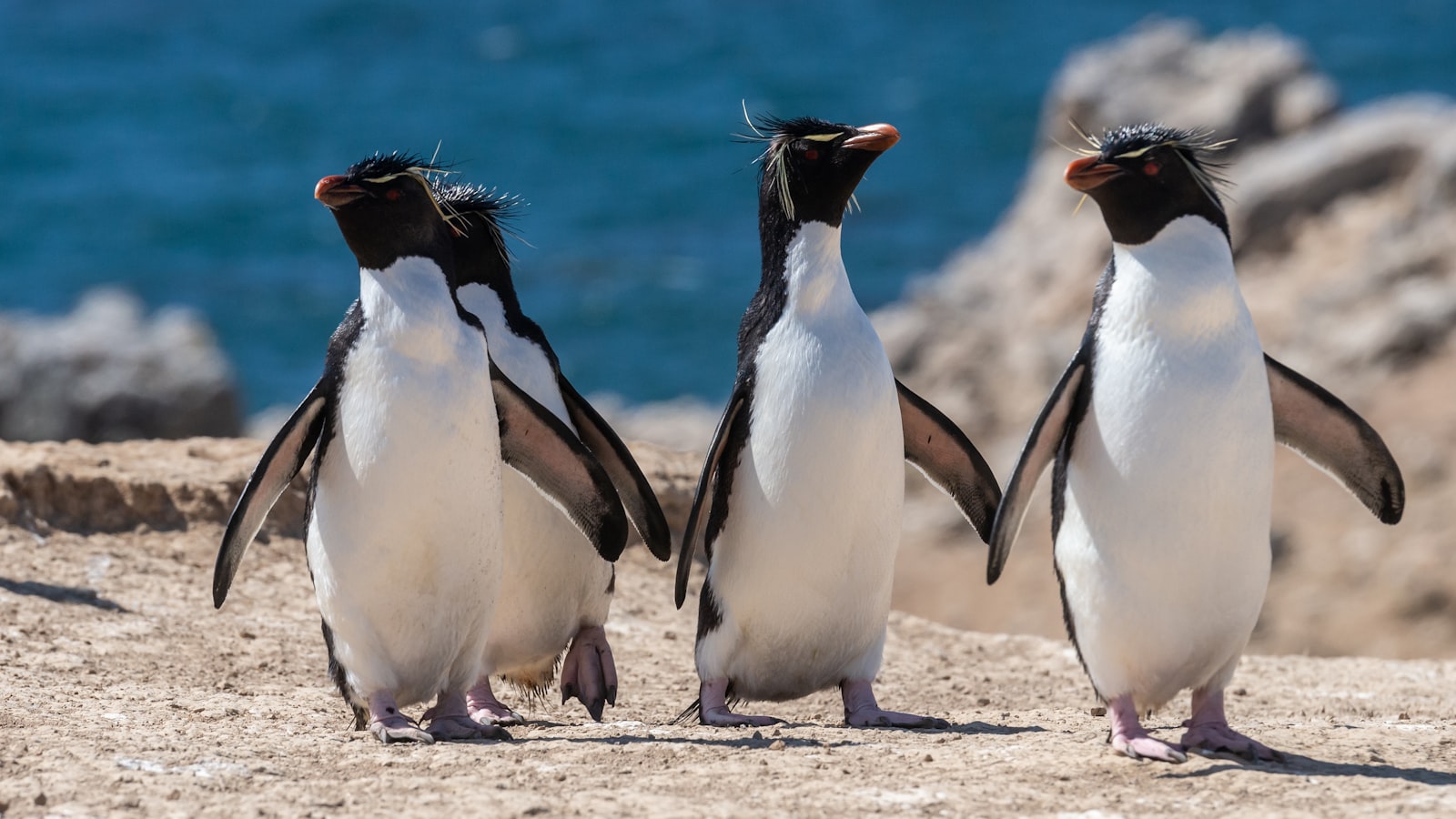
A small, spiky-crested penguin found around the southern tip of South America and its outlying islands. Its tangled taxonomic history makes it a quietly interesting stop on any Southern Ocean itinerary.
Wildlife
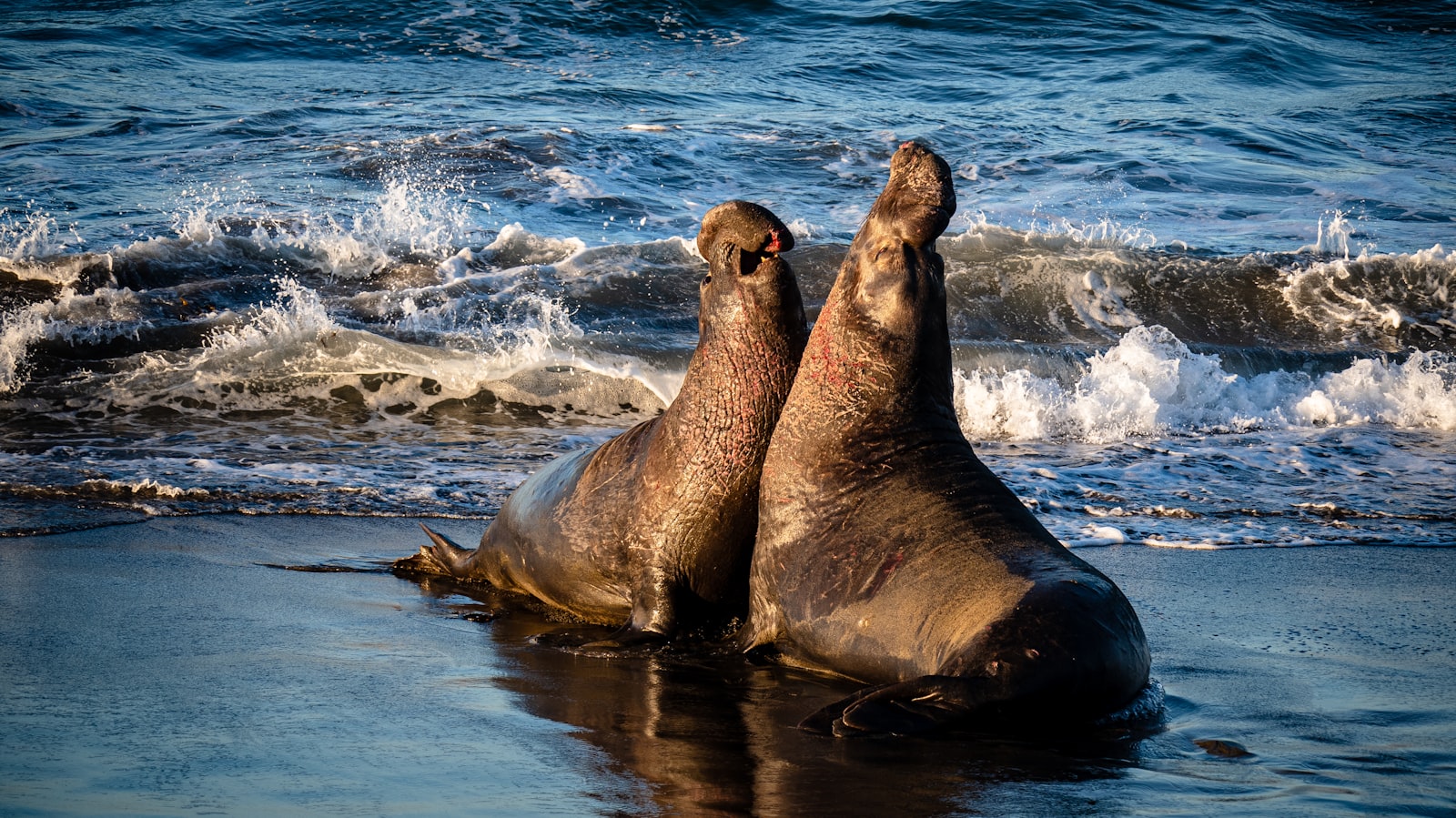
The southern elephant seal is the largest of all pinnipeds, with bulls roughly twice the bulk of a walrus. Watching a beachful of them roar and shove over territory is one of the most physical wildlife spectacles the Southern Ocean offers.
Wildlife
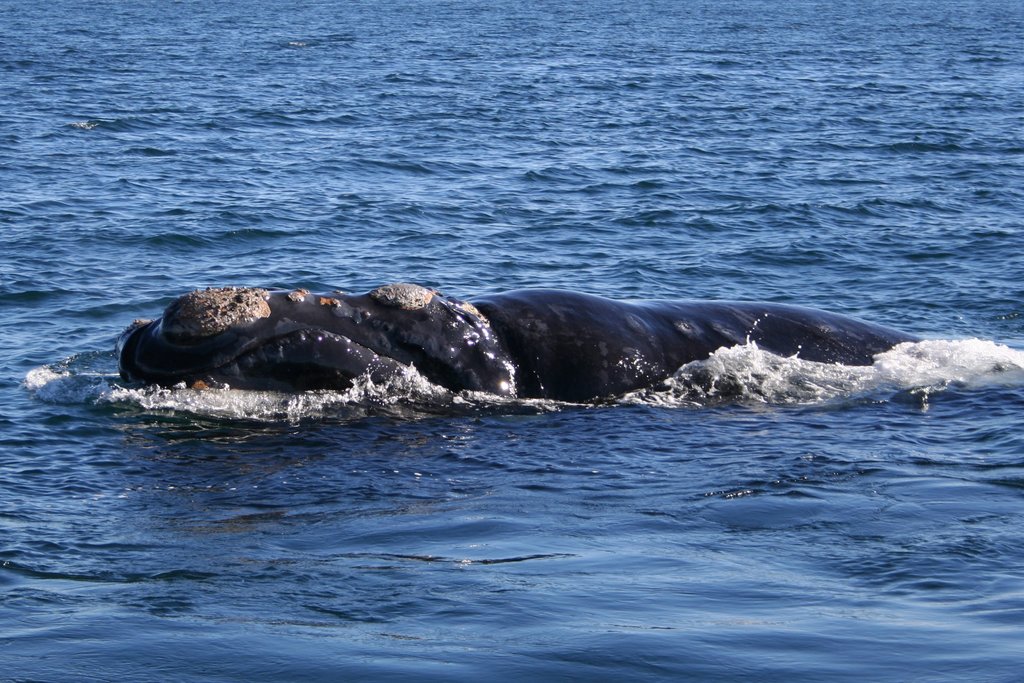
A stocky baleen whale with no dorsal fin and a head crusted in pale callosities, once hunted almost to extinction and now the whale most likely to breach or wave a fluke at passing ships. It favours the same cold, food-rich waters that expedition itineraries already follow.