Diving & snorkelling
Optional activities · from €1,050Drysuit diving and polar snorkeling reveal a cathedral of translucent blue sea ice, giant sea spiders, and penguins darting underwater with bird-like agility.
Itinerary and landing sites are indicative and subject to change based on weather, sea ice, and wildlife conditions.
Your voyage begins where the world drops off. Ushuaia, Argentina, reputed to be the southernmost city on the planet, is located on the far southern tip of South America. Starting in the afternoon, you embark from this small resort town on Tierra del Fuego, nicknamed “The End of the World,” and sail the mountain-fringed Beagle Channel for the remainder of the evening.
Over the next two days on the Drake Passage, you enjoy some of the same experiences encountered by the great polar explorers who first charted these regions: cool salt breezes, rolling seas, maybe even a fin whale spouting up sea spray. After passing the Antarctic Convergence – Antarctica’s natural boundary, formed when north-flowing cold waters collide with warmer sub-Antarctic seas – you are in the circum-Antarctic upwelling zone. Not only does the marine life change, the avian life changes too. Wandering albatrosses, grey-headed albatrosses, black-browed albatrosses, light-mantled sooty albatrosses, cape pigeons, southern fulmars, Wilson’s storm petrels, blue petrels, and Antarctic petrels are a few of the birds you might see.
Options for Antarctic Peninsula activities are many, and no less great during the late summer. Humpback whales are prolific in this region, gorging themselves on krill before their migration north. The penguin chicks are also fledging, stirring up activity on the beaches while sleek leopard seals lie in wait, poised to attack the less fortunate ones. Sites for your Antarctic adventures may include: Livingston Island – Here you find a wide variety of gentoo and chinstrap penguins on Hannah Point, as well as southern giant petrels and elephant seals hauling out onto the beach. Deception Island – Actually a subducted crater, this island opens into the sea and creates a natural harbor for the ship. An abandoned whaling station, and multiple bird species – cape petrels, kelp gulls, brown and south polar skuas, and Antarctic terns – can be seen here. Wilson’s storm petrels and black-bellied storm petrels also nest in the ruins of the whaling station in Whalers Bay. Cuverville Island – A small precipitous island nestled between the mountains of the Antarctic Peninsula and Rongé Island, Cuverville houses a large colony of gentoo penguins and breeding pairs of brown skuas. Neko Harbour – An epic landscape of mammoth glaciers and endless wind-carved snow, Neko Harbour offers opportunities for a Zodiac cruise and landing that afford the closest views of the surrounding alpine peaks. You might also be able to set foot on the continent here. Paradise Bay – You could take a Zodiac cruise in these sprawling, ice-flecked waters, where you have a good chance of seeing humpback and minke whales. Pléneau & Petermann Islands – If the ice allows it, you may sail through the Lemaire Channel in search of Adélie penguins and blue-eyed shags. There’s also a good chance you’ll encounter humpback and minke whales as well as leopard seals. Crystal Sound – Your journey takes you south along the Argentine Islands to this ice-packed body of water, and from here across the Polar Circle in the morning. Detaille Island – You may make a landing at an abandoned British research station here, taking in the island’s lofty mountains and imposing glaciers. Fish Islands – Further north you encounter one of the southernmost Adélie penguin and blue-eyed shag colonies in the Antarctic Peninsula. Melchior Islands – These islands offer a beautiful landscape rich with icebergs. Leopard seals, crabeater seals, and whales are found here, and there are excellent opportunities for diving. Conditions on the Drake Passage determine the exact time of departure.
Your return voyage is far from lonely. While crossing the Drake, you’re again greeted by the vast array of seabirds remembered from the passage south. But they seem a little more familiar to you now, and you to them.
Every adventure, no matter how grand, must eventually come to an end. It’s now time to disembark in Ushuaia, but with memories that will accompany you wherever your next adventure lies.
Drysuit diving and polar snorkeling reveal a cathedral of translucent blue sea ice, giant sea spiders, and penguins darting underwater with bird-like agility.
Oceanwide Expeditions operates dedicated polar expedition voyages to the White Continent with seasoned expedition teams.
Abundant whale encounters, playful fur seal pups, and dramatic golden-hour polar light.

Volcanic Isles • Penguin Rookeries & Calderas

Classic Antarctica • Towering Peaks & Wildlife

Whale Highway • Humpbacks, Orcas & Protected Bays

Palmer Archipelago • Glacial Vistas & Palmer Station

Kodak Gap • Kilometer-High Glaciated Chasm

Deep South • 66°33′ S & Midnight Sun
| Cabin | Occupancy | Price (per person) | Promo | Availability | Source | detail.action |
|---|---|---|---|---|---|---|
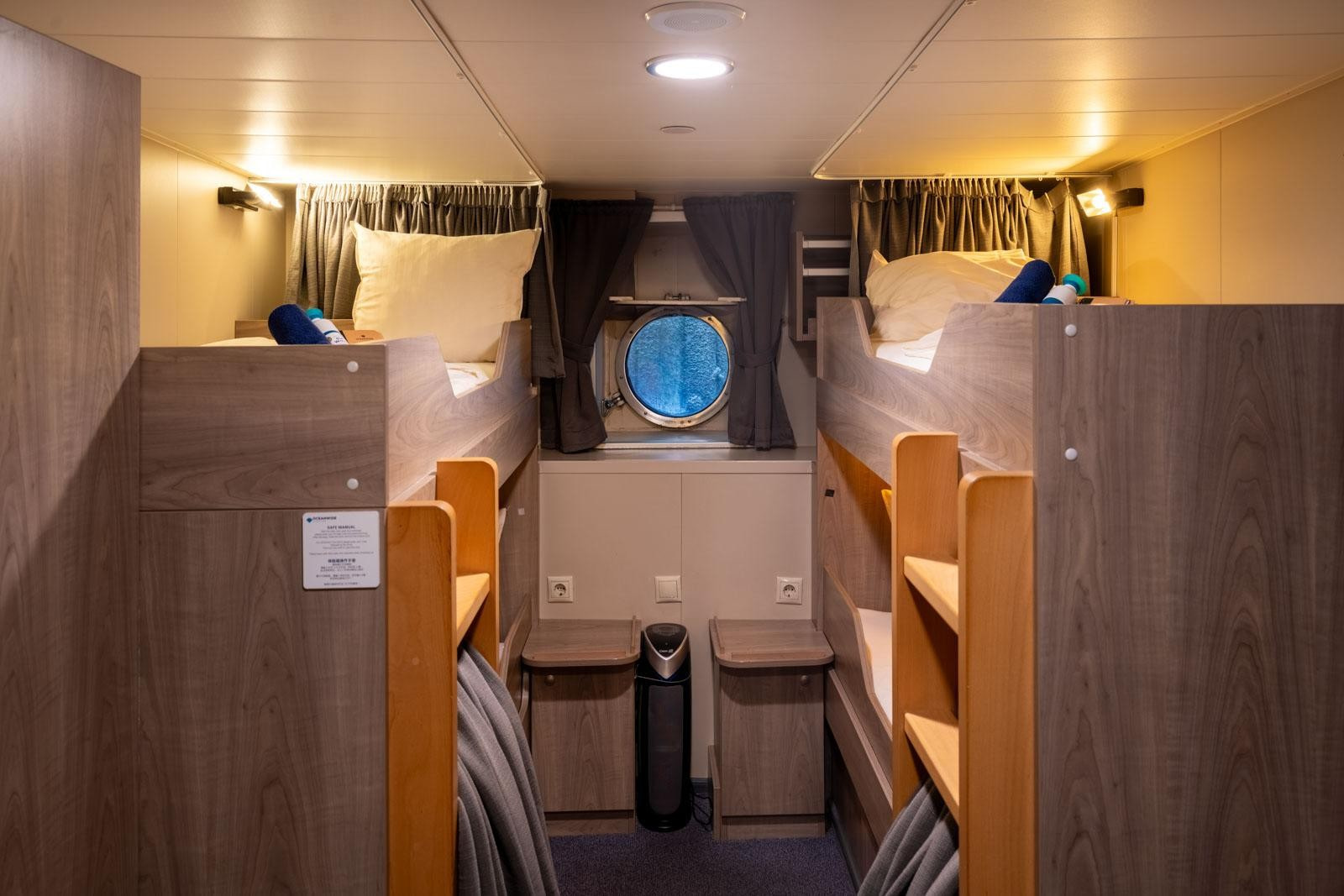
Quadruple Porthole
Best price
12 m² cabin (4 aboard) with two upper-and-lower berth sets and one porthole; suited to families travelling with children.
In your cabin
|
quad | €9,950 | — | available | Oceanwide Expeditions | View at operator |
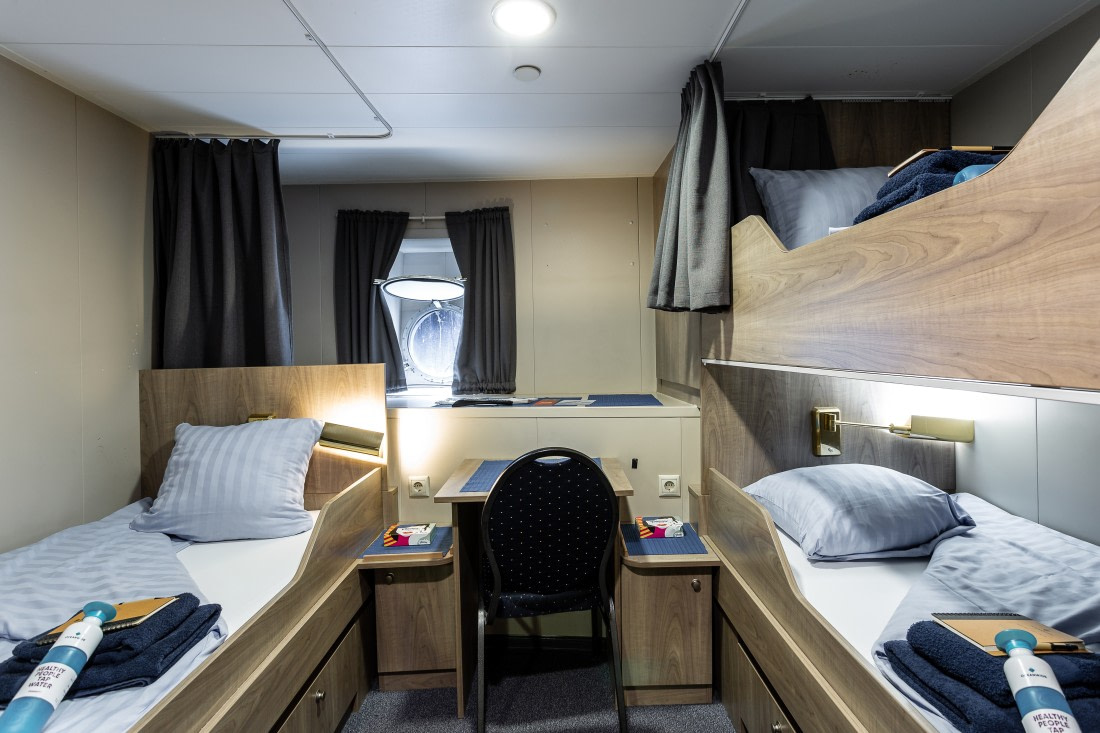
Triple Porthole
Three-berth porthole cabin sold via the booking feed; Oceanwide's current Plancius cabin page and ship-page cabin breakdown (4 quad + 9 twin porthole + 25 twin window + 2 twin deluxe + 10 superior = 50 cabins) do not list this category, though a 'Triple cabin' photo exists in the official gallery. In your cabin
|
triple | €11,150 | — | sold out | Oceanwide Expeditions | |
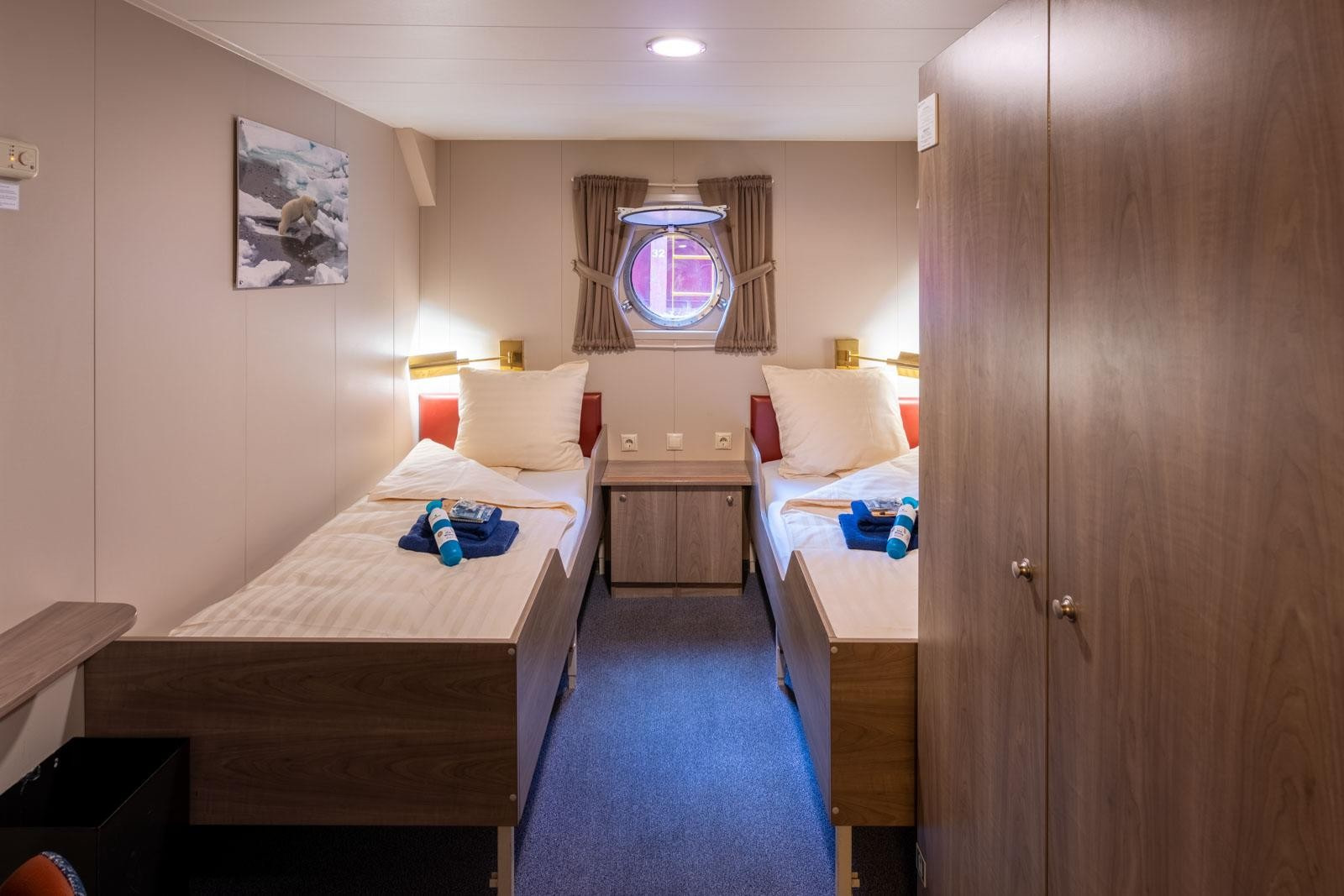
Twin Porthole
12 m² cabin (9 aboard) with two lower berths and one porthole; en-suite shower & toilet.
In your cabin
|
double | €12,200 | — | available | Oceanwide Expeditions | View at operator |
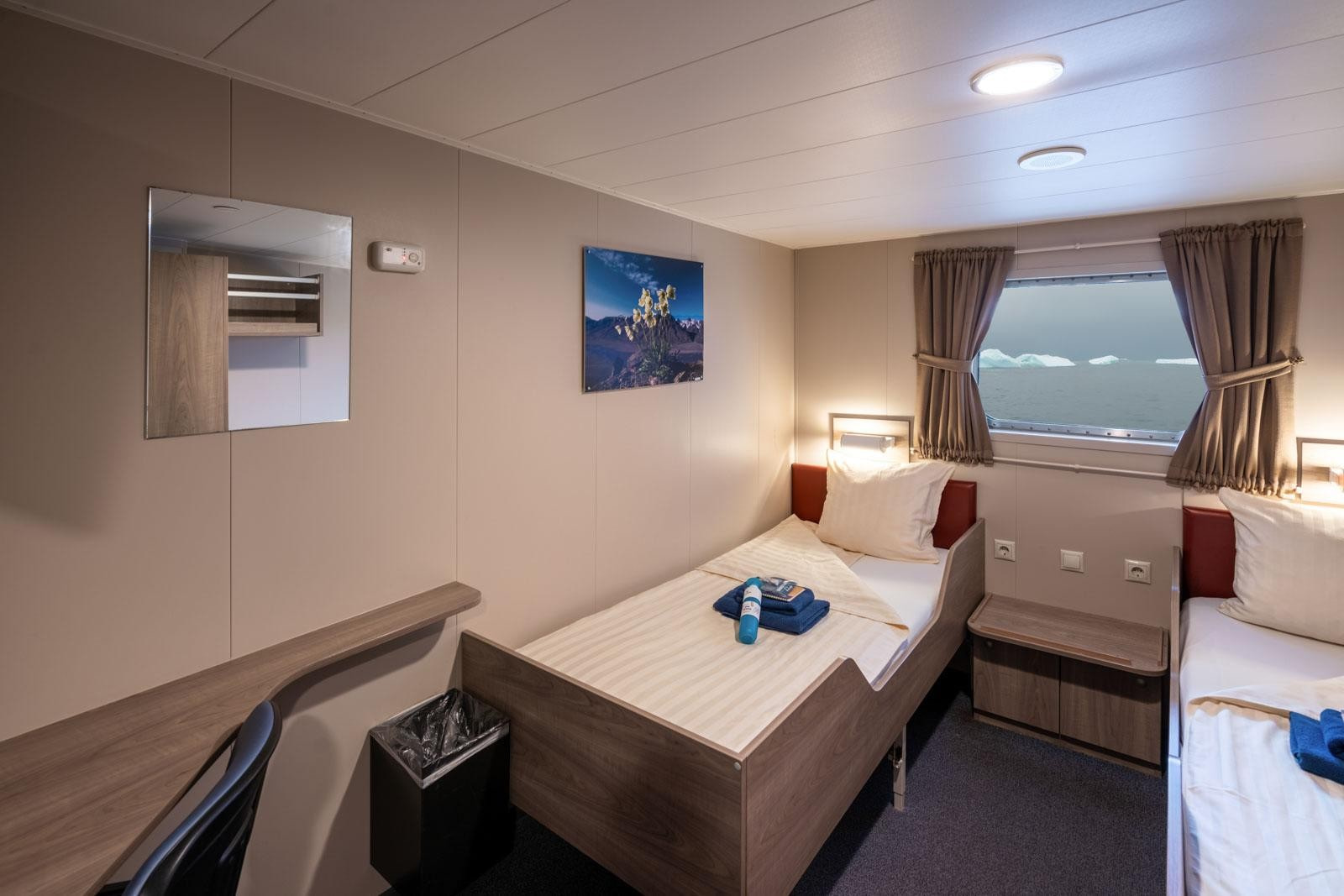
Twin Window
12,5-13,5 m² cabin (25 aboard) with two lower berths and one window; a few windows may be partially obstructed by the ship's design.
In your cabin
|
double | €12,750 | — | available | Oceanwide Expeditions | View at operator |
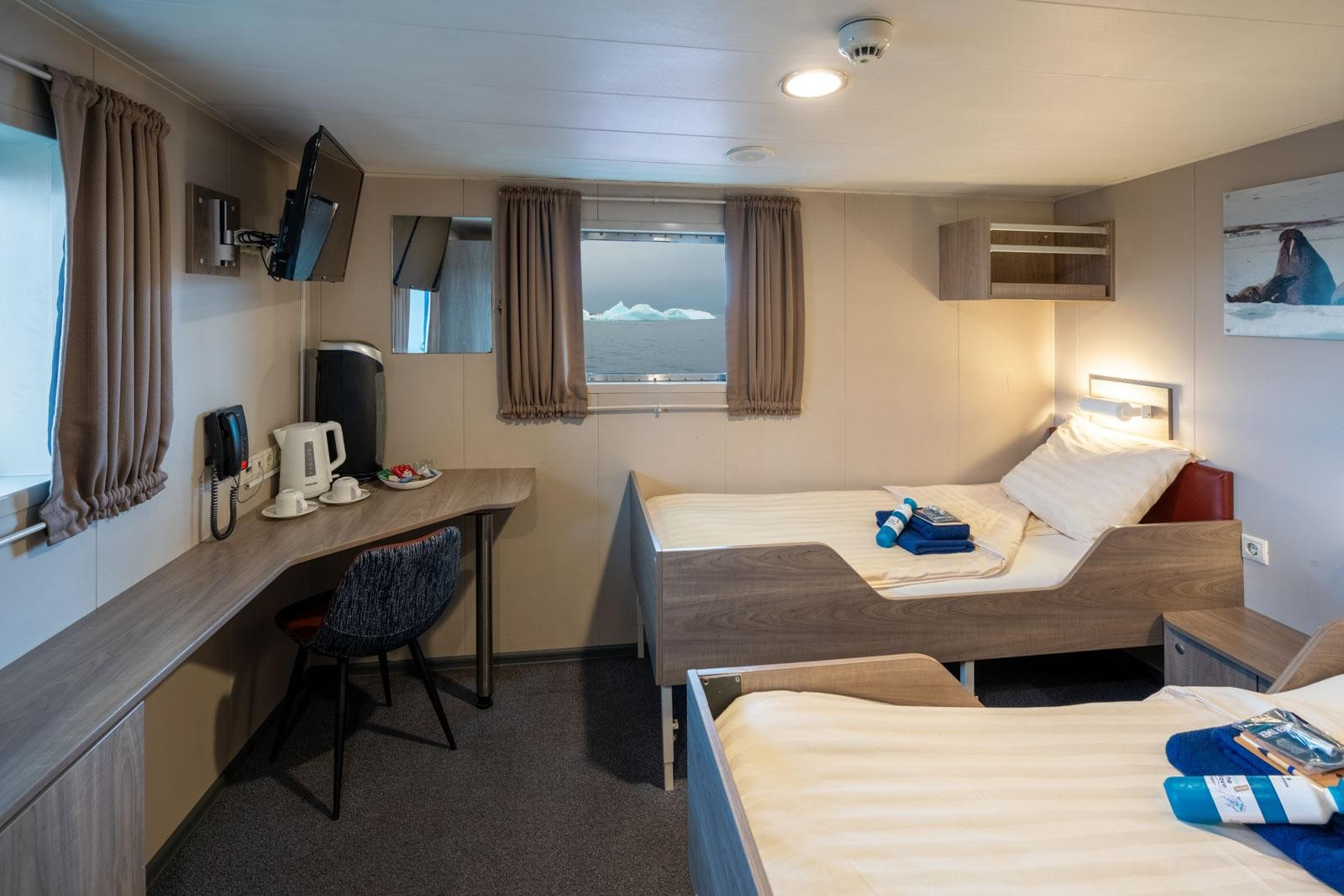
Twin Deluxe
13,5 m² corner cabin (2 aboard), slightly more spacious than the standard twins, with two lower berths and two windows; en-suite shower & toilet.
In your cabin
|
double | €14,200 | — | available | Oceanwide Expeditions | View at operator |
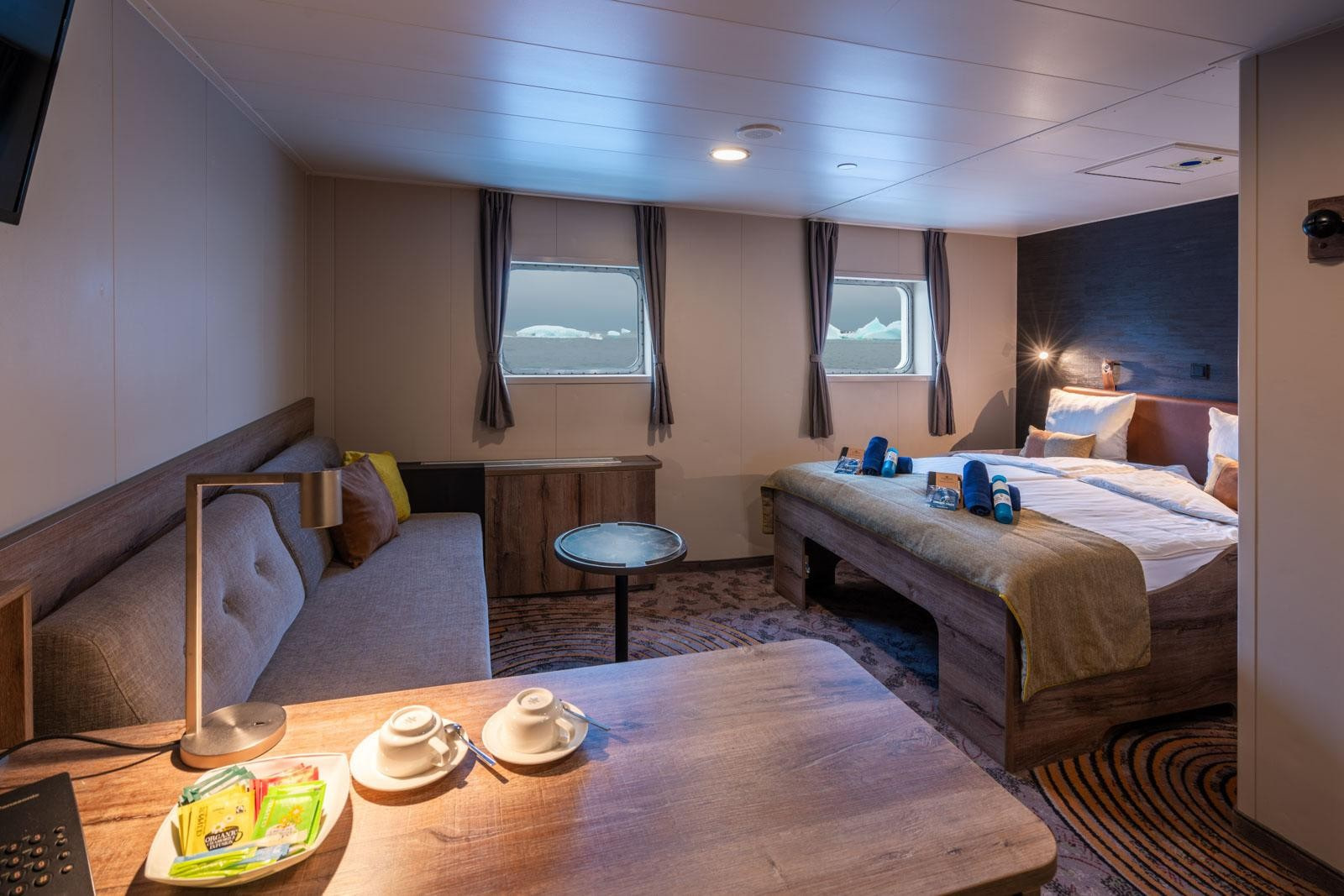
Superior
21-23 m² cabin (10 aboard) with one queen-size double bed plus a sofa bed and two windows; en-suite shower & toilet.
In your cabin
|
— | €14,800 | — | available | Oceanwide Expeditions | View at operator |
Prices are captured from operator websites and may change — the operator's site is authoritative. Captured Sep 3, 2026 06:14 UTC.
Everything worth bringing on an Antarctic expedition — an interactive checklist you can tick off as you pack, keep as a personal link and download as a PDF.
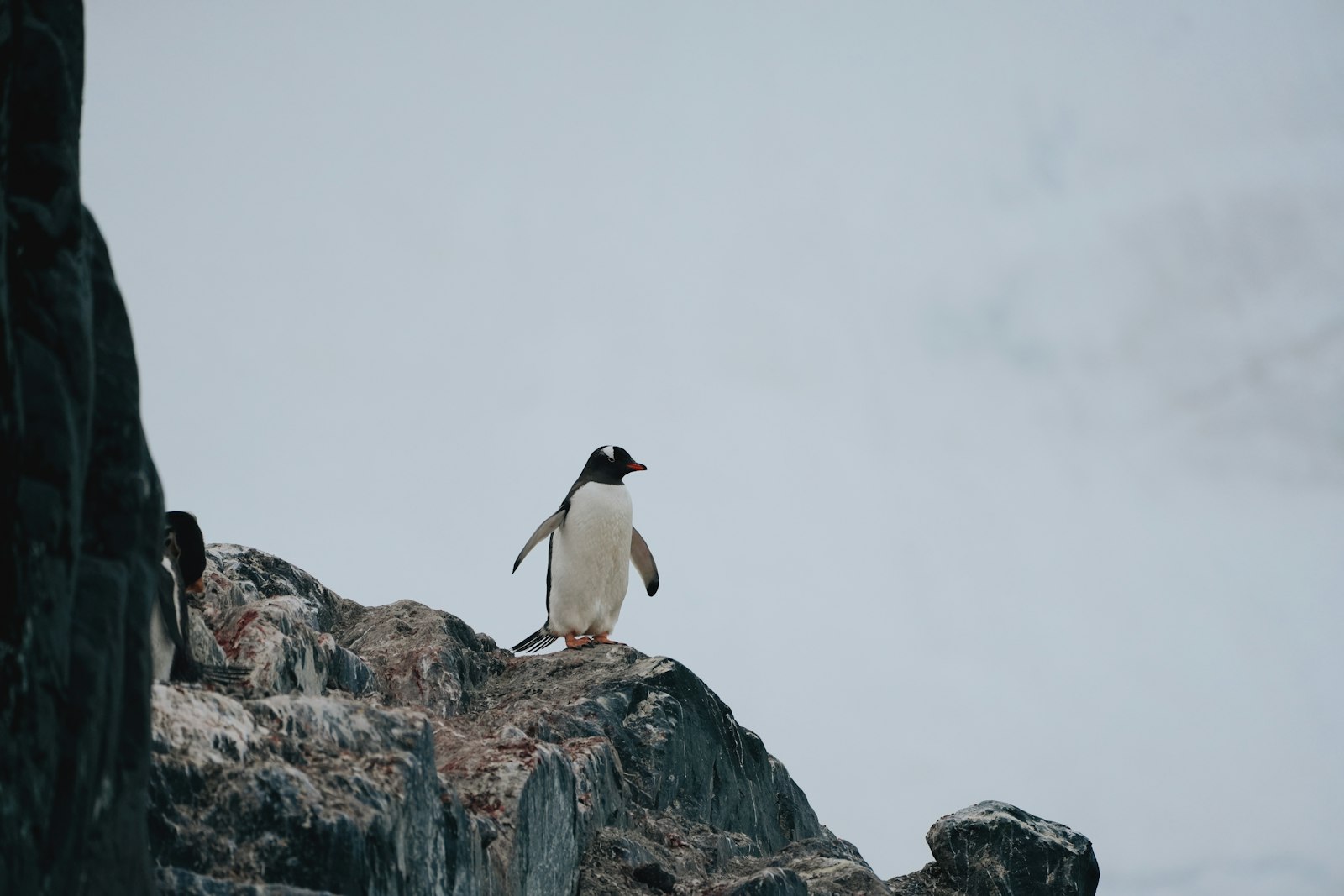
Wildlife
A stocky, orange-billed penguin of the genus Pygoscelis, closest kin to the Adélie and Chinstrap. Its loud, trumpeting call, delivered with head thrown back, carries across the shoreline colonies where expedition landings are made.
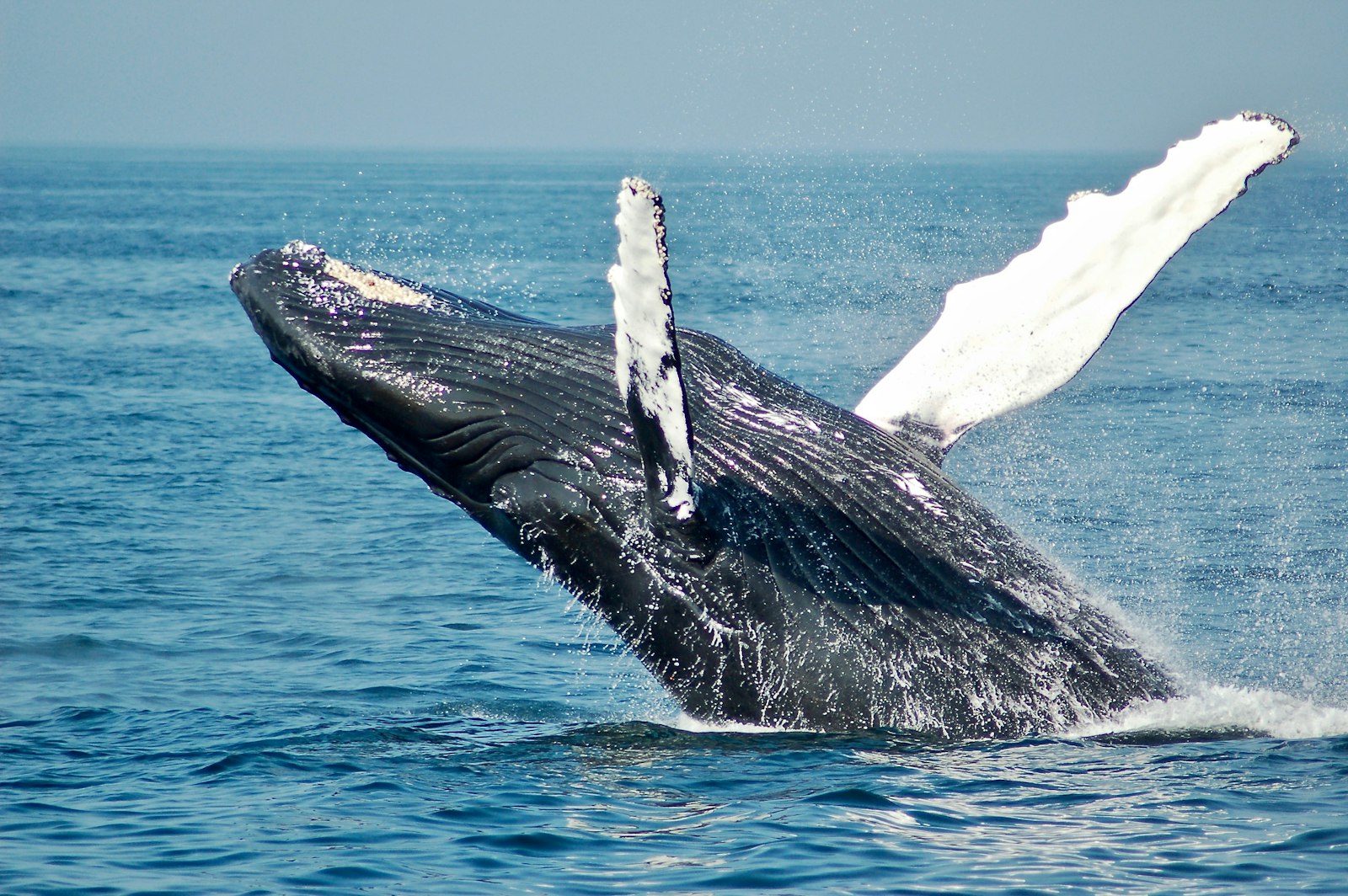
Wildlife
A 14–17 metre baleen whale known for breaching and long pectoral fins, often seen feeding on krill in loose groups along the ice edge.
Wildlife
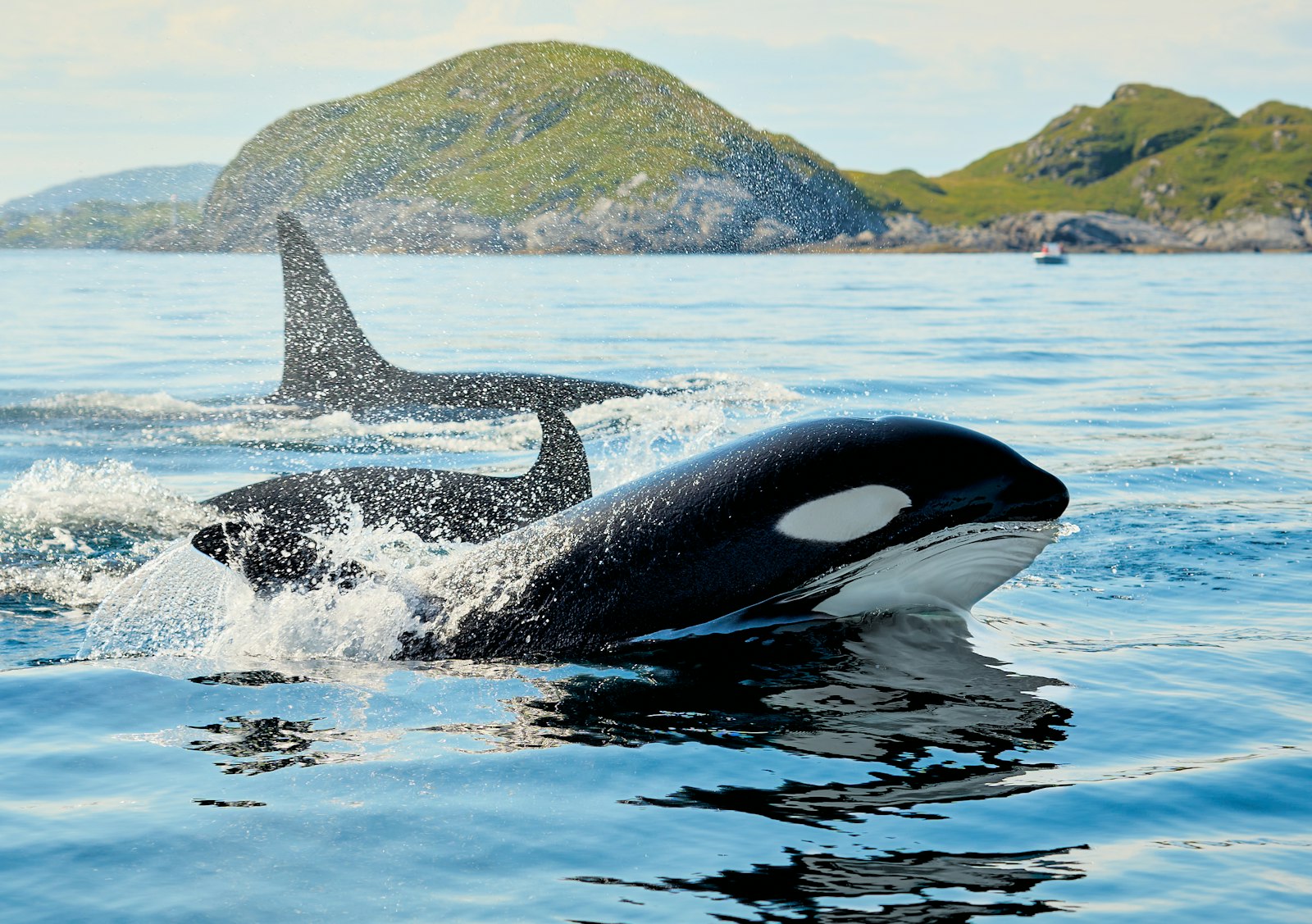
Black and white apex predator instantly recognizable by its pale eye patches, the orca is the largest of the dolphins and one of the ocean's most capable hunters. Sightings often involve a tight-knit family pod working the ice edge together.
Wildlife
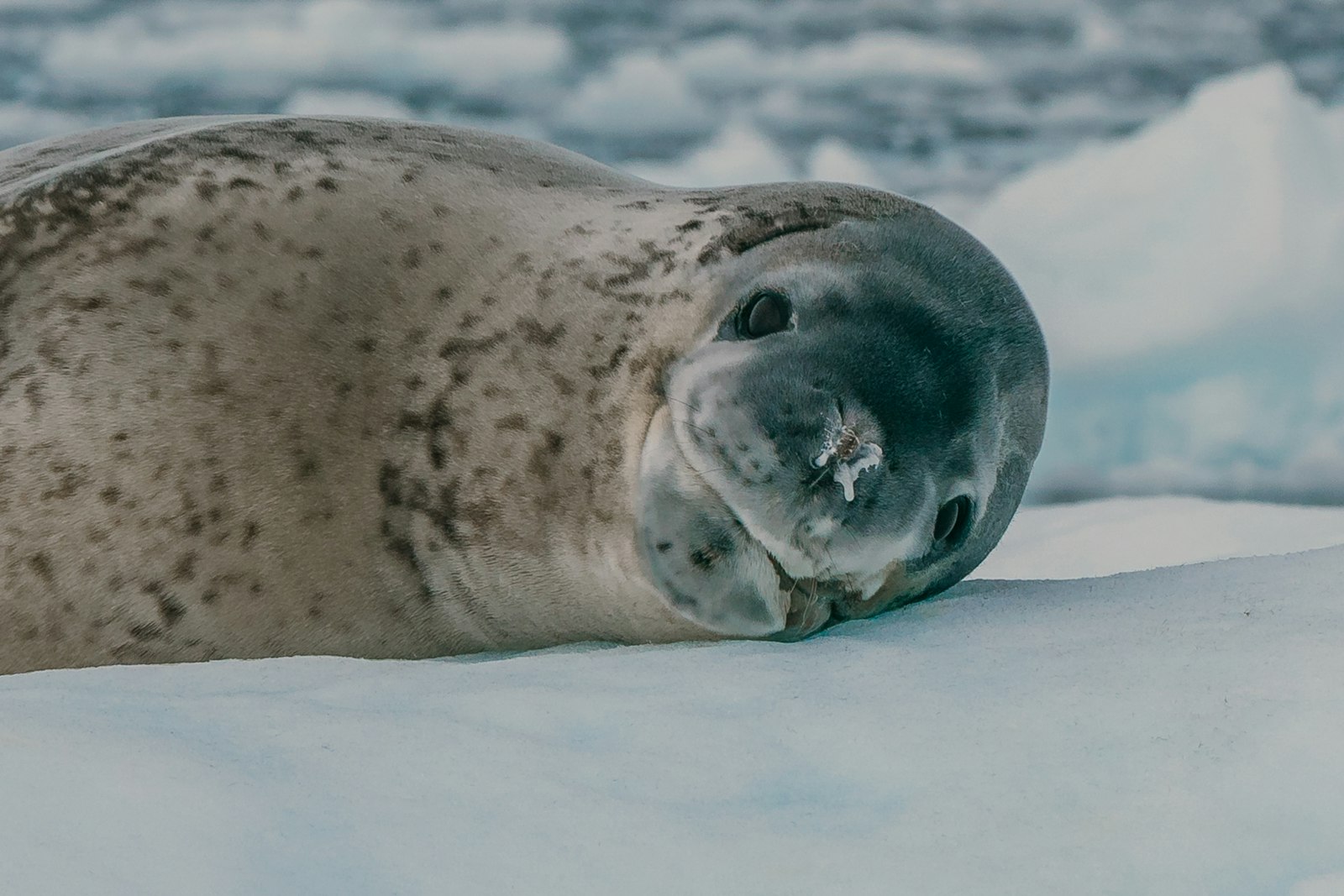
The leopard seal is the Antarctic's second-largest seal after the elephant seal, built long and muscular with a spotted, leopard-like coat. It is the region's top predator, hunting penguins, fish, and even other seals along the ice edge.