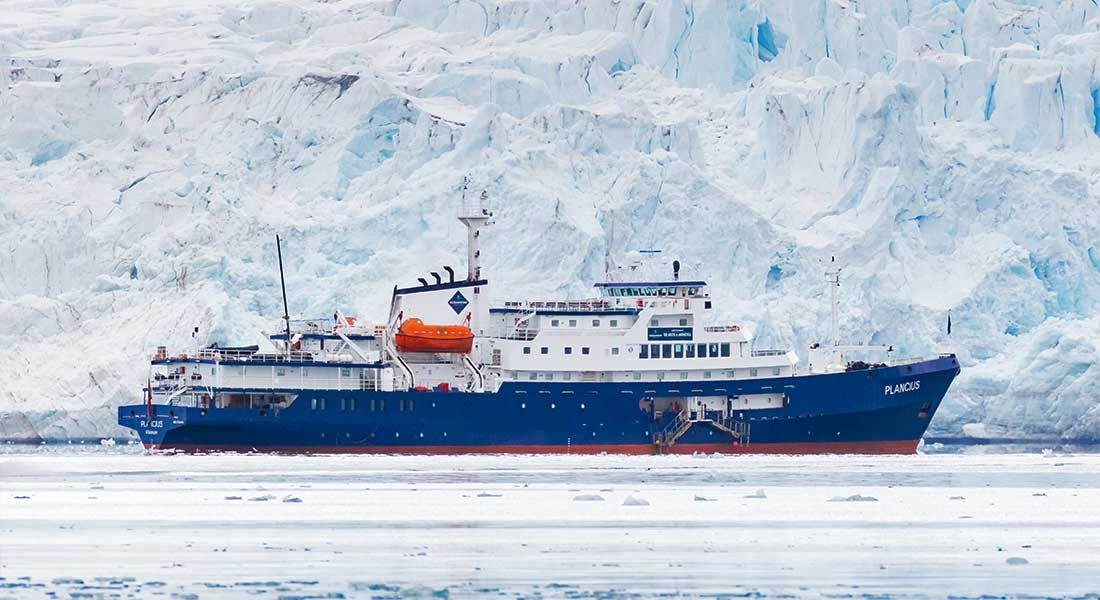
m/v Plancius
IAATO Category 1 (101–200 guests) — full Category 1 site access via two-group shore & Zodiac rotations
| Cabin | Occupancy | Price (per person) | Availability | Action |
|---|---|---|---|---|
|
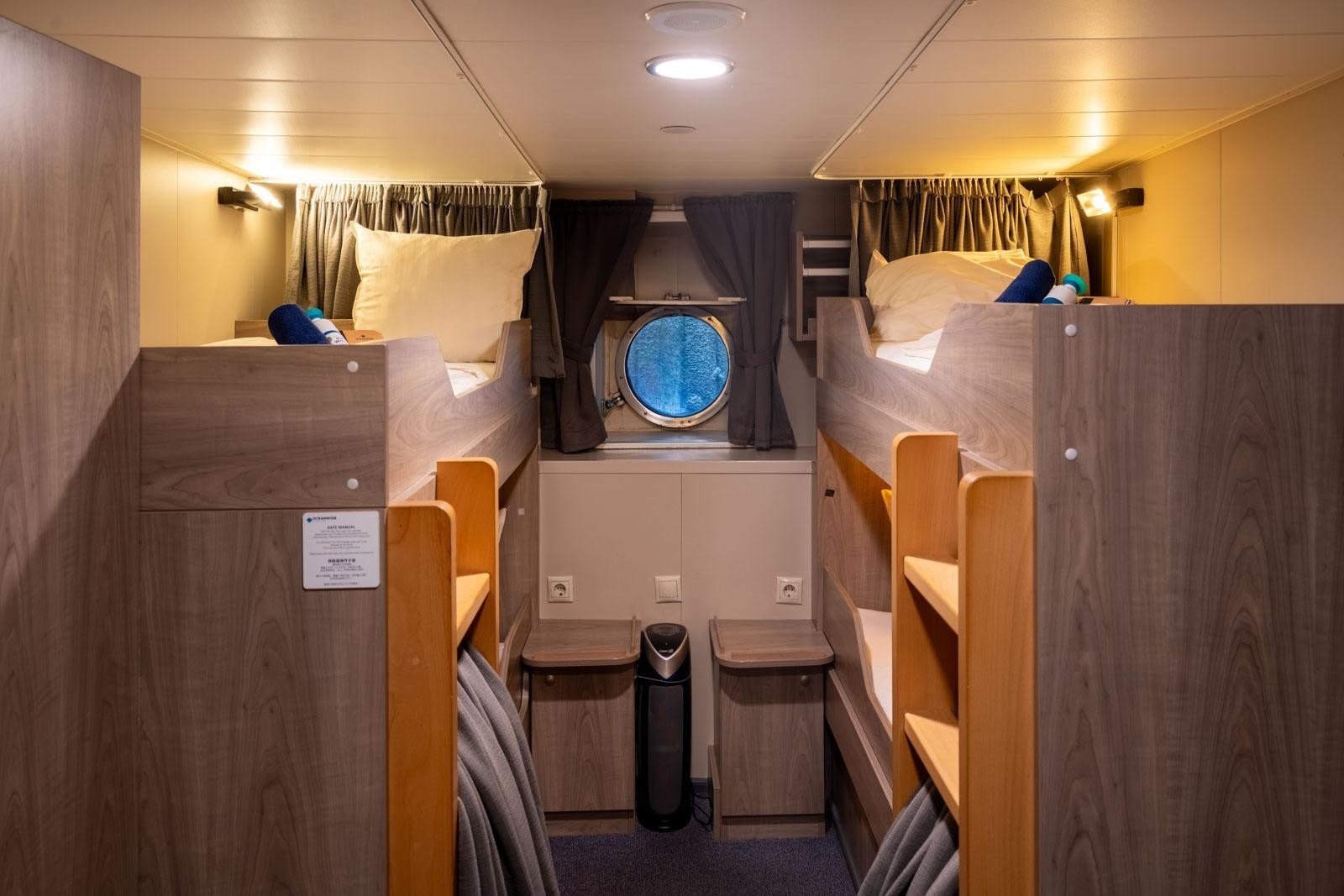
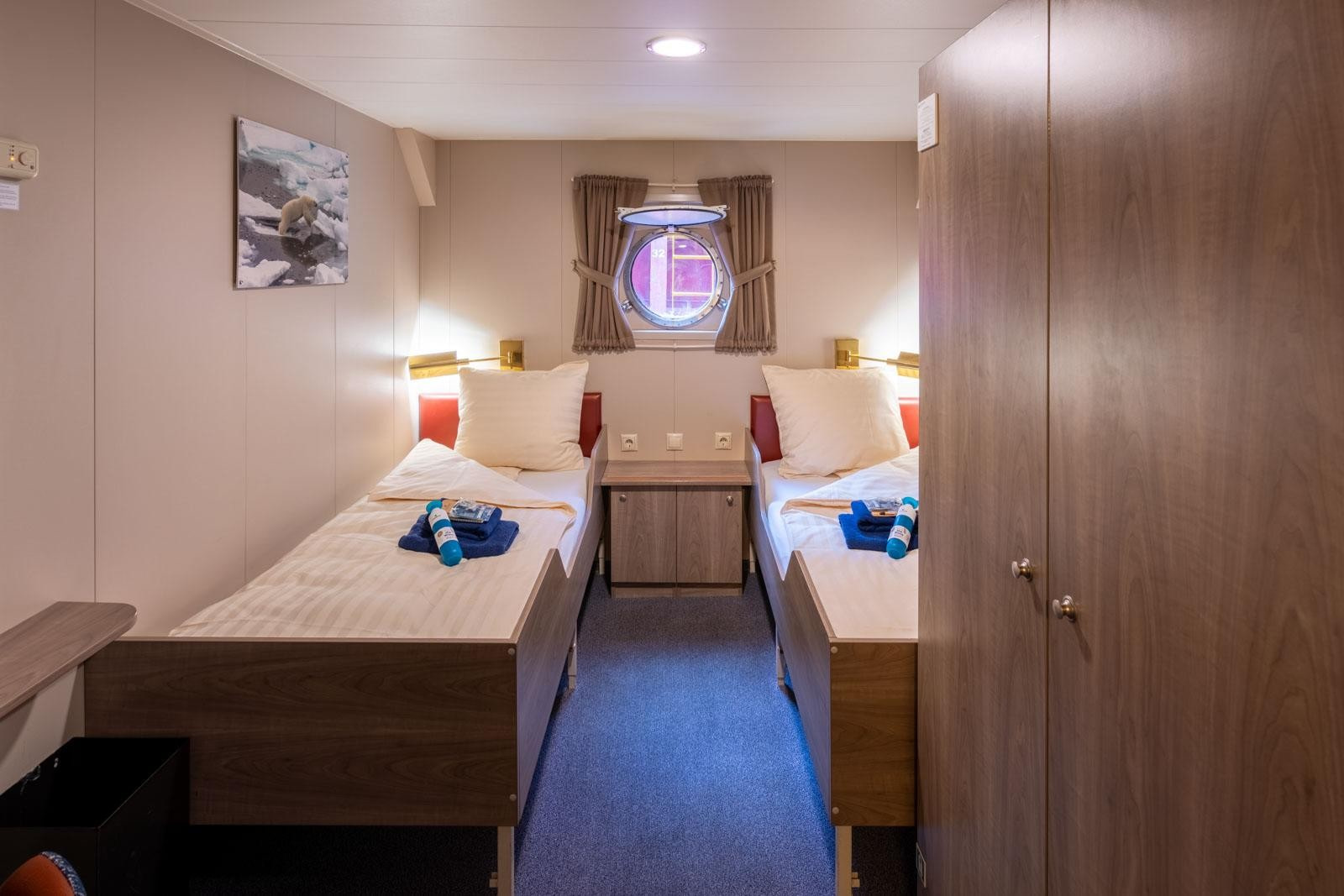
Quadruple Porthole
12 m²
4 guests
12 m² cabin (4 aboard) with two upper-and-lower berth sets and one porthole; suited to families travelling with children. In your cabin 10
|
Quad |
$10,452
€9,350
|
Sold out | |
|
Triple Porthole
3 guests
Three-berth porthole cabin sold via the booking feed; Oceanwide's current Plancius cabin page and ship-page cabin breakdown (4 quad + 9 twin porthole + 25 twin window + 2 twin deluxe + 10 superior = 50 cabins) do not list this category, though a 'Triple cabin' photo exists in the official gallery. In your cabin 7
|
Triple |
$12,017
€10,750
|
Sold out | |
|
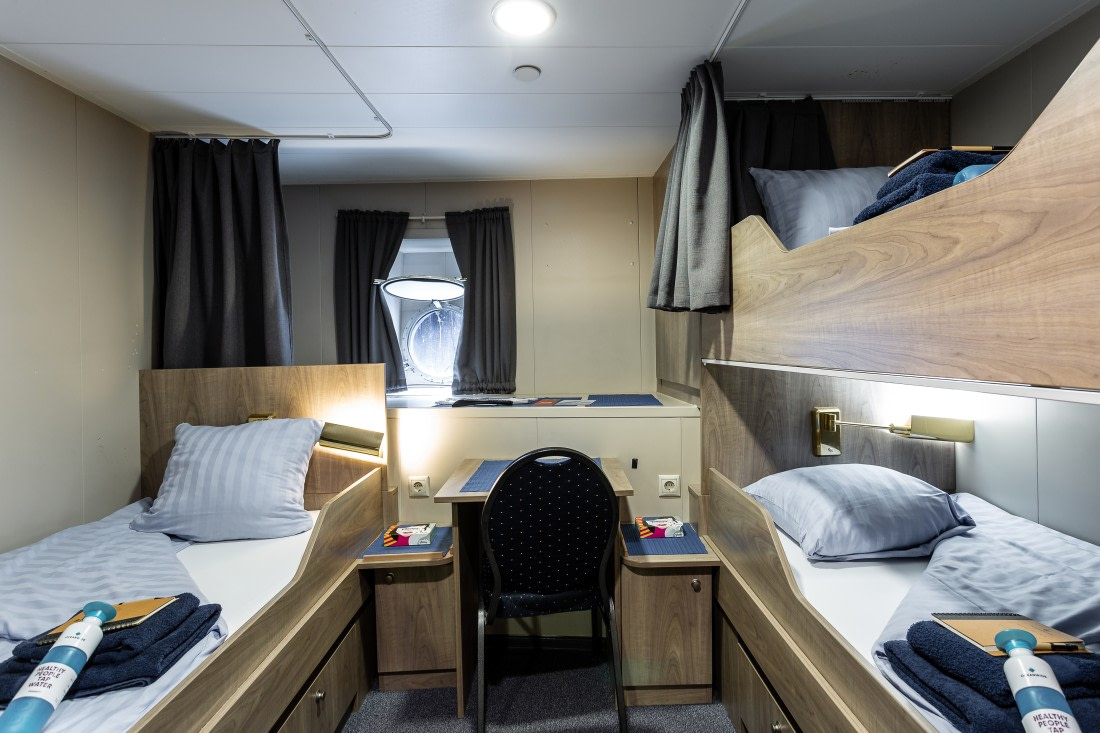
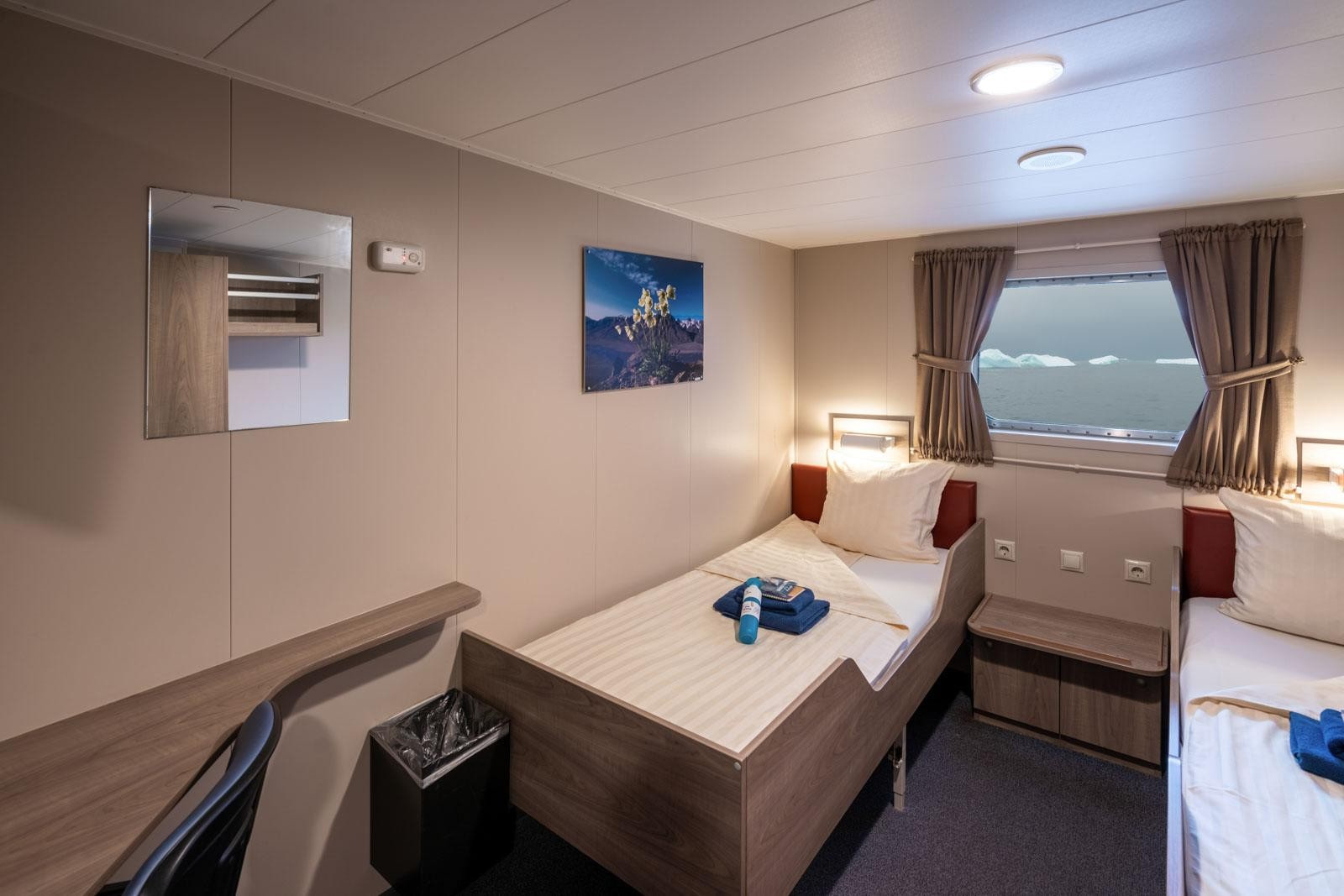
Twin Porthole
Best price
12 m²
2 guests
12 m² cabin (9 aboard) with two lower berths and one porthole; en-suite shower & toilet. In your cabin 10
|
Double |
$13,135
€11,750
|
Available | View at operator |
|
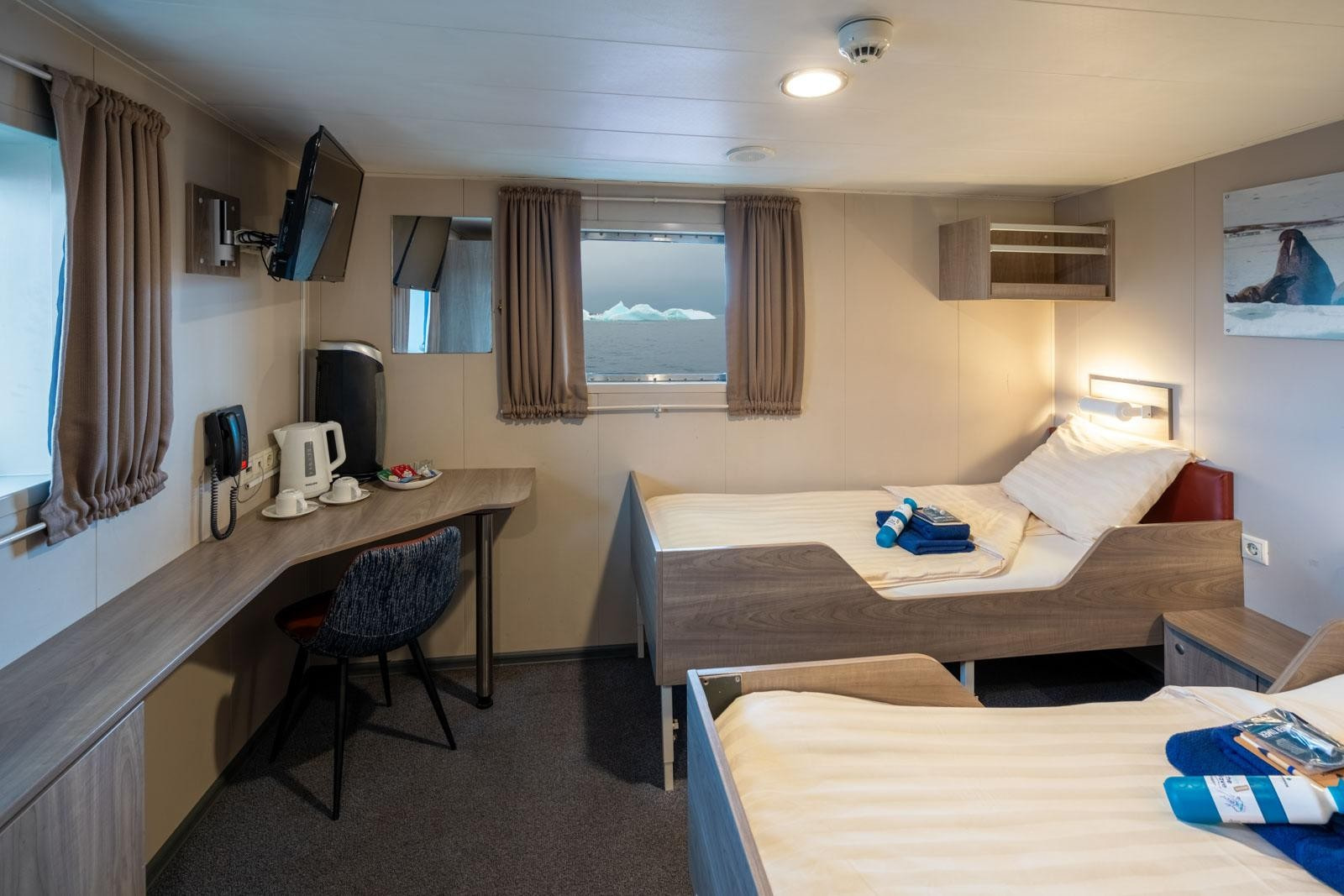
Twin Window
13 m²
2 guests
12,5-13,5 m² cabin (25 aboard) with two lower berths and one window; a few windows may be partially obstructed by the ship's design. In your cabin 10
|
Double |
$13,694
€12,250
|
Available | View at operator |
|
Twin Deluxe
13.5 m²
2 guests
13,5 m² corner cabin (2 aboard), slightly more spacious than the standard twins, with two lower berths and two windows; en-suite shower & toilet. In your cabin 10
|
Double |
$15,259
€13,650
|
Sold out | |
|
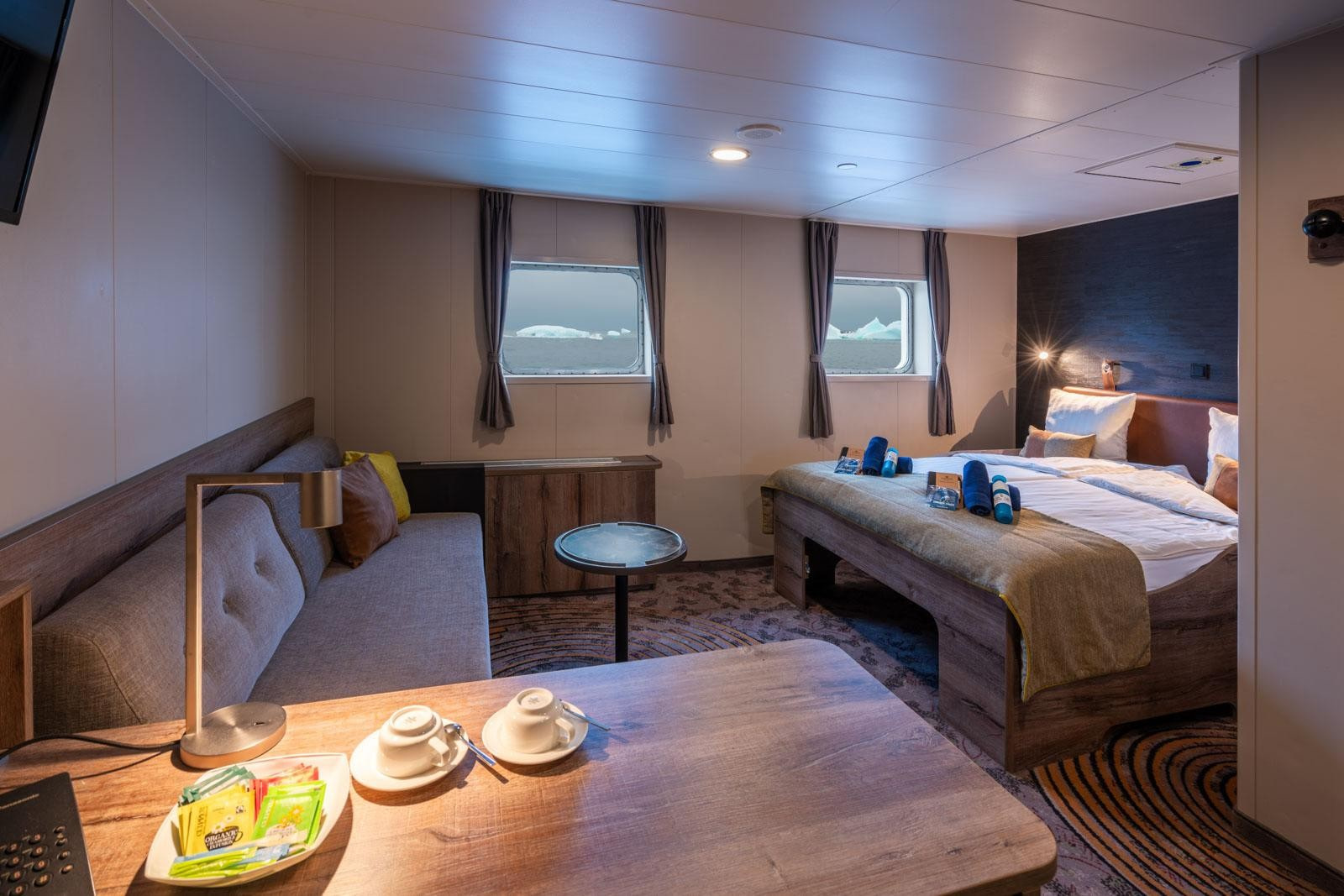
Superior
22 m²
2 guests
21-23 m² cabin (10 aboard) with one queen-size double bed plus a sofa bed and two windows; en-suite shower & toilet. In your cabin 13
|
— |
$15,930
€14,250
|
Available | View at operator |
Prices are captured from operator websites and may change — the operator's site is authoritative. Captured Nov 2, 2026 06:16 UTC.
Itinerary and landing sites are indicative and subject to change based on weather, sea ice, and wildlife conditions.
Your voyage begins where the world drops off: Ushuaia, Argentina, said to be the southernmost city on the planet, located on the far southern tip of South America. Starting in the afternoon, we embark from this small resort town on Tierra del Fuego (nicknamed “The End of the World”) and sail the mountainous Beagle Channel for the rest of the evening.
Today we are en route to South Georgia. After passing the Antarctic Convergence, which is a natural boundary formed when north-flowing cold waters collide with warmer sub-Antarctic waters, we enter the circum-Antarctic upwelling zone. Not only does the marine life change, the bird life changes, too: A variety of albatrosses and petrels show up, along with Cape pigeons and southern fulmars.
Our aim today is to visit some of the world’s top king penguin rookeries. This time of year you have a good chance of seeing these animals nesting on eggs, with their chicks nearby. The rookeries are sometimes overflowing, with penguins traveling to and from the beach. Possible visits in this region include: Salisbury Plain, St. Andrews Bay, Gold Harbour – Here you can see not only the massive king penguin colony, but also elephant seals and limitless fur seal pups playing in the surf. Grytviken – We also have the opportunity to check out this abandoned whaling station, where king penguins walk the streets and elephant seals lie around like they own the place – because they basically do! You might also see the South Georgia Museum as well as Shackleton’s grave here. Cooper Bay – This is a fine place for a Zodiac cruise, and this bay also houses a rookery of macaroni penguins. King penguins, pintails, and giant petrels may also appear here. Moltke Harbour – Located in Royal Bay, this scenic spot gives you the chance to see the huge king penguin colony that lives here.
A pleasant tailwind often accompanies the vessel through the westerlies, and on both sides of the Antarctic Convergence, you might see large numbers of Antarctic and sub-Antarctic seabirds.
Today we plan to approach Gough Island for a Zodiac cruise in Quest Bay, if the weather permits. Here you might see northern rockhopper penguins and sub-Antarctic fur seals. In previous years, it has been possible for us to circumnavigate most of Gough Island’s 33-mile circumference, taking in this area’s splendid scenery and abundant wildlife.
The remote islands of Tristan da Cunha are famed for their plentiful bird populations, which include rockhopper penguins, several species of albatross, petrels, skuas, terns, and many others. Our goal during this stage of our voyage is to visit the small settlement on the west side of the main island, but we might also land at Seal Bay on the south side of Tristan da Cunha or at Sandy Point on the east side. In these stunning locations, you could encounter such exotic wildlife as yellow-nosed albatrosses and sub-Antarctic fur seals, all while exploring a rarely visited spot. We also intend to land at Nightingale Island and Inaccessible Island, both of which offer great views of beautiful seabirds ranging from yellow-nosed albatrosses to brown noddies. Two days are reserved at Tristan da Cunha in case of bad weather, but please remember that nature determines our itineraries here: Since beginning the Atlantic Odyssey cruise in 1998, adverse weather led to the cancellation of 35% of Tristan da Cunha landings. If we have to divert for safety reasons, we will find good alternatives.
Seabirds and dolphins indigenous to this region often follow the vessel.
After we land at Jamestown on Saint Helena Island, you will have the opportunity to enjoy the area’s local culture, pleasant climate, and endemic bird life. You can pay a visit to Longwood House, where Napoleon died in exile; walk the 699-step Jacob’s Ladder, if you’re feeling ambitious; or snorkel the shallows offshore, seeing multitudes of tropical and subtropical fish. Please note: You have the option to disembark and fly home from Jamestown, if flights are available. In the evening, we will depart for Praia, Cape Verde, where you can also disembark. Make sure to book voyage PLA34-27 if you want to fly out from Praia.
Scenic Fjord • Sea Lion Colonies & Les Eclaireurs
Rite of Passage • Albatross Alley
Subantarctic Haven • Albatross Cliffs & 5 Penguin Species
Serengeti of the South • Hundreds of Thousands of King Penguins
Southern Ocean Arc • Marine Mammal Highway
IAATO Category 1 (101–200 guests) — full Category 1 site access via two-group shore & Zodiac rotations
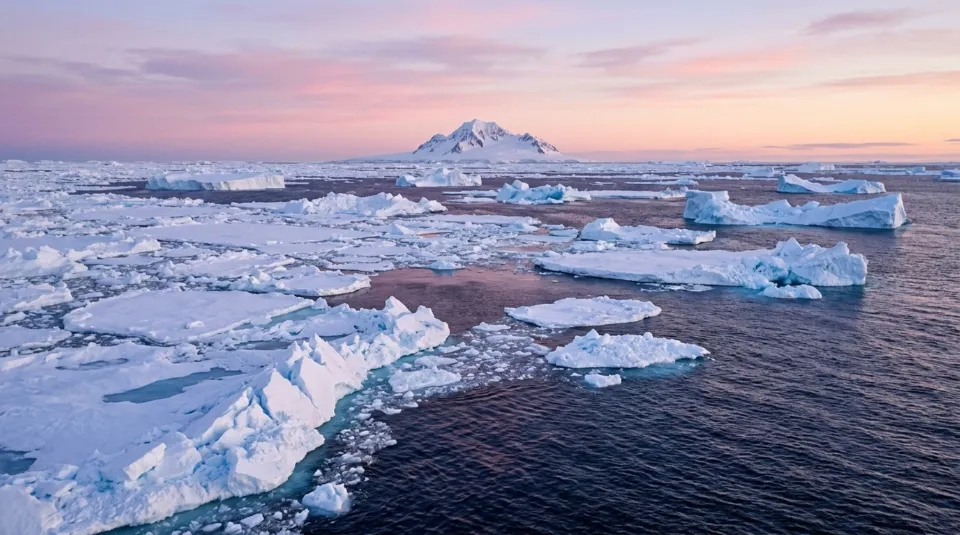
Abundant whale encounters, playful fur seal pups, and dramatic golden-hour polar light.
Oceanwide Expeditions operates dedicated polar expedition voyages to Antarctica with experienced expedition teams.
Fares from $9,949
Upcoming Antarctic departures in a similar sailing window and region — tick Compare on any card to compare side by side.
Bellingshausen Sea
Jan 31, 2028 – Feb 9, 2028 · 9 days
Punta Arenas
Antarctic Peninsula
Jan 31, 2028 – Feb 7, 2028 · 8 days
Punta Arenas, Chile
Lemaire Channel
Jan 31, 2028 – Feb 8, 2028 · 9 days
Penguins
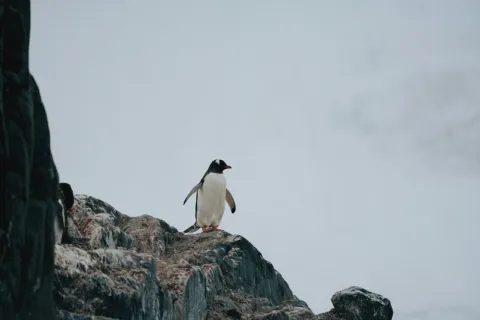
A stocky, orange-billed penguin of the genus Pygoscelis, closest kin to the Adélie and Chinstrap. Its loud, trumpeting call, delivered with head thrown back, carries across the shoreline colonies where expedition landings are made.
Whales & Dolphins
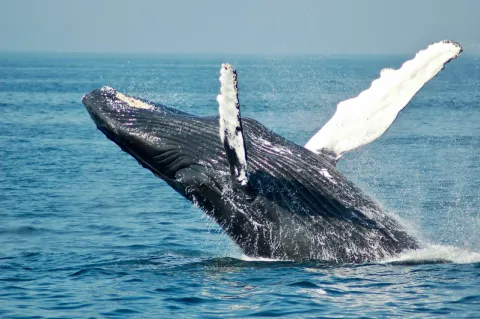
A 14–17 metre baleen whale known for breaching and long pectoral fins, often seen feeding on krill in loose groups along the ice edge.
Whales & Dolphins
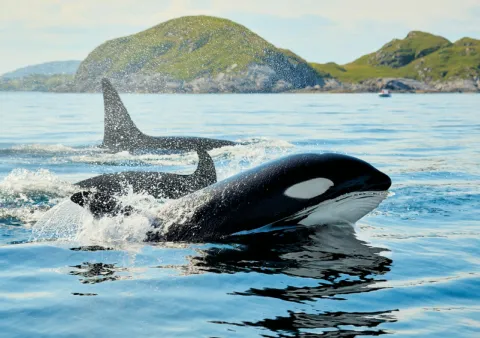
Black and white apex predator instantly recognizable by its pale eye patches, the orca is the largest of the dolphins and one of the ocean's most capable hunters. Sightings often involve a tight-knit family pod working the ice edge together.
Albatrosses & Seabirds
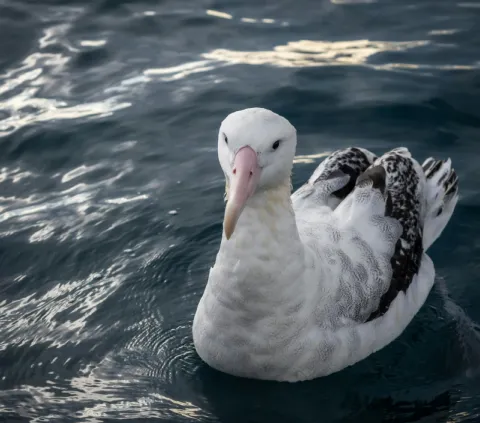
The snowy albatross, better known as the wandering albatross, has the widest wingspan of any living bird alive today. Watch for it riding the wind for hours behind the ship without a single wingbeat.
Everything worth bringing on an Antarctic expedition — an interactive checklist you can tick off as you pack, keep as a personal link and download as a PDF.