Diving & snorkelling
Optional activities · from €1,600Drysuit diving and polar snorkeling reveal a cathedral of translucent blue sea ice, giant sea spiders, and penguins darting underwater with bird-like agility.
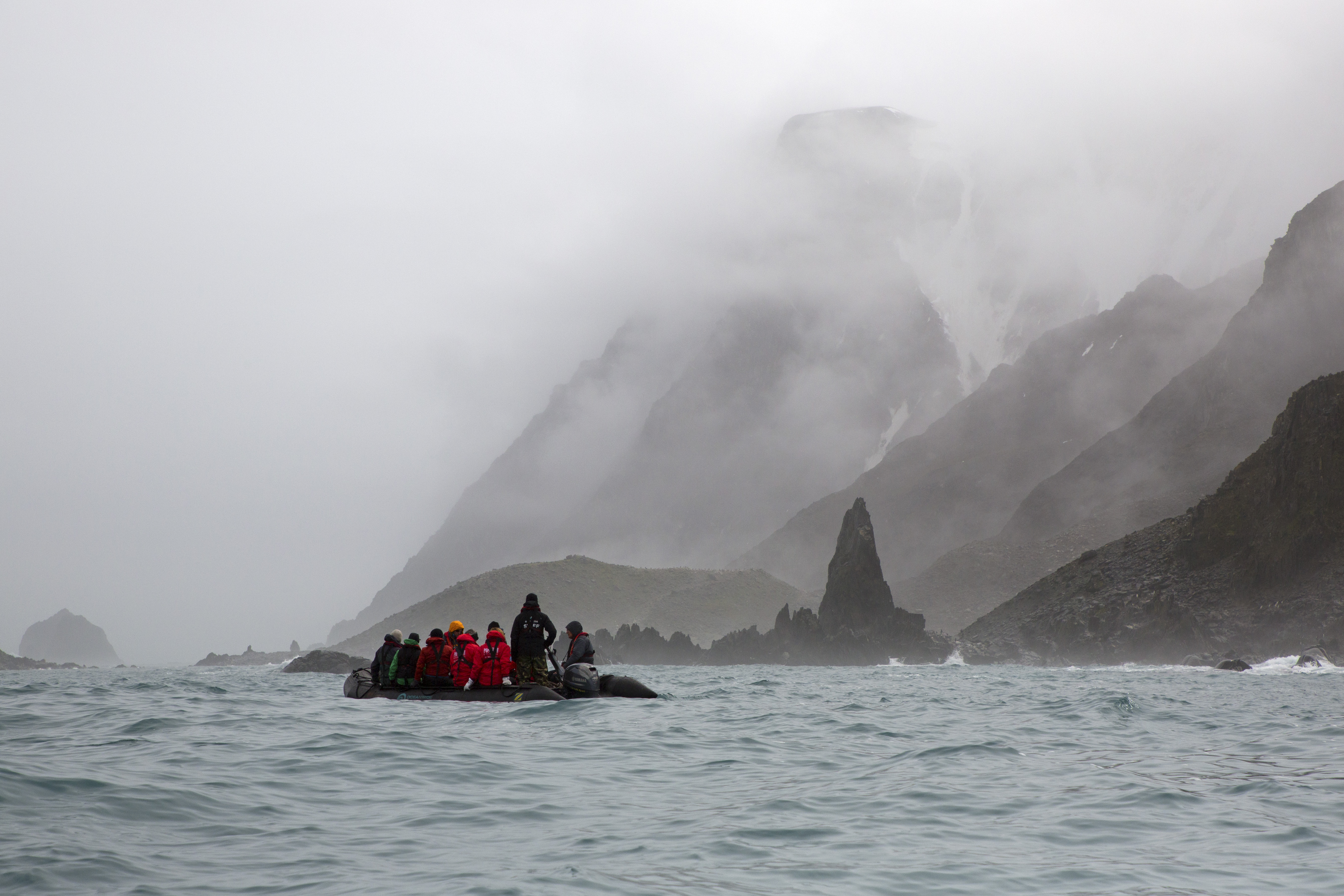
Itinerary and landing sites are indicative and subject to change based on weather, sea ice, and wildlife conditions.
Your voyage begins where the world drops off. Ushuaia, Argentina, reputed to be the southernmost city on the planet, is located on the far southern tip of South America. Starting in the afternoon, you embark from this small resort town on Tierra del Fuego, nicknamed “The End of the World,” and sail the mountain-fringed Beagle Channel for the remainder of the evening.
Several species of albatross follow the vessel into the westerlies, along with storm petrels, shearwaters, and diving petrels.
The Falkland Islands offer an abundance of wildlife that is easily approachable, though caution is always advised. These islands are largely unknown gems, the site of a 1982 war between the UK and Argentina. Not only do various species of bird live here, but chances are great you’ll see both Peale’s dolphins and Commerson’s dolphins in the surrounding waters. During this segment of the voyage, you may visit the following sites: Westpoint Island – This beautiful island hosts a bounty of birdlife, from shore birds near the landing site to black-browed albatrosses on the nest. Among them is a rookery of rockhopper penguins who have to undertake an incredible climb from the sea to get to their nests among the albatrosses. Saunders Island – On Saunders Island you can see the black-browed albatross and its sometimes-clumsy landings, along with breeding imperial shags and rockhopper penguins. King penguins, Magellanic penguins, and gentoos are also found here.
The capital of the Falklands and center of its culture, Port Stanley has some Victorian-era charm: colorful houses, well-tended gardens, and English-style pubs are all to be found here. You can also see several century-old clipper ships nearby, silent witnesses to the hardships of 19th century sailors. The small but interesting museum is also worth a visit, covering the early days of settlement up to the Falklands War. Approximately 2,100 people live in Port Stanley. Admission to the museum is included.
En route to South Georgia, you now cross the Antarctic Convergence. The temperature cools considerably within the space of a few hours, and nutritious water rises to the surface of the sea due to colliding water columns. This phenomenon attracts a multitude of seabirds near the ship, including several species of albatross, shearwaters, petrels, prions, and skuas.
Today you arrive at the first South Georgia activity site. Please keep in mind that weather conditions in this area can be challenging, largely dictating the program. Over the next several days, you have a chance to visit the following sites: Fortuna Bay – A beautiful outwash plain from Fortuna Glacier is home to a large number of king penguins and seals. Here you may also have the chance to follow the final leg of Shackleton’s route to the abandoned whaling village of Stromness. This path cuts across the mountain pass beyond Shackleton’s Waterfall, and as the terrain is partly swampy, be prepared to cross a few small streams. Salisbury Plain, St. Andrews Bay, Gold Harbour – These sites not only house the three largest king penguin colonies in South Georgia, they’re also three of the world’s largest breeding beaches for Antarctic fur seals. Literarily millions breed on South Georgia during December and January. By February the young fur seals are curious and playful and fill the surf with life and fun and large elephant seals come to the beaches to moult. Grytviken – In this abandoned whaling station, king penguins walk the streets and elephant seals lie around like they own the place – because they basically do. Here you might be able to see the South Georgia Museum as well as Shackleton’s grave. In the afternoon of day 10 and depending on the conditions, we will start sailing southwards in the direction of the South Orkney Islands.
There may be sea ice on this route, and at the edge of the ice some south polar skuas and snow petrels could join the other seabirds trailing the vessel south.
Depending on the conditions, you might visit Orcadas Base, an Argentine scientific station on Laurie Island in the South Orkney archipelago. The personnel here will happily show you their facility, where you can enjoy expansive views of the surrounding glaciers. If a visit isn’t possible, you may instead land in Coronation Island’s Shingle Cove.
You‘ve now completed roughly the same route (albeit in the opposite direction) as Sir Ernest Shackleton did using only a small life boat, the James Caird, in spring of 1916. Watching Elephant Island materialize on the horizon after crossing all that water, it’s hard not to marvel at how he and his five-man crew accomplished that feat. The purpose of Shackleton’s crossing was to rescue 22 shipwrecked members of his Imperial Trans-Antarctic Expedition, also known as the Endurance Expedition, who were stranded on Elephant Island. For four and a half months, Shackleton undertook this legendary rescue. Conditions on Elephant Island are severe. The coastline is mostly made up of vertical rock and ice cliffs highly exposed to the elements. If possible you will take the Zodiacs to Point Wild, where the marooned members of Shackleton’s expedition miraculously managed to survive.
If ice permits, you sail into the Antarctic Sound at the northwestern edge of the Weddell Sea. Here colossal tabular icebergs herald your arrival to the eastern edges of the Antarctic Peninsula. Brown Bluff is a potential location for a landing, where you may get the chance to set foot on the continent.
The volcanic islands of the South Shetlands are windswept and often cloaked in mist, but they do offer subtle pleasures: There’s a wide variety of flora (mosses, lichens, flowering grasses) and no small amount of fauna (gentoo penguins, chinstrap penguins, southern giant petrels). In Deception Island, the ship plunges through Neptune’s Bellows and into the flooded caldera. Here you find an abandoned whaling station, and thousands of cape petrels – along with kelp gulls, brown and south polar skuas, and Antarctic terns. A good hike is a possibility in this fascinating and desolate volcanic landscape.
Gray stone peaks sketched with snow, towers of broken blue-white ice, and unique polar wildlife below and above welcome you into the otherworldly expanse of Antarctica. You enter the area around Gerlache Strait, venturing into one of the most beautiful settings Antarctica has to offer. Sites you may visit here include: Neko Harbour – An epic landscape of mammoth glaciers and endless wind-carved snow, Neko Harbour offers opportunities for a Zodiac cruise and landing that afford the closest views of the surrounding alpine peaks. Paradise Bay – You may be able to take a Zodiac cruise in these sprawling, ice-flecked waters, where there’s a good chance you’ll encounter humpback and minke whales. The aim is then to head south. If conditions allow, sites you can visit ‘over’ the polar circle include: Crystal Sound – Your journey takes you south along the Argentine Islands to this ice-packed body of water, and from here across the Polar Circle in the morning. Detaille Island – You may make a landing at an abandoned British research station here, taking in the island’s lofty mountains and imposing glaciers. Pourquoi Pas Island – You might circumnavigate this island, named after the ship of the famous French explorer Jean-Baptiste Charcot. This location is known for its tight fjords and lofty, glacier-crowded mountains. Horseshoe Island – This is the location of the former British Base Y, a remnant of the 1950s that is now unmanned though still equipped with almost all the technology it had while in service. As with all of our Antarctic trips, conditions on the Drake Passage determine the exact time of departure.
Your return voyage is far from lonely. While crossing the Drake, you’re again greeted by the vast array of seabirds remembered from the passage south. But they seem a little more familiar to you now, and you to them.
Every adventure, no matter how grand, must eventually come to an end. It’s now time to disembark in Ushuaia, but with memories that will accompany you wherever your next adventure lies.
Drysuit diving and polar snorkeling reveal a cathedral of translucent blue sea ice, giant sea spiders, and penguins darting underwater with bird-like agility.
Oceanwide Expeditions operates dedicated polar expedition voyages to the White Continent with seasoned expedition teams.
Peak whale activity with humpbacks and orcas, fledging chicks, and open passages south.

End of the World • Subpolar Forests & Gateway Port

Rite of Passage • Albatross Alley

Subantarctic Haven • Albatross Cliffs & 5 Penguin Species

Southern Ocean Arc • Marine Mammal Highway

Serengeti of the South • Hundreds of Thousands of King Penguins

Ice-Bound Isles • Orcadas Base & Adélie Rookeries

Volcanic Isles • Penguin Rookeries & Calderas

Iceberg Highway • Giant Tabular Bergs & Adélie Rookeries

Classic Antarctica • Towering Peaks & Wildlife

Iceberg Alley • Tabular Giants & Emperor Penguins
| Cabin | Occupancy | Price (per person) | Promo | Availability | Source | detail.action |
|---|---|---|---|---|---|---|
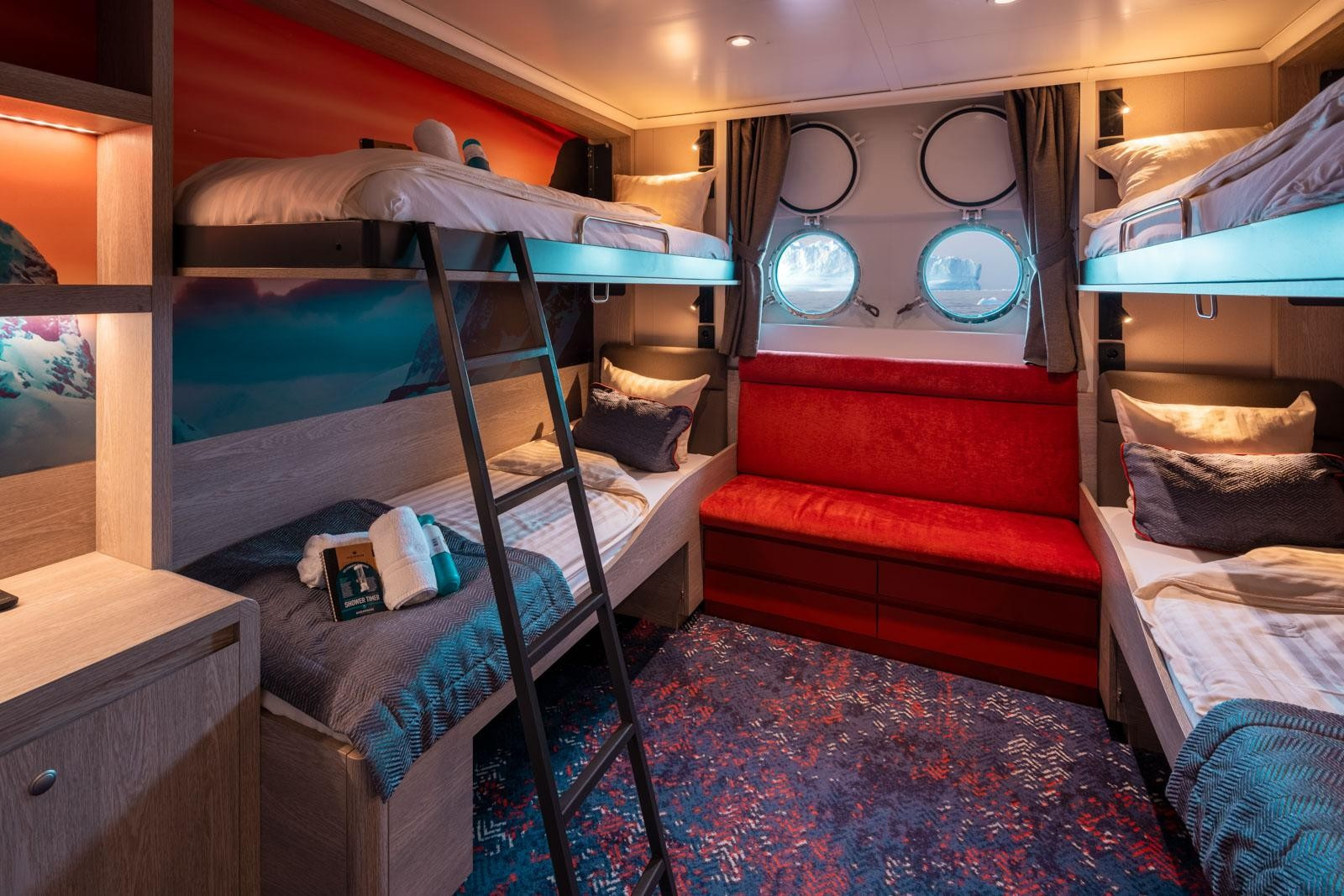
Quadruple Porthole
15,3-16 m² cabin (4 aboard) with two upper-and-lower berth sets, two portholes and a small sofa; suited to families travelling with children.
In your cabin
|
quad | €16,100 | — | sold out | Oceanwide Expeditions | |
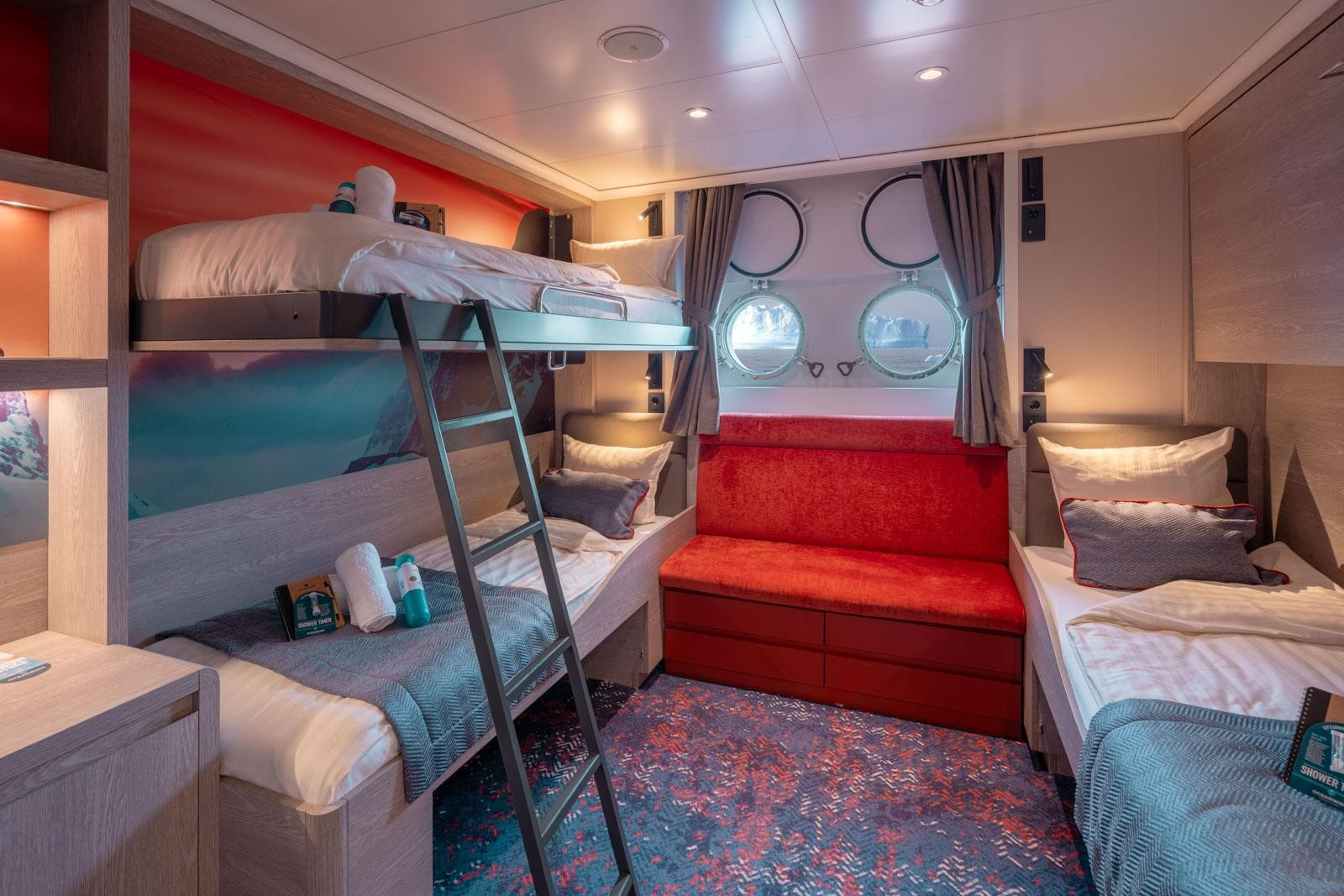
Triple Porthole
15,9-16 m² cabin (2 aboard) with one upper berth and two lower berths, two portholes and a small sofa; suited to families or shared travel.
In your cabin
|
triple | €18,350 | — | sold out | Oceanwide Expeditions | |
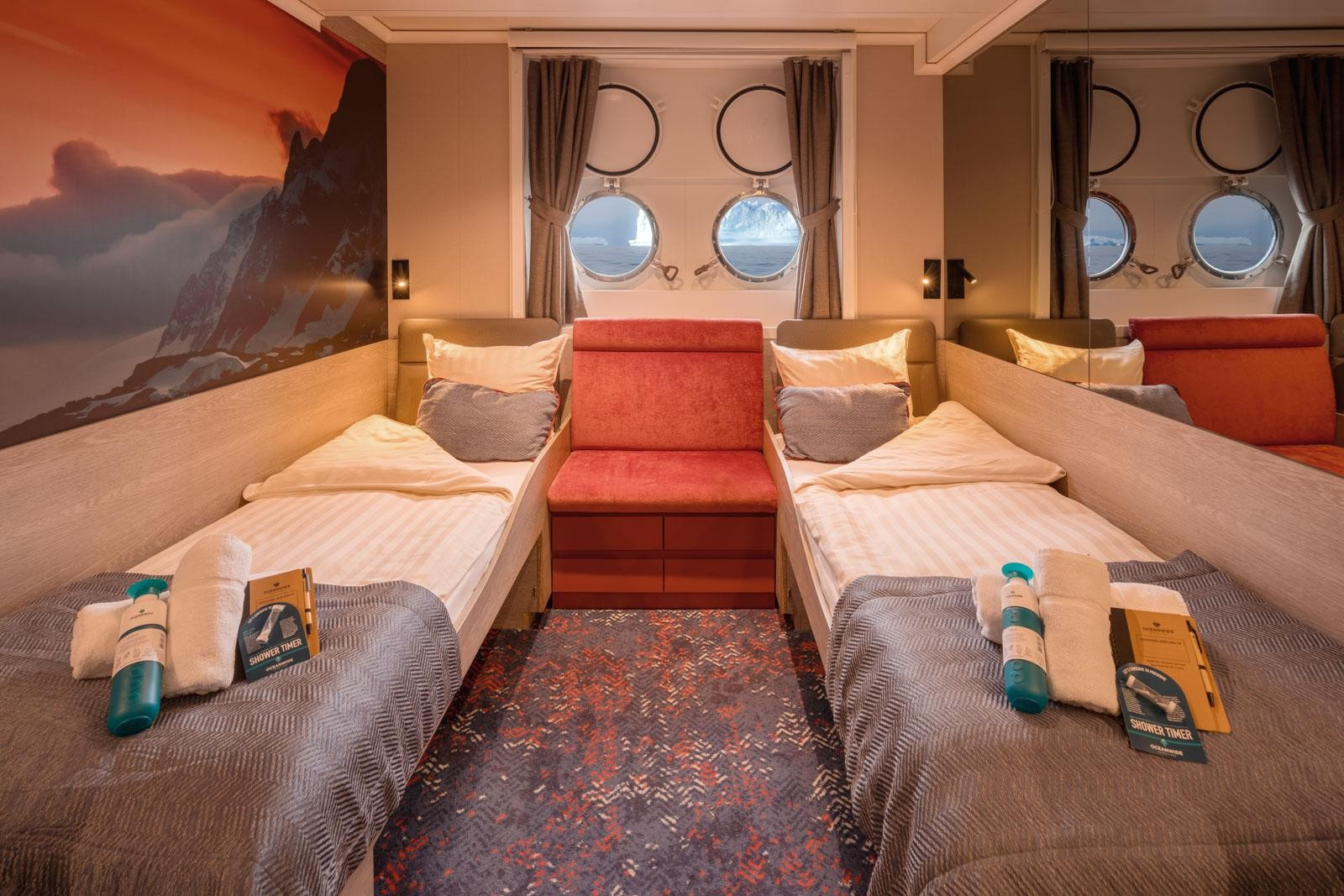
Twin Porthole
13,3-16 m² cabin (27 aboard) with two single beds, two portholes and a small sofa; en-suite shower & toilet.
In your cabin
|
double | €20,050 | — | sold out | Oceanwide Expeditions | |
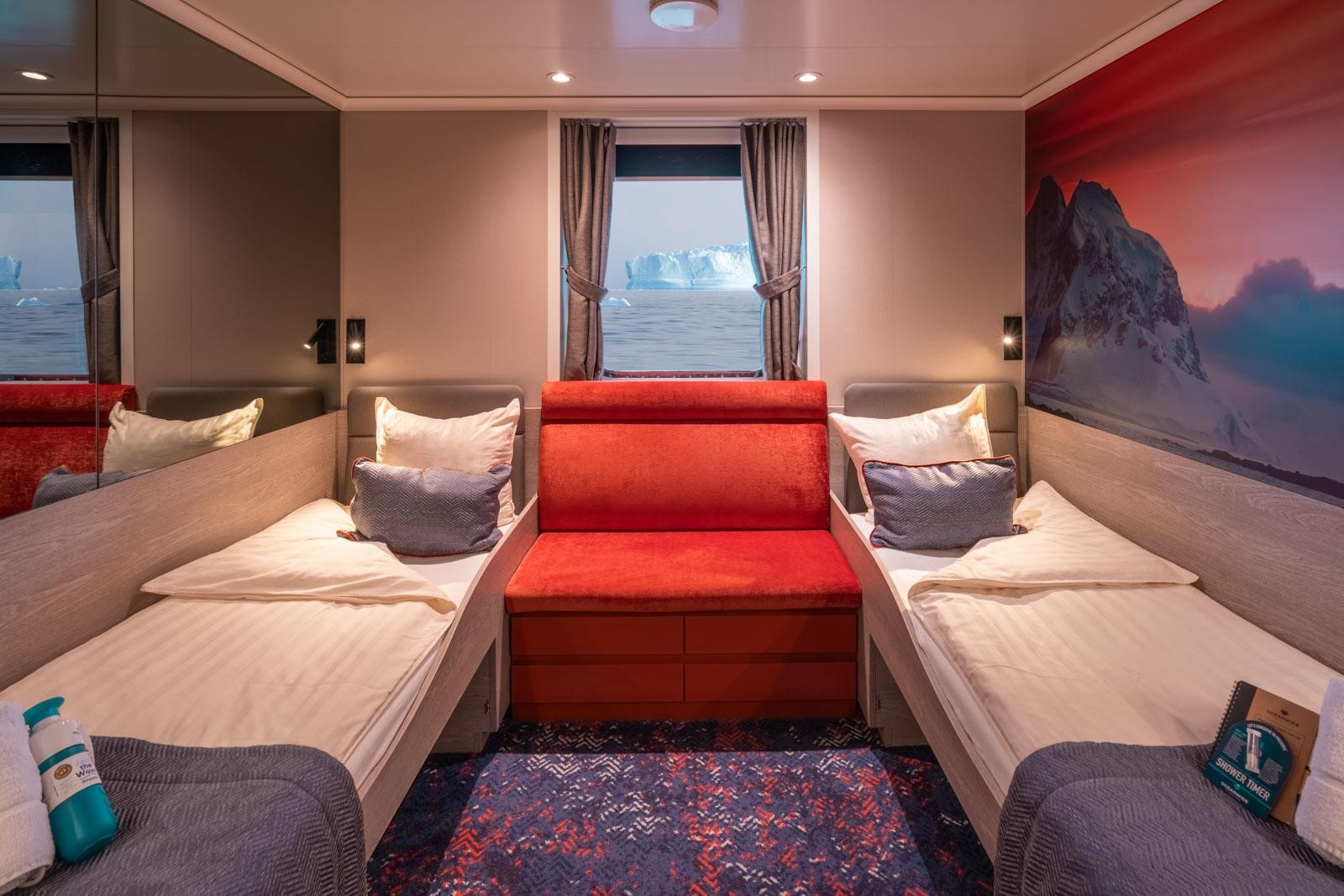
Twin Window
12,1-14,3 m² cabin (14 aboard) with two single beds, one window and a small sofa; some windows may be partially obstructed by the ship's design.
In your cabin
|
double | €21,050 | — | sold out | Oceanwide Expeditions | |
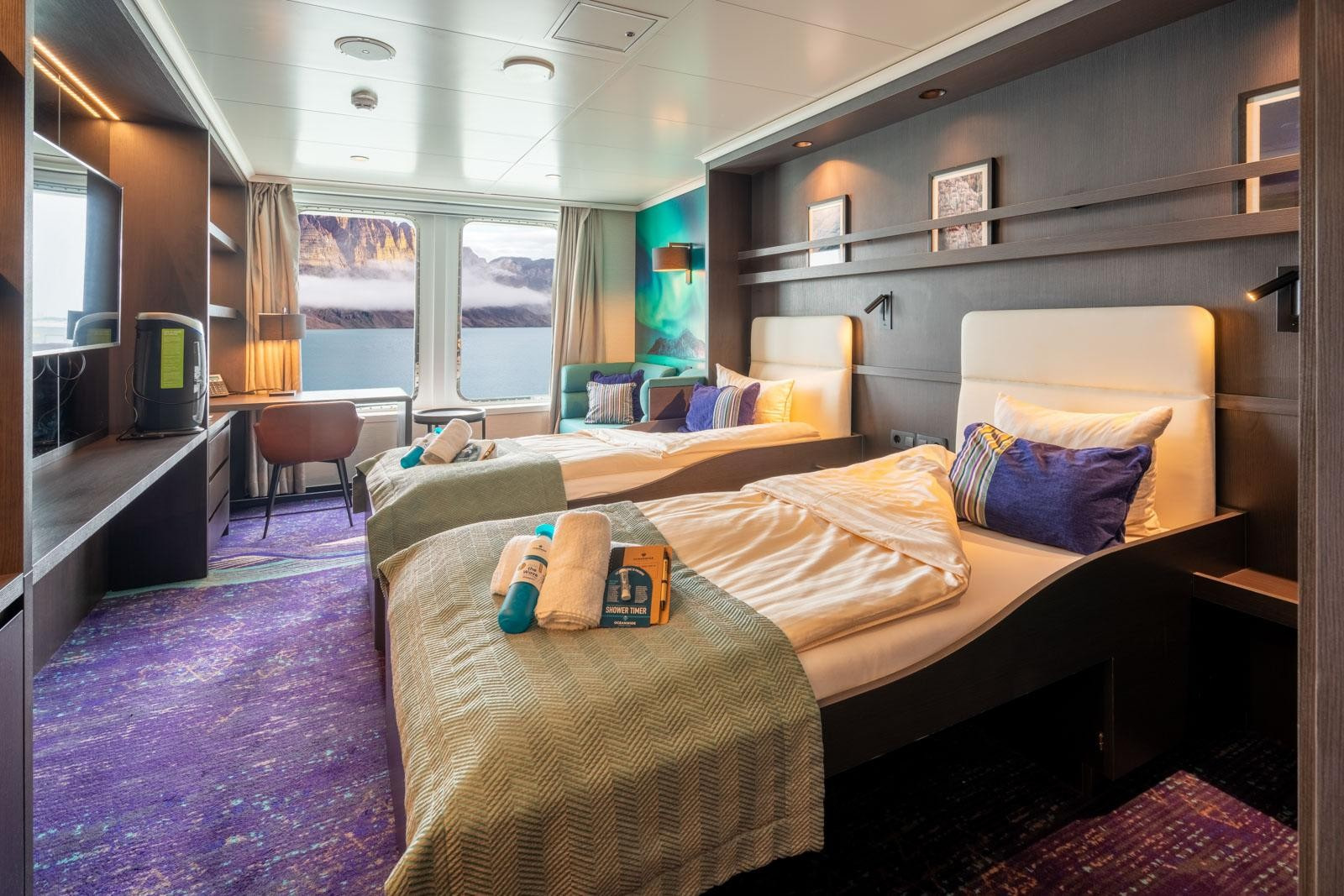
Twin Deluxe
Best price
19,4-21,3 m² cabin (11 aboard) with two single beds, two windows and a sofa; en-suite shower & toilet.
In your cabin
|
double | €23,050 | — | available | Oceanwide Expeditions | View at operator |
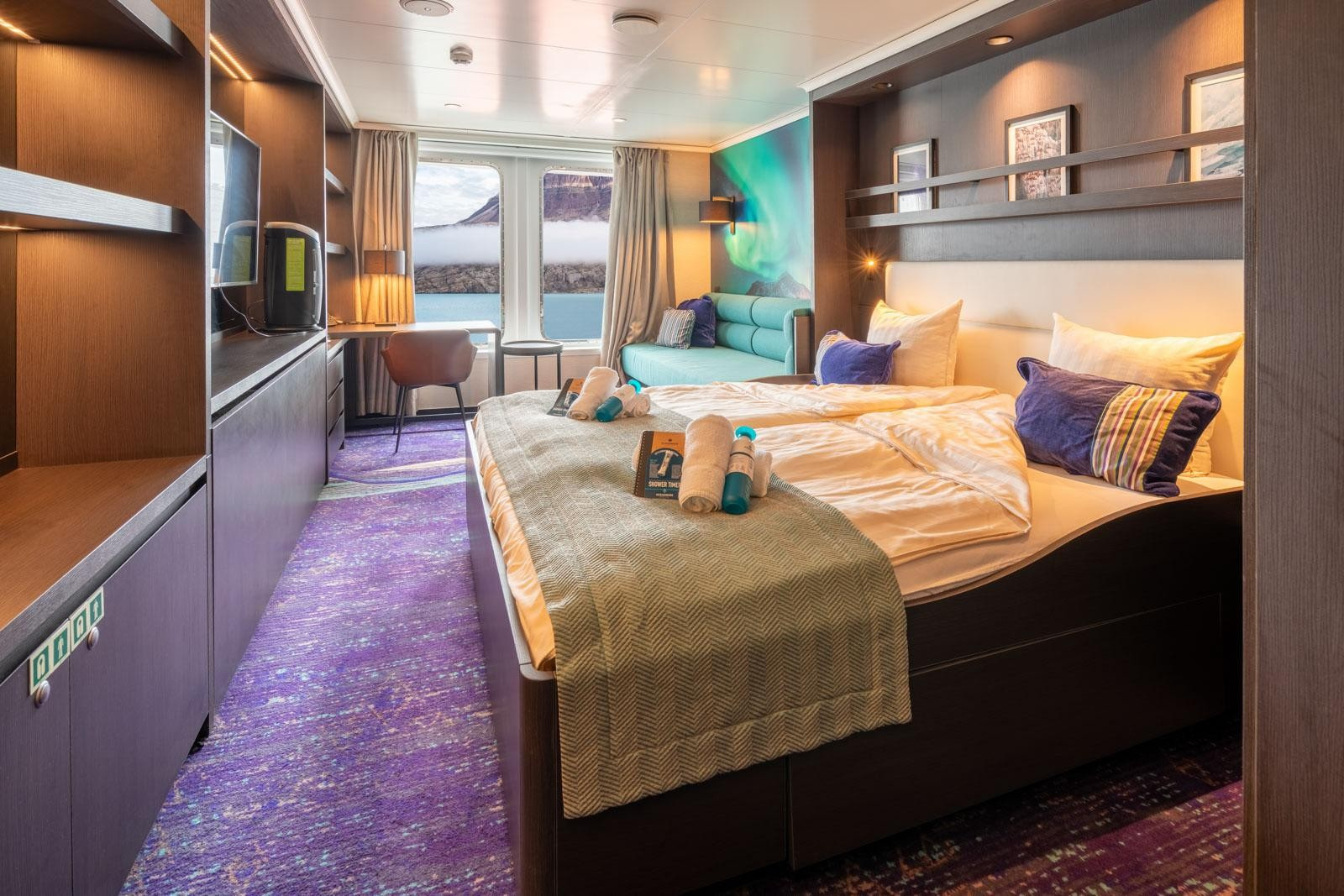
Superior
20,7-21,3 m² cabin (8 aboard) with one double bed, two windows and a sofa; en-suite shower & toilet.
In your cabin
|
— | €24,150 | — | sold out | Oceanwide Expeditions | |
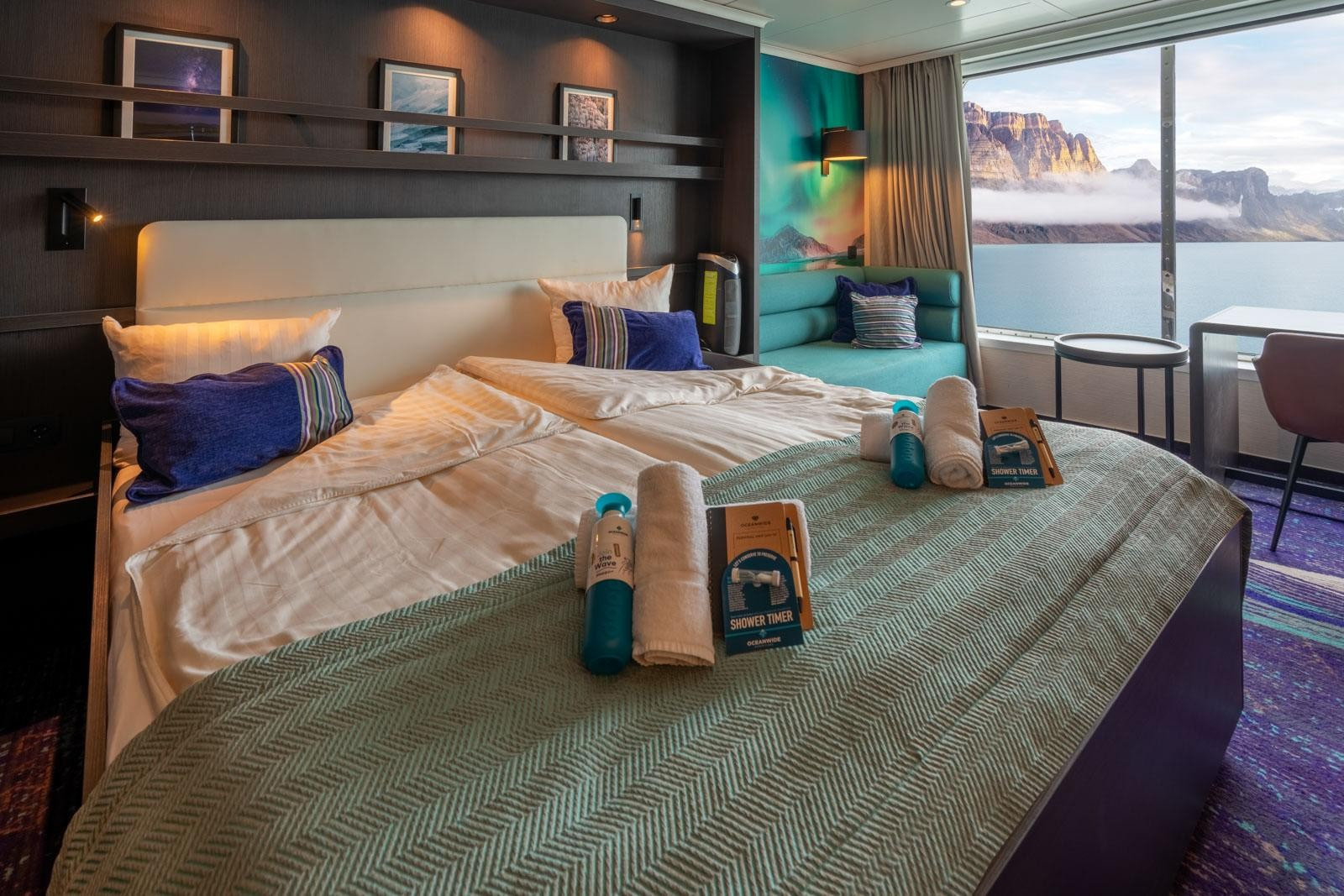
Junior Suite
Suite of 19,2-20 m² (8 aboard) with one double bed and a double window; en-suite shower & toilet.
In your cabin
|
— | €25,350 | — | sold out | Oceanwide Expeditions | |
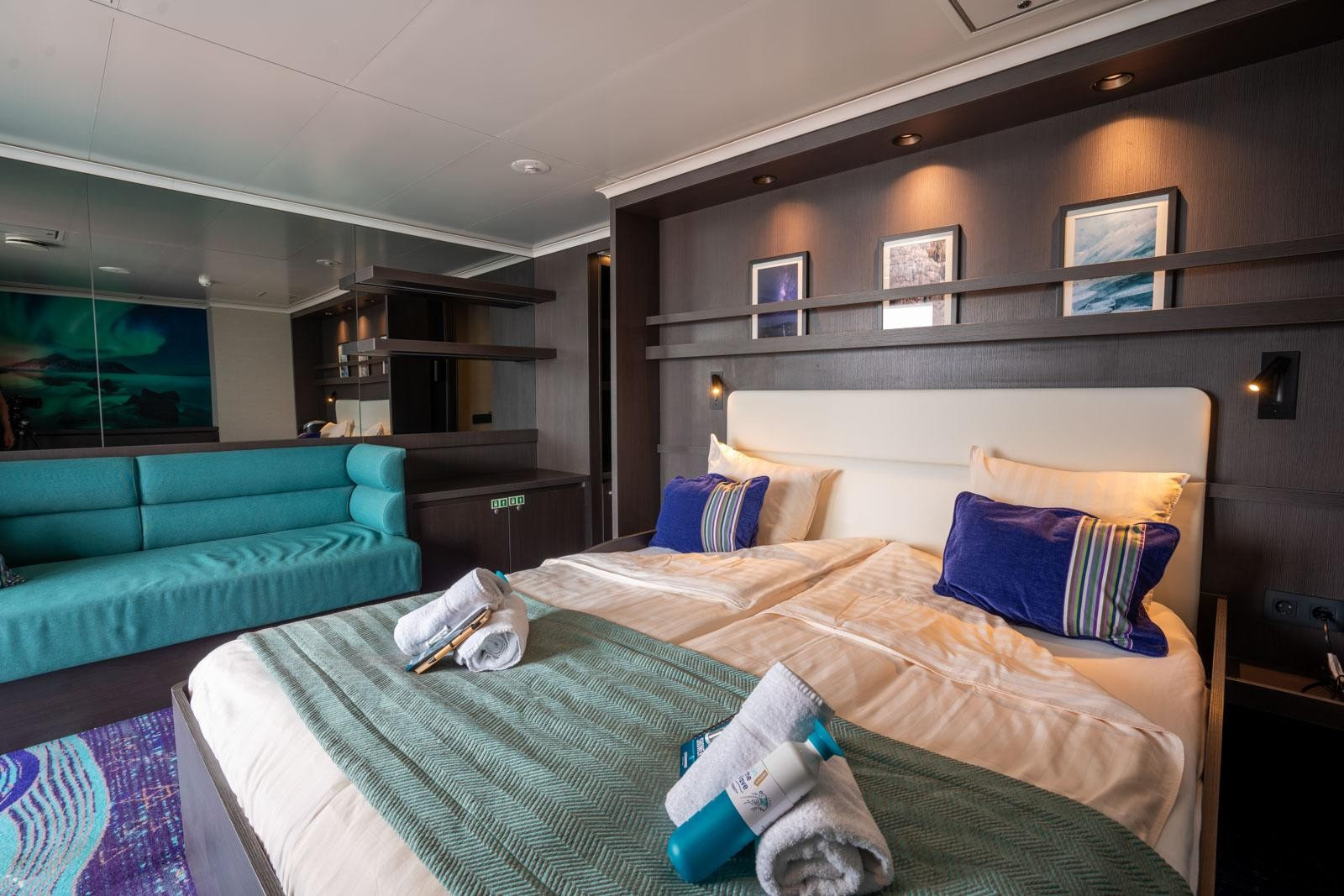
Grand Suite with private balcony
Top-category suite (6 aboard) with one double bed, a double window and a private balcony; sofa and en-suite shower & toilet.
In your cabin
|
— | €29,300 | — | sold out | Oceanwide Expeditions |
Prices are captured from operator websites and may change — the operator's site is authoritative. Captured Sep 3, 2026 06:14 UTC.
Everything worth bringing on an Antarctic expedition — an interactive checklist you can tick off as you pack, keep as a personal link and download as a PDF.
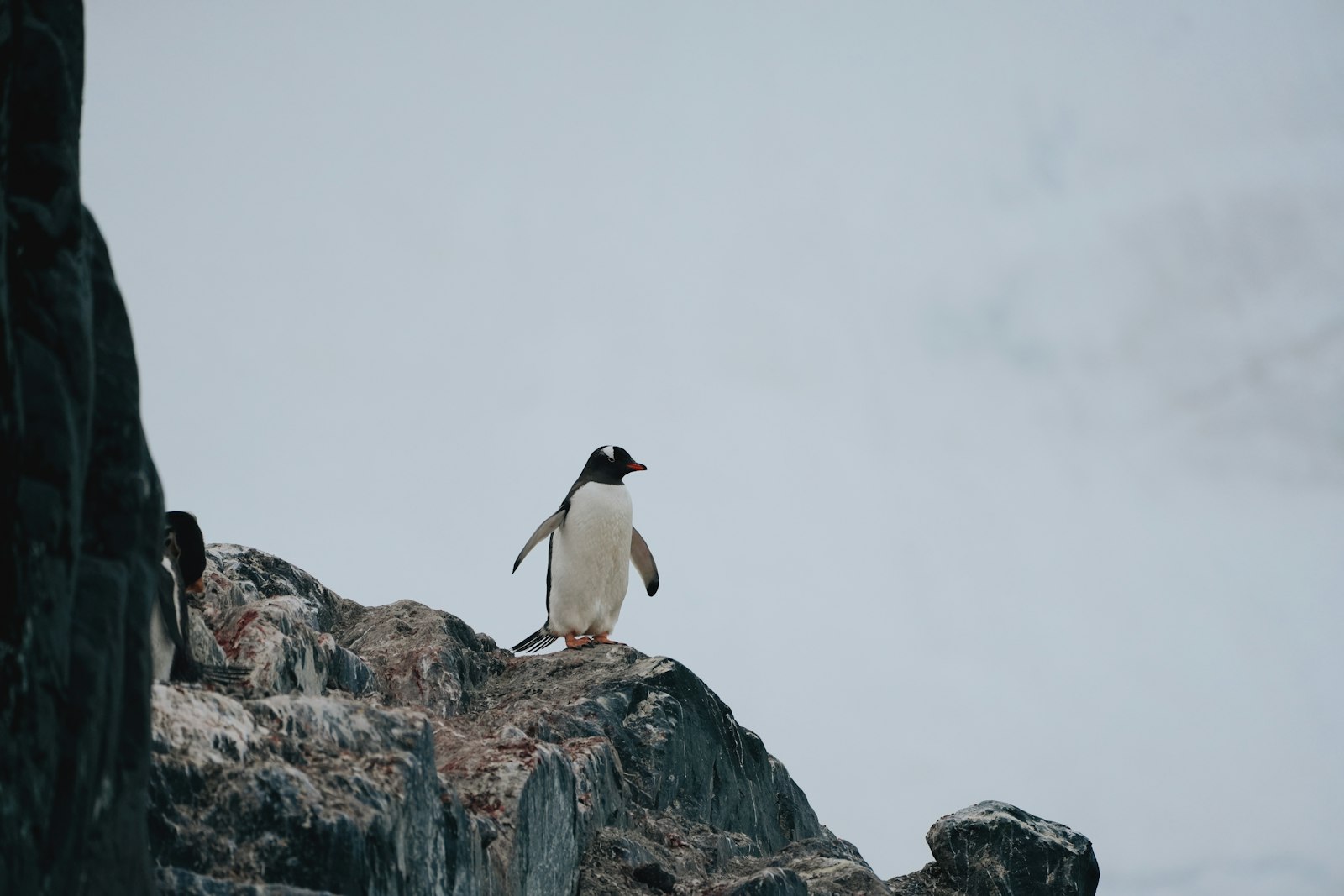
Wildlife
A stocky, orange-billed penguin of the genus Pygoscelis, closest kin to the Adélie and Chinstrap. Its loud, trumpeting call, delivered with head thrown back, carries across the shoreline colonies where expedition landings are made.
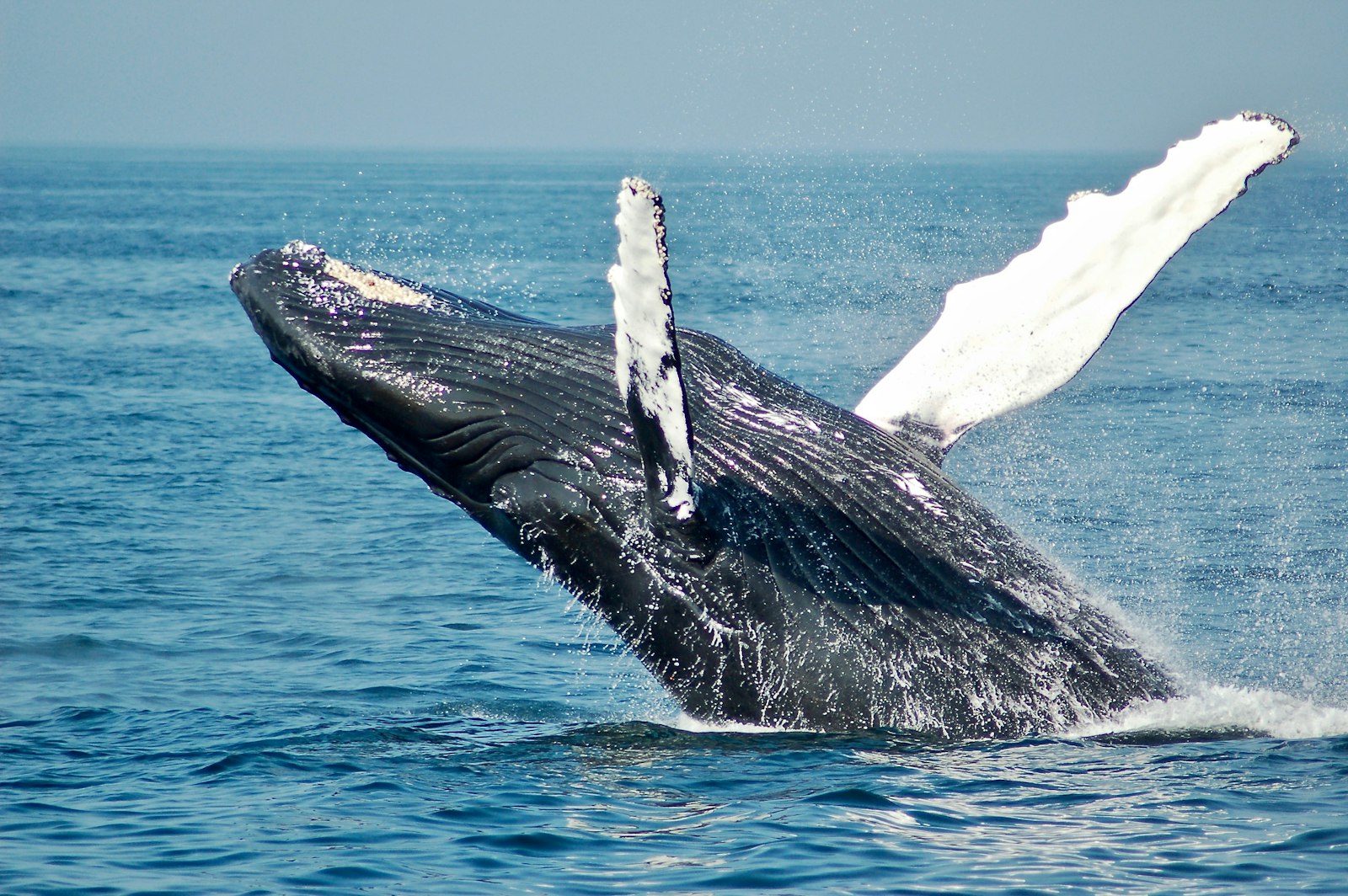
Wildlife
A 14–17 metre baleen whale known for breaching and long pectoral fins, often seen feeding on krill in loose groups along the ice edge.
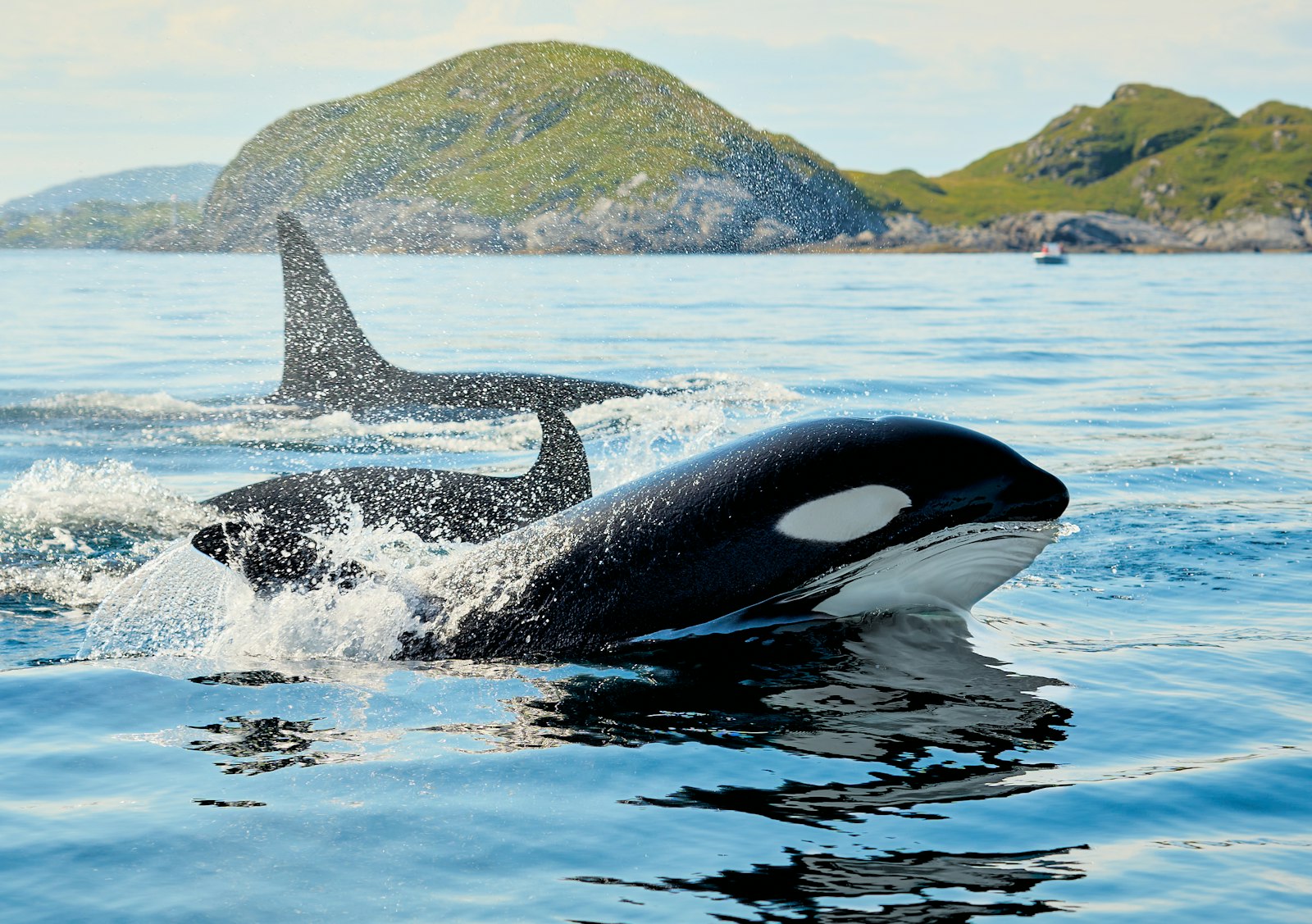
Wildlife
Black and white apex predator instantly recognizable by its pale eye patches, the orca is the largest of the dolphins and one of the ocean's most capable hunters. Sightings often involve a tight-knit family pod working the ice edge together.
Wildlife
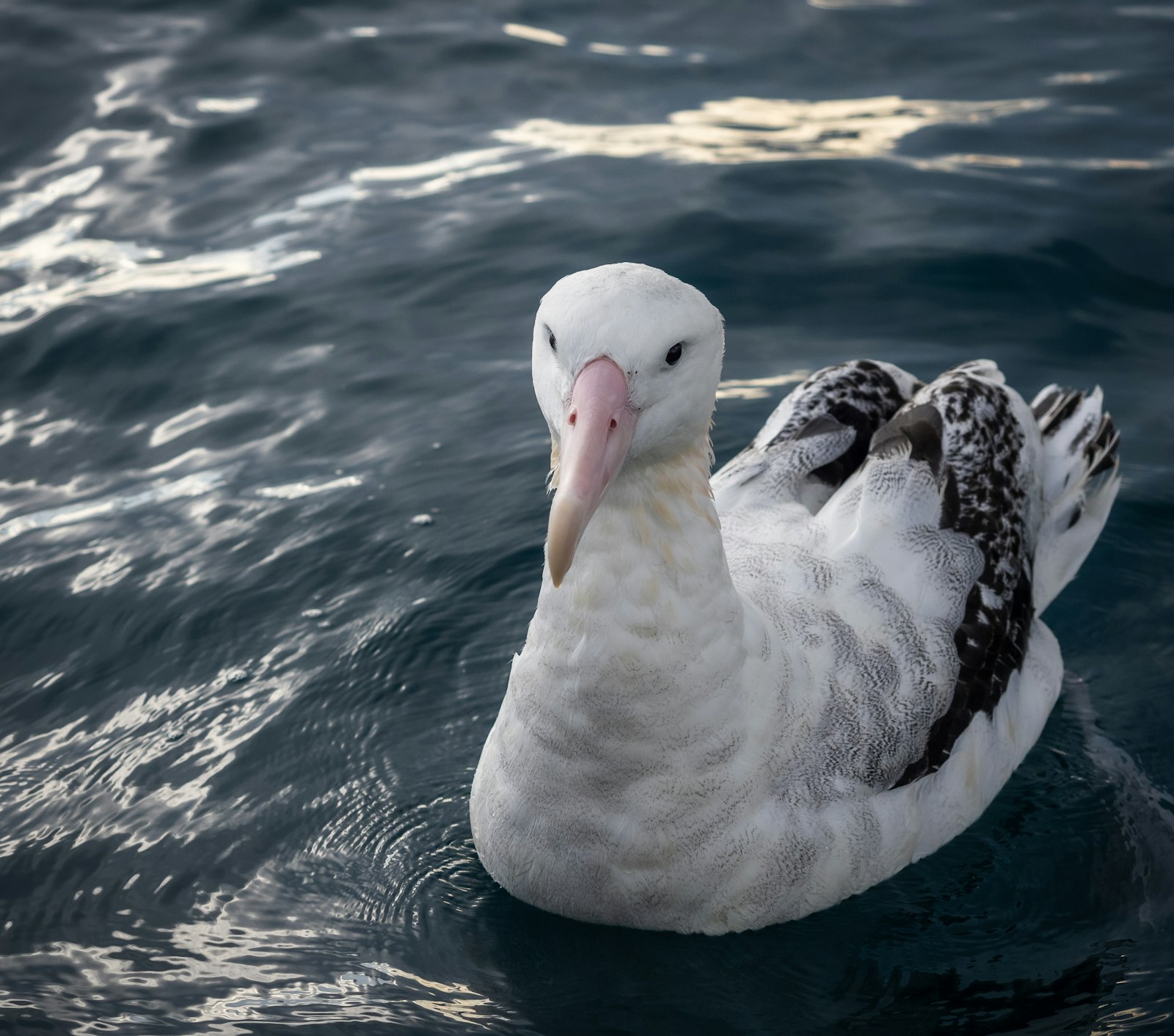
The snowy albatross, better known as the wandering albatross, has the widest wingspan of any living bird alive today. Watch for it riding the wind for hours behind the ship without a single wingbeat.