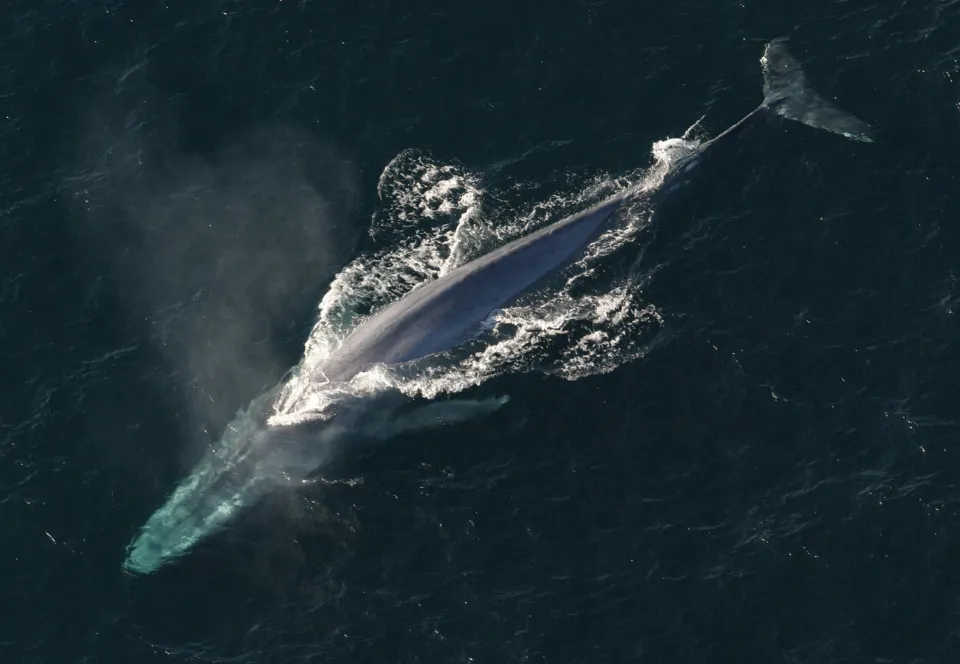
The Southern Ocean subspecies, Balaenoptera musculus intermedia, is the one you have a chance of meeting on an Antarctic voyage, generally between December and March when whales move south to feed. Krill is effectively their only food, and the dense swarms found around the Antarctic Peninsula and through the Scotia Sea are exactly what draws them in. Sightings are never guaranteed — blue whales are usually solitary or seen in twos, with no social structure beyond a mother and calf travelling together — but the reward is a body that can stretch close to 30 metres, longer than most ships' zodiacs laid end to end.
Waters off South Georgia are another place expedition staff keep binoculars ready, given the productive feeding grounds nearby. Blue whales were hunted here heavily through the whaling era, brought to the edge of extinction before the International Whaling Commission's 1966 ban, and numbers are still recovering; the species remains listed as endangered. What you are looking for from the deck is a tall, single blow and a long grey-blue back that seems to take a while to finish surfacing — a fair indication of just how much animal is beneath the water.