| Scientific name | Eudyptes moseleyi |
|---|---|
| Conservation status | EN Endangered |
| Standing height | 52–58 cm |
| Weight | 2.4–3.8 kg |
| Primary diet | Krill, pelagic crustaceans, squid & small fish |
| Diving & swimming | To 100 m · two-footed vertical cliff jumper |
| Did you know? | Recognized as a distinct species in 2006 by its flamboyant, shoulder-brushing golden crests and deeper calls, roughly 85% of the world population breeds on Tristan da Cunha and Gough Island. |
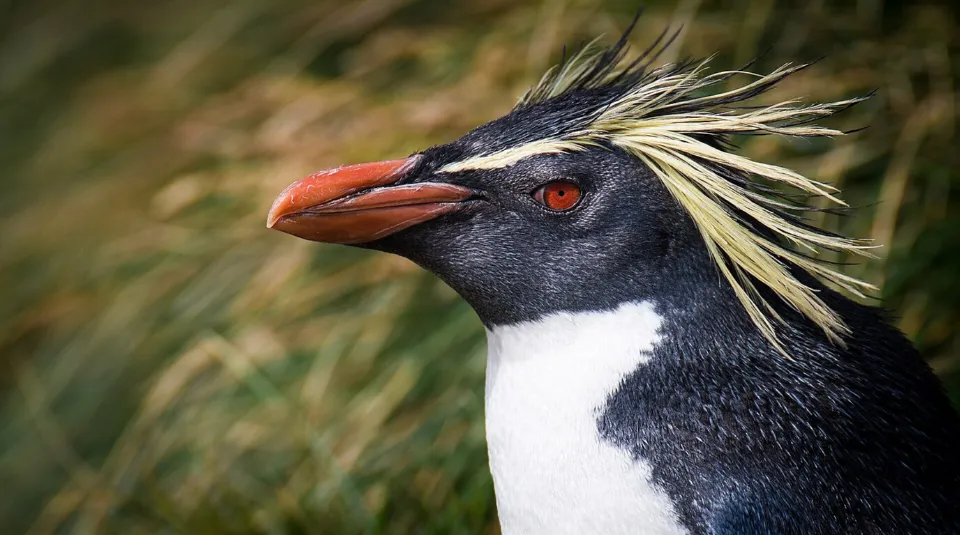
Split as a full species from the southern rockhopper after genetic and vocal studies, the northern rockhopper penguin sports dramatically longer, denser, pendulous yellow-gold eyebrow tassels and a deeper bass voice. True to its name, it bounds two-footed up vertical volcanic ledges slicked with Atlantic swell.
Breeding along warmer sub-Antarctic islands near the Subtropical Convergence, vagrant and foraging birds enter northern Scotia Sea waters, and Atlantic Odyssey positioning voyages ascending from Ushuaia and South Georgia toward Tristan da Cunha and Gough Island enjoy close Zodiac views right below their cliffside rookeries.
When to Spot Northern Rockhopper Penguin (Oct–Mar)
Colonies build stone nests in November, hatch chicks across December–January, and fledge crèches into coastal waters during February.
Frequently asked questions about Northern Rockhopper Penguin
Browse all Antarctica expedition FAQsWhen is the best time to see Northern Rockhopper Penguin in Antarctica?
Peak sighting months for Northern Rockhopper Penguin are November, December, January. Colonies build stone nests in November, hatch chicks across December–January, and fledge crèches into coastal waters during February. See our penguin chick hatching calendar and Early vs Peak vs Late Summer guide.
Where can you spot Northern Rockhopper Penguin on an Antarctica cruise?
Northern Rockhopper Penguin (Eudyptes moseleyi) is primarily encountered in Scotia Sea, with 149 upcoming expedition departures visiting these habitats. Key field traits: diet of Krill, pelagic crustaceans, squid & small fish; Diving & swimming: To 100 m · two-footed vertical cliff jumper. Learn how daily Zodiac excursions and shore landings work.
How close can you approach Northern Rockhopper Penguin under IAATO rules?
Under mandatory IAATO wildlife distance and biosecurity rules, visitors ashore must keep at least 5 metres (15 feet) from Northern Rockhopper Penguin, give birds the right of way on colony trails, and never kneel or place gear on the snow. If a curious penguin walks closer on its own, remain still and let it pass. See our recommended camera lenses (70–200mm / 100–400mm).