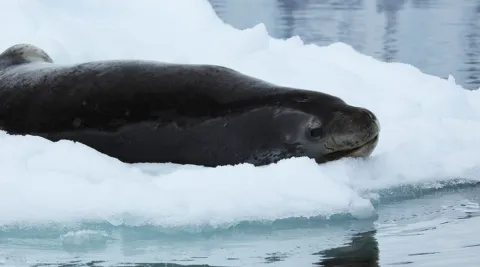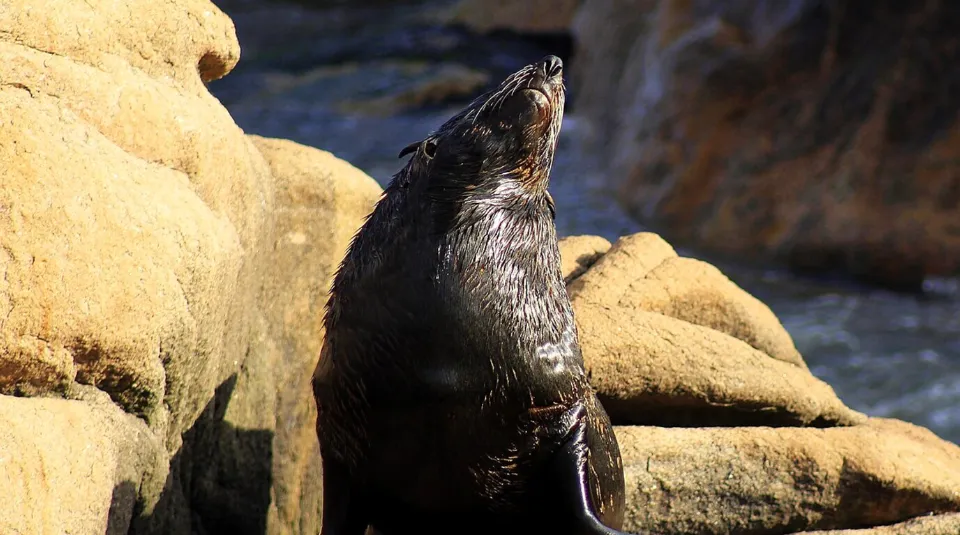
| Scientific name | Arctocephalus australis |
|---|---|
| Conservation status | LC Least Concern |
| Body length | 1.4–1.9 m |
| Weight | 40–190 kg |
| Primary diet | Anchovy, sprat, mackerel, squid & lobster krill |
| Diving & swimming | To 170 m · up to 7 min |
| Did you know? | Between foraging bouts off Cape Horn and the Falklands, rafts float at the surface “jug-handling” — looping hind and foreflippers together above the water to warm blood in the sun. |
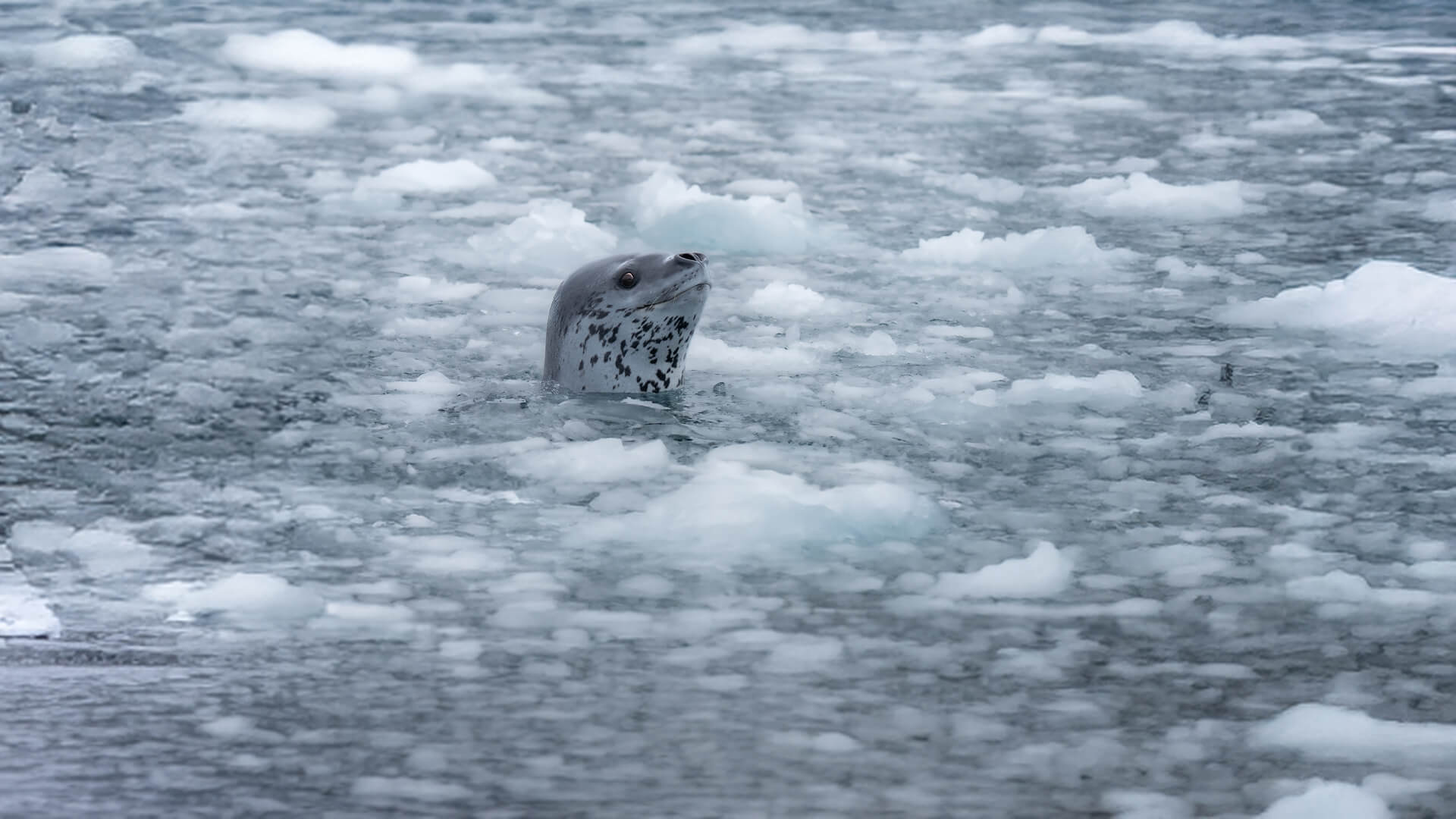
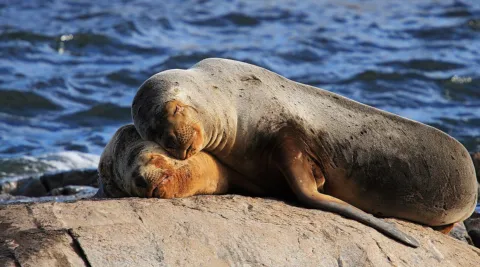
Smaller and sleeker than the heavy-jowled South American sea lion with which it shares southern rocky headlands, the South American fur seal has visible external ear pinnae, a sharply pointed upturned nose, and a dense double coat that keeps it warm in cold Humboldt and Cape Horn currents. Bulls defend wave-washed boulder territories almost twice their females’ weight.
Travellers sailing out of Ushuaia through the Beagle Channel, rounding Cape Horn, or exploring outer islands in the Falklands regularly watch rafts of fur seals floating upright with flippers held high like sails to regulate body temperature.
When to Spot South American Fur Seal (Oct–Mar)
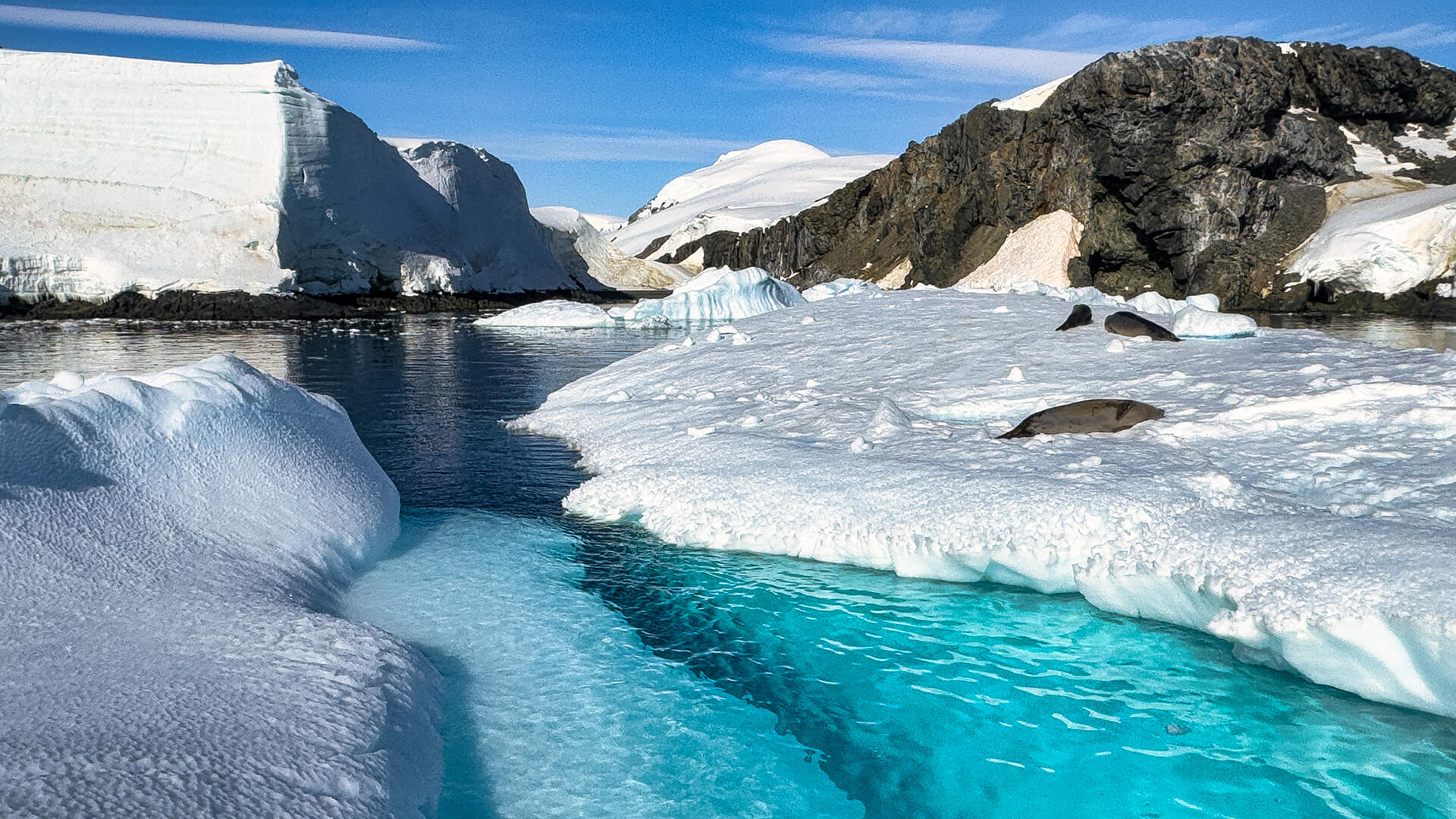
Haul-outs along ice floes and sub-Antarctic beaches run reliably from November through February, shifting from breeding ashore to coastal foraging.
Frequently asked questions about South American Fur Seal
Browse all Antarctica expedition FAQsWhen is the best time to see South American Fur Seal in Antarctica?
Peak sighting months for South American Fur Seal are November, December, January. Haul-outs along ice floes and sub-Antarctic beaches run reliably from November through February, shifting from breeding ashore to coastal foraging. Compare conditions in our Early, Peak & Late Summer FAQ.
Where can you spot South American Fur Seal on an Antarctica cruise?
South American Fur Seal (Arctocephalus australis) is primarily encountered in Beagle Channel, Tierra del Fuego, Patagonia, Cape Horn, Falkland Islands, with 704 upcoming expedition departures visiting these habitats. Key field traits: diet of Anchovy, sprat, mackerel, squid & lobster krill; Diving & swimming: To 170 m · up to 7 min. Learn how daily Zodiac excursions and shore landings work.
How close can you approach South American Fur Seal under IAATO rules?
Under mandatory IAATO wildlife distance and biosecurity rules, visitors must maintain at least 15 to 25 metres (50–80 feet) from South American Fur Seal ashore or on ice floes and never walk between a seal and the water. See our polar telephoto lens recommendations.