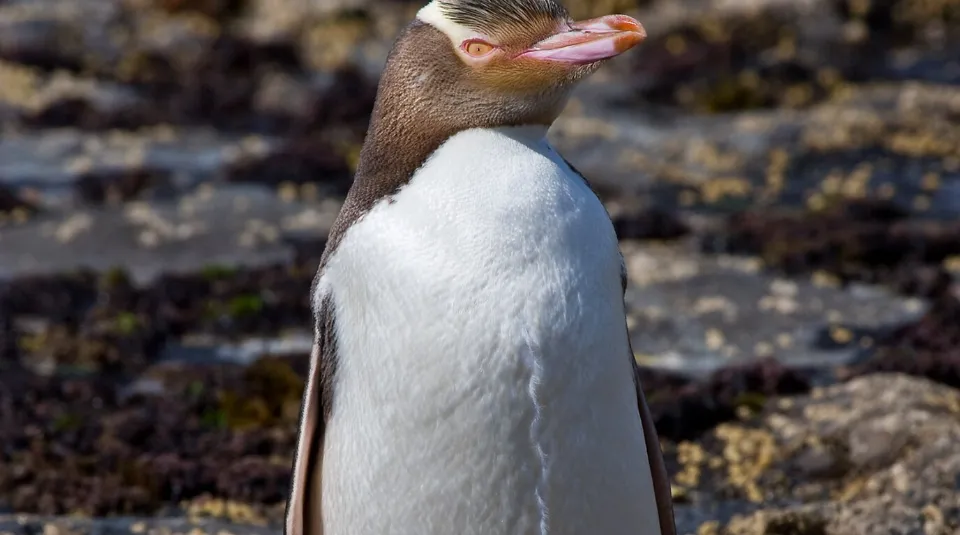
| Scientific name | Megadyptes antipodes |
|---|---|
| Conservation status | EN Endangered |
| Standing height | 62–79 cm |
| Weight | 4.2–8.5 kg |
| Primary diet | Opalfish, red cod, sprat & arrow squid |
| Diving & swimming | Seafloor dives to 160 m · solitary forest nester |
| Did you know? | Most evolutionarily ancient of living penguins and one of the rarest (~4,000 birds), the hoiho refuses colonial rookeries — insisting on visual privacy beneath coastal rata forest out of sight of any neighbour. |
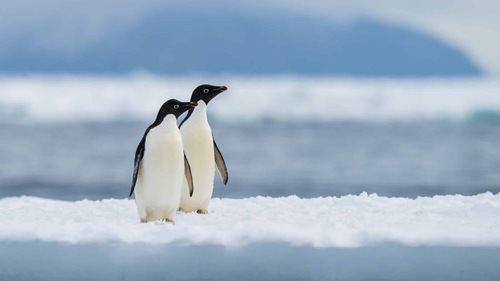
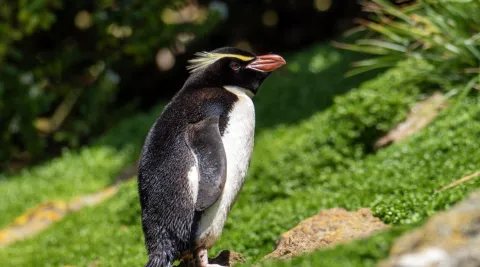
The yellow-eyed penguin, or hoiho, is New Zealand's own — the sole surviving member of the genus Megadyptes and, despite the name, more closely related to the crested penguins than to the little blue penguin it was once grouped with. On mainland colonies such as Otago Peninsula the species has fallen by around three-quarters since the mid-1990s, a decline driven by disease outbreaks and pressures at sea from fisheries and pollution, which makes sightings on the outer islands all the more valuable.
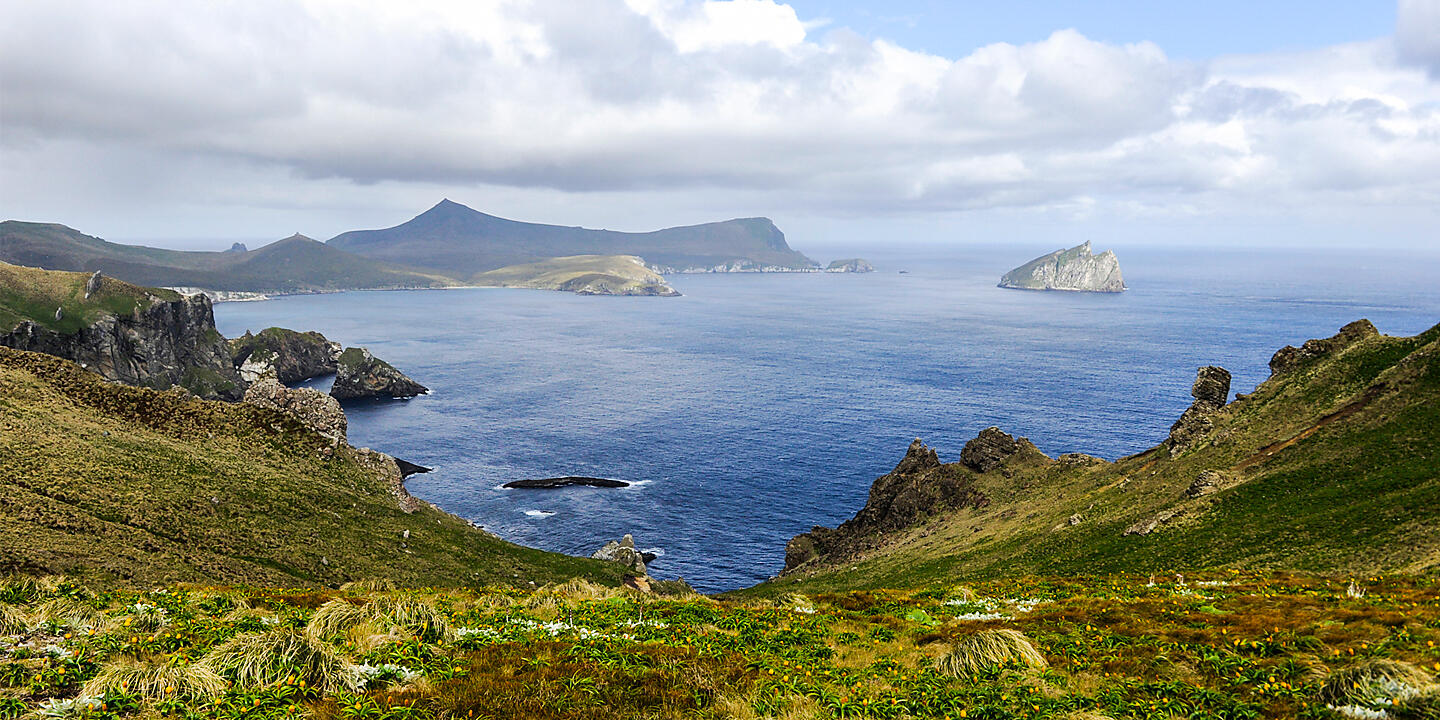
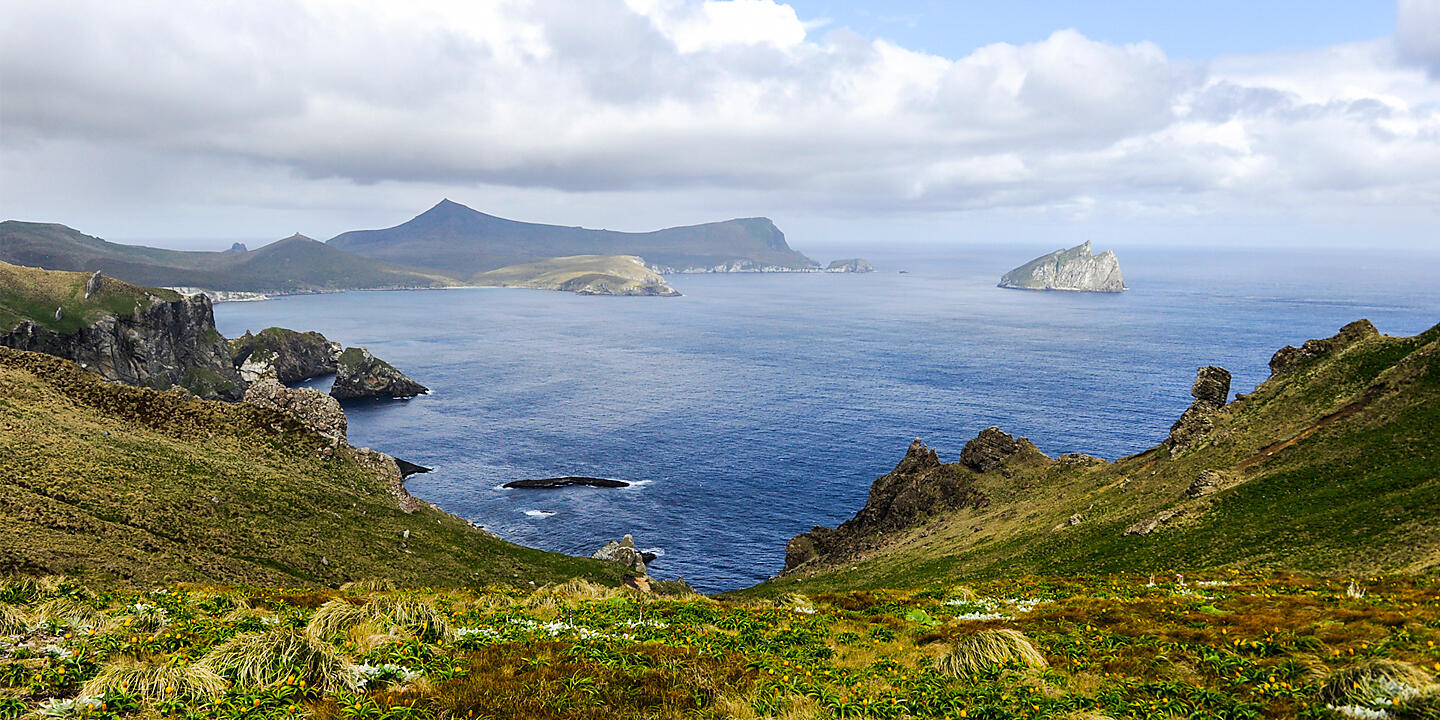
Travellers on voyages to Campbell Island and the Auckland Islands have a chance to see breeding birds in one of the species' last secure strongholds, well away from the mainland's declining colonies. Like most penguins it feeds mainly on fish, and pairs return to the same stretch of coast each season to nest in dense vegetation just above the shoreline rather than in open colonies.
Landings are brief and weather-dependent, so a hoiho sighting is never guaranteed, but expedition staff know the likely landing beaches and will time shore visits around the birds' movements to and from the water where possible.
When to Spot Yellow-Eyed Penguin (Oct–Mar)
Colonies build stone nests in November, hatch chicks across December–January, and fledge crèches into coastal waters during February.
Frequently asked questions about Yellow-Eyed Penguin
Browse all Antarctica expedition FAQsWhen is the best time to see Yellow-Eyed Penguin in Antarctica?
Peak sighting months for Yellow-Eyed Penguin are November, December, January. Colonies build stone nests in November, hatch chicks across December–January, and fledge crèches into coastal waters during February. See our penguin chick hatching calendar and Early vs Peak vs Late Summer guide.
Where can you spot Yellow-Eyed Penguin on an Antarctica cruise?
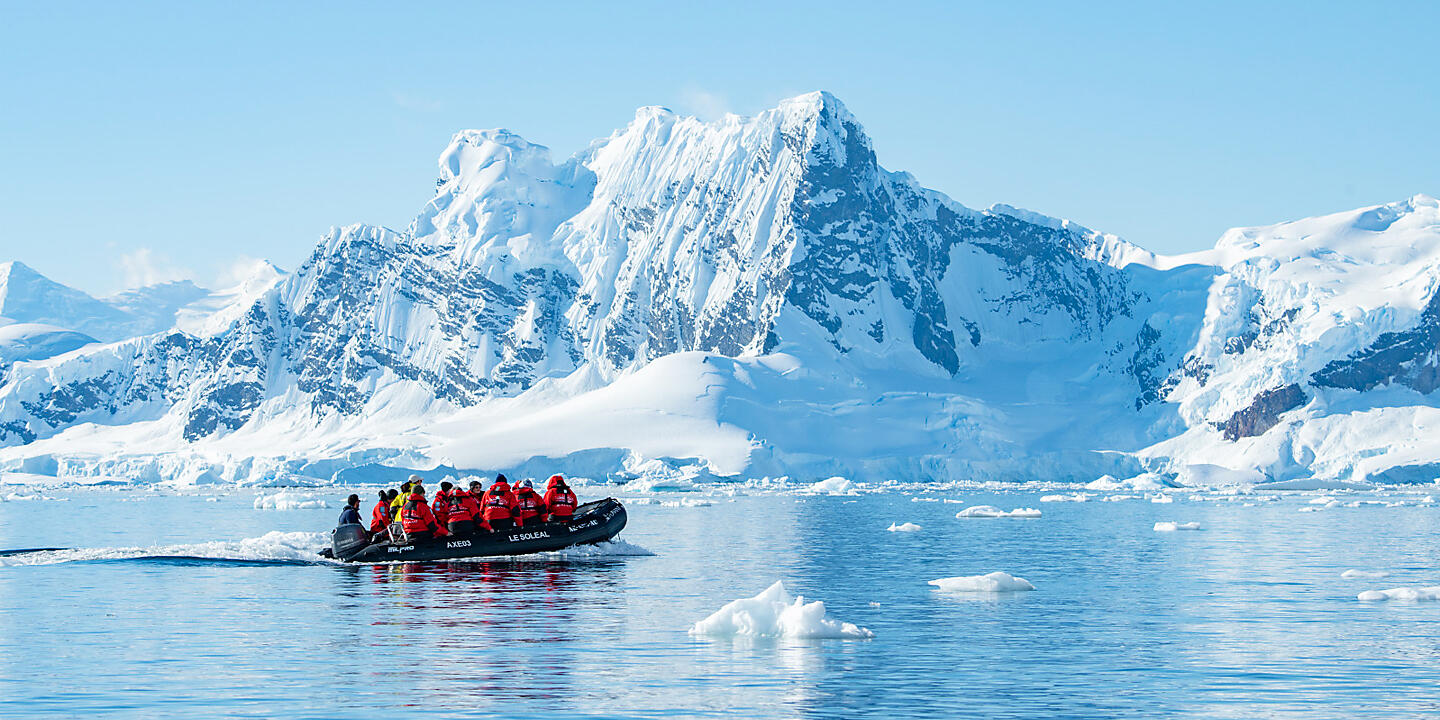
Yellow-Eyed Penguin (Megadyptes antipodes) is primarily encountered in Auckland Islands, Campbell Island, with 9 upcoming expedition departures visiting these habitats. Key field traits: diet of Opalfish, red cod, sprat & arrow squid; Diving & swimming: Seafloor dives to 160 m · solitary forest nester. Learn how daily Zodiac excursions and shore landings work.
How close can you approach Yellow-Eyed Penguin under IAATO rules?
Under mandatory IAATO wildlife distance and biosecurity rules, visitors ashore must keep at least 5 metres (15 feet) from Yellow-Eyed Penguin, give birds the right of way on colony trails, and never kneel or place gear on the snow. If a curious penguin walks closer on its own, remain still and let it pass. See our recommended camera lenses (70–200mm / 100–400mm).