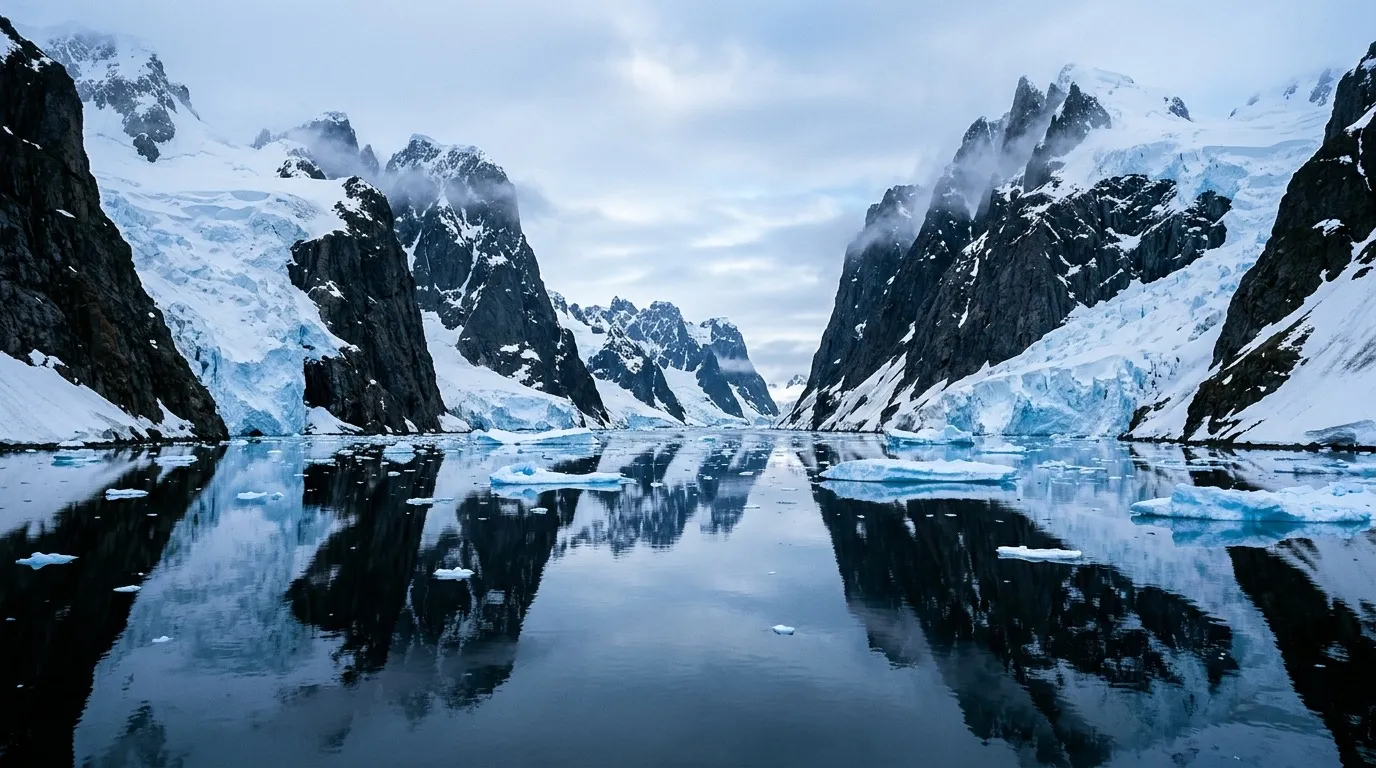
Antarctic ice falls into two distinct families — frozen ocean salt water and ancient freshwater glacier ice:
Sea ice (frozen ocean water, 1–3 m thick): Fast ice is sea ice frozen solid ("fastened") to the shoreline or grounded icebergs, forming the stable platforms where Emperor penguins breed in spring. Pack ice (drift ice) is broken sea-ice floes driven by wind and currents that ice-strengthened ships (PC6 / 1A Super) navigate through.
Glacial ice (freshwater snow compressed over thousands of years): Tabular icebergs are flat-topped, vertical-walled giants — sometimes miles long — that calve off floating ice shelves in the Weddell and Ross seas. Brash ice is the floating carpet of shattered glacier fragments under 2 metres across that crackle as your Zodiac glides through a bay, while bergy bits and growlers are dense, car- to house-sized blocks of cobalt-blue glacial ice.