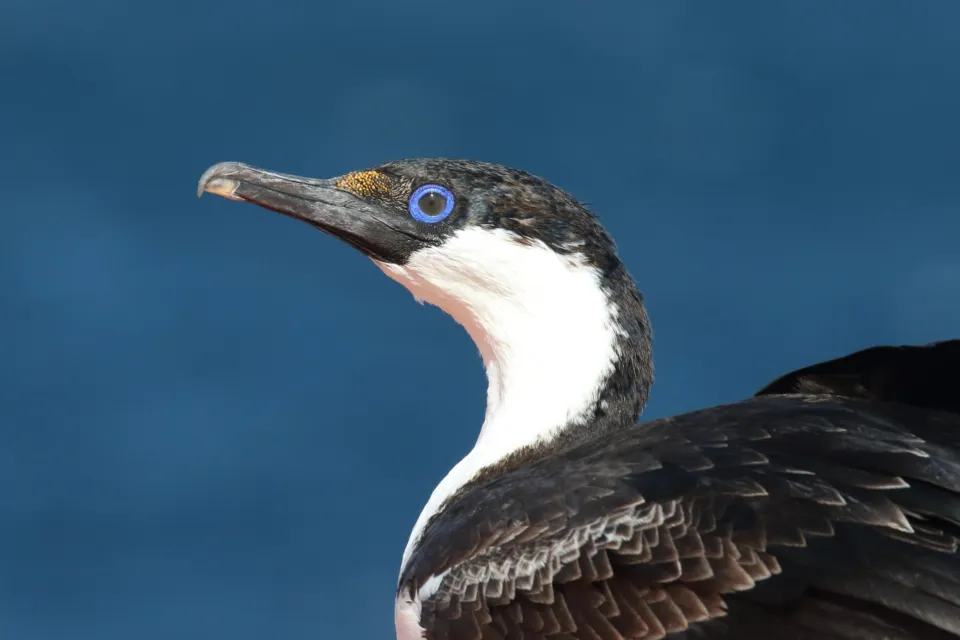
Cruise past the rocky headlands of the Antarctic Peninsula and you'll likely pick out small, dark-plumaged birds standing stiffly upright on ledges and ice floes — this is the Antarctic shag, easy to tell apart from the penguins and petrels sharing the same cliffs by its slender neck and hooked bill. Zodiac cruises around the South Shetland Islands and along the ice-choked waters of the Weddell Sea often bring passengers close enough to notice the bright patch of skin around its eye, a feature that has earned it nicknames like blue-eyed shag and imperial cormorant among expedition guides.
Further south, small colonies turn up on the exposed rock outcrops of the Antarctic Sound, nesting apart from the penguin rookeries. The Antarctic shag is notable for being the only cormorant established on the Antarctic continent itself, and some ornithologists still treat it as the same species as the more widespread Imperial shag found further north — so don't be surprised if a naturalist on board debates the point over dinner.