| Scientific name | Ardenna gravis |
|---|---|
| Conservation status | LC Least Concern |
| Length & wingspan | 43–51 cm · 1.05–1.22 m |
| Weight | 715–950 g |
| Primary diet | Squid, Fuegian sprat, sand lance & krill |
| Flight & range | 30,000+ km Atlantic figure-eight loop |
| Did you know? | Over five million pairs nest almost exclusively in Tristan da Cunha and Gough Island, visiting Falkland and Patagonian shelves before sweeping north past Newfoundland and Greenland each boreal summer. |
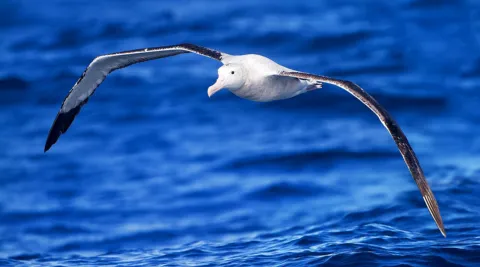
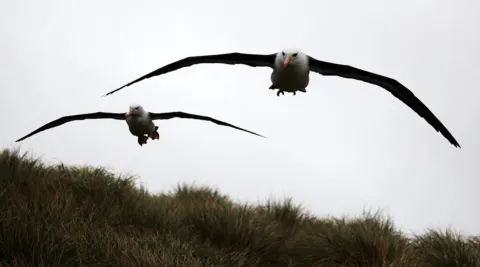
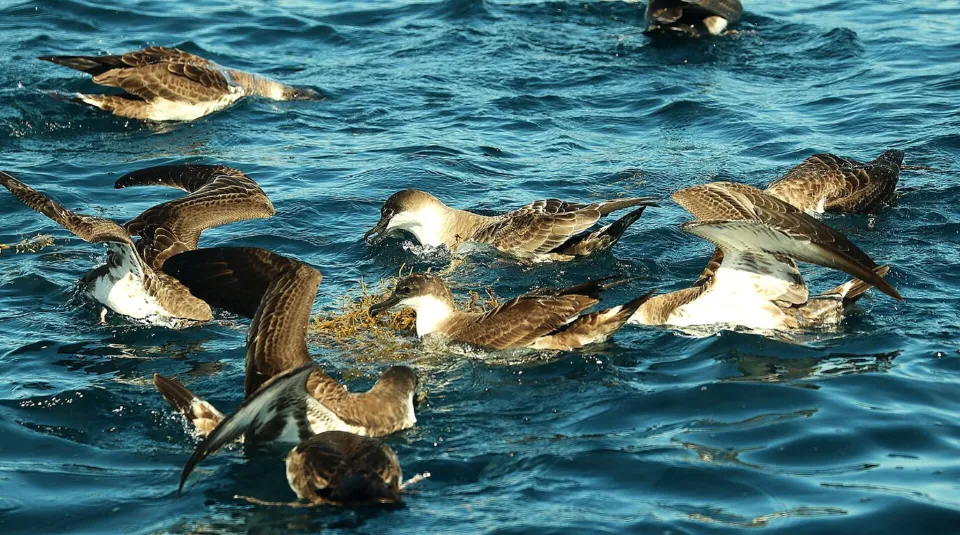
Clean-cut and powerful in flight, the great shearwater wears a sharply demarcated dark cap separated from its brown back by a partial white neck collar, a bright white rump horseshoe above the tail, and clean white underparts smudged dark across the belly.
Although almost its entire global population nests in the Tristan da Cunha group, small satellite colonies breed in the Falkland Islands and hundreds of thousands gather from December to March over rich shelf waters between Patagonia, the Falklands, and Tierra del Fuego.
When to Spot Great Shearwater (Oct–Mar)
Courtship and cliff nesting peak from November to January across the Drake Passage, Falkland Islands, South Georgia, and Peninsula headlands.
Frequently asked questions about Great Shearwater
Browse all Antarctica expedition FAQsWhen is the best time to see Great Shearwater in Antarctica?
Peak sighting months for Great Shearwater are November, December, January. Courtship and cliff nesting peak from November to January across the Drake Passage, Falkland Islands, South Georgia, and Peninsula headlands. Compare conditions in our Early, Peak & Late Summer FAQ.
Where can you spot Great Shearwater on an Antarctica cruise?
Great Shearwater (Ardenna gravis) is primarily encountered in Beagle Channel, Tierra del Fuego, Patagonia, Scotia Sea, South Georgia, Falkland Islands, with 739 upcoming expedition departures visiting these habitats. Key field traits: diet of Squid, Fuegian sprat, sand lance & krill; Flight & range: 30,000+ km Atlantic figure-eight loop. Learn how daily Zodiac excursions and shore landings work.
How close can you approach Great Shearwater under IAATO rules?
Under mandatory IAATO wildlife distance and biosecurity rules, visitors ashore must keep at least 5 metres (15 feet) from Great Shearwater, give birds the right of way on colony trails, and never kneel or place gear on the snow. If a curious penguin walks closer on its own, remain still and let it pass. See our recommended camera lenses (70–200mm / 100–400mm).