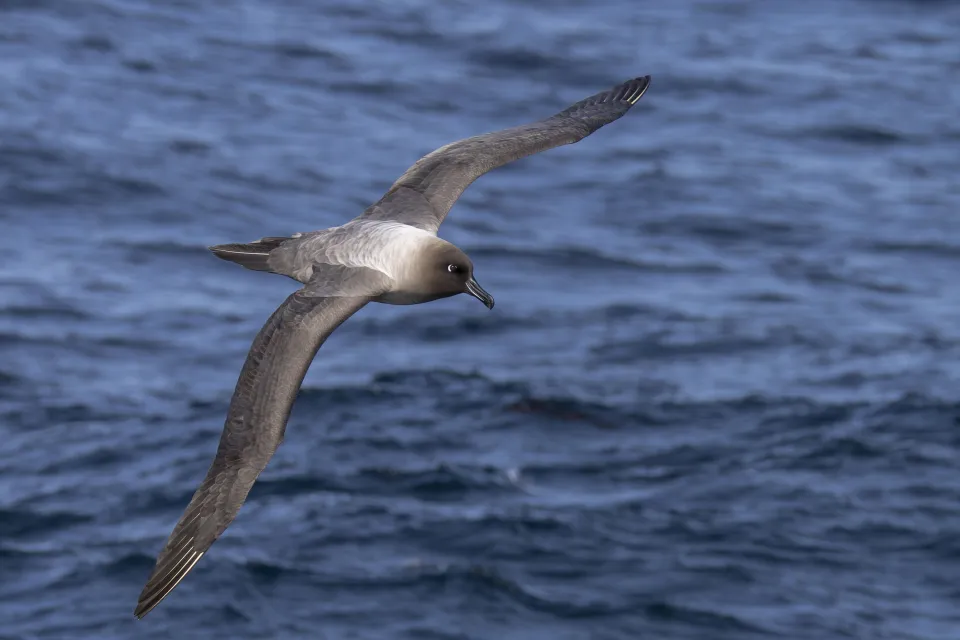
The light-mantled albatross is easy to mistake for a shadow at first — a slim, sooty-grey shape that banks and glides along cliff faces with barely a wingbeat. It shares its genus, Phoebetria, with the sooty albatross, and the two are often confused by first-time visitors until you notice the paler, silvery mantle across its back that gives this bird its name.
On our voyages it turns up reliably around the tussock-covered slopes and cliffs of South Georgia, along the wild coastlines of the Auckland Islands, and over Macquarie Island's exposed headlands, where nesting pairs favour sheltered ledges out of reach of the wind. Travellers crossing the Drake Passage often spot one riding the air just off the stern, tracking the ship for long stretches without a single flap.
The species was first described by Johann Reinhold Forster in 1785, from a specimen collected south of the Cape of Good Hope — a reminder of how far these birds range across the Southern Ocean long before expedition ships followed the same currents. Sightings cluster through the austral summer months, when ships are working the sub-Antarctic islands and the birds are most active around their breeding grounds.