| Scientific name | Larus dominicanus |
|---|---|
| Conservation status | LC Least Concern |
| Length & wingspan | 54–65 cm · 1.28–1.42 m |
| Weight | 0.8–1.3 kg |
| Primary diet | Antarctic limpets, bivalves, krill & carrion |
| Polar adaptation | Sole true gull breeding south of 60°S |
| Did you know? | Along the Antarctic Peninsula, kelp gulls pluck Antarctic limpets from icy tidepools during low water and drop them repeatedly onto flat “anvil” boulders to crack the shells. |
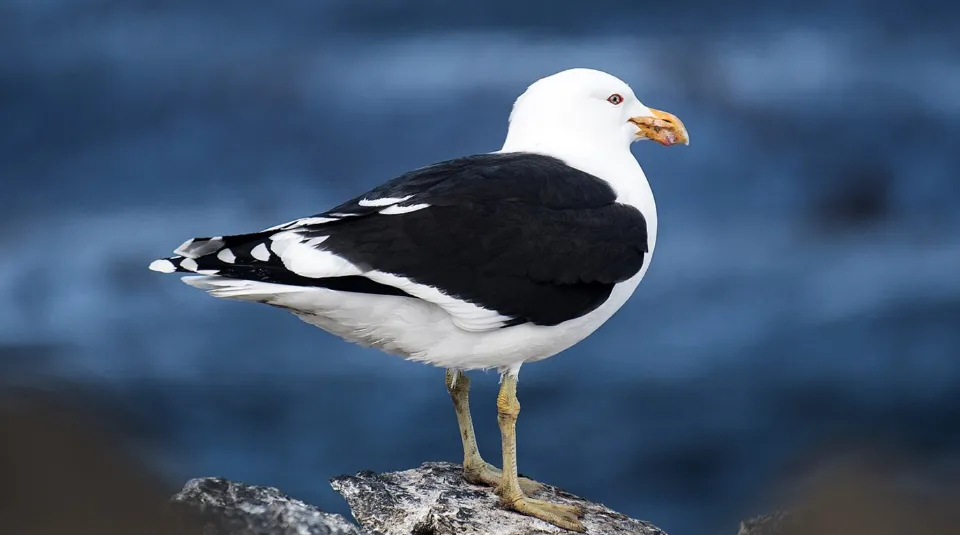
Large, slate-backed, and yellow-billed with a classic crimson spot near the tip of the lower mandible, the kelp gull (southern black-backed gull) is the only member of the gull family hardy enough to breed south of 60°S along the Antarctic Peninsula and South Shetland Islands. Along rocky intertidal ledges, its signature food is the Antarctic limpet (Nacella concinna), dropped onto boulders to crack the shells.
Shell middens left around mossy rock nests are a familiar detail on Peninsula landings at Damoy Point, Neko Harbour, and Wilhelmina Bay, as well as across South Georgia and the Falklands.
When to Spot Kelp Gull (Oct–Mar)
Courtship and cliff nesting peak from November to January across the Drake Passage, Falkland Islands, South Georgia, and Peninsula headlands.
Frequently asked questions about Kelp Gull
Browse all Antarctica expedition FAQsWhen is the best time to see Kelp Gull in Antarctica?
Peak sighting months for Kelp Gull are November, December, January. Courtship and cliff nesting peak from November to January across the Drake Passage, Falkland Islands, South Georgia, and Peninsula headlands. Compare conditions in our Early, Peak & Late Summer FAQ.
Where can you spot Kelp Gull on an Antarctica cruise?
Kelp Gull (Larus dominicanus) is primarily encountered in Antarctic Peninsula, South Shetland Islands, Beagle Channel, South Georgia, Falkland Islands, with 951 upcoming expedition departures visiting these habitats. Key field traits: diet of Antarctic limpets, bivalves, krill & carrion; Polar adaptation: Sole true gull breeding south of 60°S. Learn how daily Zodiac excursions and shore landings work.
How close can you approach Kelp Gull under IAATO rules?
Under mandatory IAATO wildlife distance and biosecurity rules, visitors ashore must keep at least 5 metres (15 feet) from Kelp Gull, give birds the right of way on colony trails, and never kneel or place gear on the snow. If a curious penguin walks closer on its own, remain still and let it pass. See our recommended camera lenses (70–200mm / 100–400mm).