| Scientific name | Macronectes halli |
|---|---|
| Conservation status | LC Least Concern |
| Length & wingspan | 80–95 cm · 1.8–2.1 m |
| Weight | 3.0–5.2 kg |
| Primary diet | Seal & penguin carrion, squid, krill & offal |
| Flight & range | Nests 6 weeks earlier than southern twin |
| Did you know? | Only recognized as a separate species from the southern giant petrel in 1966, it never produces a white colour morph and times chick hatching straight onto peak seal-pupping season ashore. |
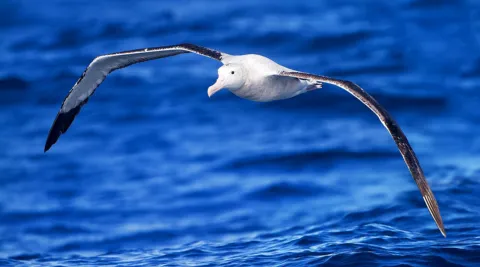
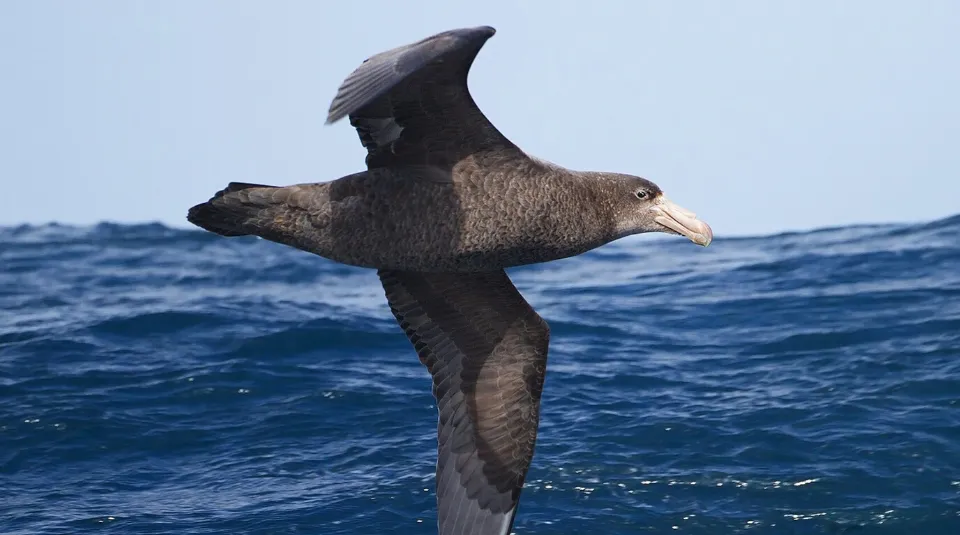
Sharing the two-metre wingspan and heavy tubular-nosed bill of the southern giant petrel, the northern giant petrel lacks an all-white colour morph and reveals its identity at close range by a warm reddish-pink to brick-brown horn tip on the bill rather than pale lime green. Pairs nest six weeks earlier than southern giant petrels, choosing sheltered tussac grass rather than exposed gravel ridges.
South Georgia, the Falkland Islands, Macquarie Island, and Campbell Island host side-by-side populations of both species, giving keen birders on Zodiac landings and stern decks textbook comparison views.
When to Spot Northern Giant Petrel (Oct–Mar)
Courtship and cliff nesting peak from November to January across the Drake Passage, Falkland Islands, South Georgia, and Peninsula headlands.
Frequently asked questions about Northern Giant Petrel
Browse all Antarctica expedition FAQsWhen is the best time to see Northern Giant Petrel in Antarctica?
Peak sighting months for Northern Giant Petrel are November, December, January. Courtship and cliff nesting peak from November to January across the Drake Passage, Falkland Islands, South Georgia, and Peninsula headlands. Compare conditions in our Early, Peak & Late Summer FAQ.
Where can you spot Northern Giant Petrel on an Antarctica cruise?
Northern Giant Petrel (Macronectes halli) is primarily encountered in Drake Passage, South Georgia, Falkland Islands, Macquarie Island, Campbell Island, with 957 upcoming expedition departures visiting these habitats. Key field traits: diet of Seal & penguin carrion, squid, krill & offal; Flight & range: Nests 6 weeks earlier than southern twin. Learn how daily Zodiac excursions and shore landings work.
How close can you approach Northern Giant Petrel under IAATO rules?
Under mandatory IAATO wildlife distance and biosecurity rules, visitors ashore must keep at least 5 metres (15 feet) from Northern Giant Petrel, give birds the right of way on colony trails, and never kneel or place gear on the snow. If a curious penguin walks closer on its own, remain still and let it pass. See our recommended camera lenses (70–200mm / 100–400mm).