| Scientific name | Diomedea sanfordi |
|---|---|
| Conservation status | EN Endangered |
| Length & wingspan | 112–115 cm · 3.0–3.2 m |
| Weight | 6.2–9.0 kg |
| Primary diet | Cephalopods, fish, salps & crustaceans |
| Flight & range | 190,000 km circumpolar biennial migration |
| Did you know? | Taiaroa Head’s famous matriarch “Grandma” bred past 61 years of age, and juveniles leave New Zealand to ride the Roaring Forties right around Antarctica to forage off Patagonia and Cape Horn. |
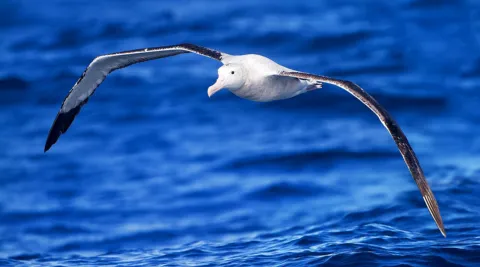
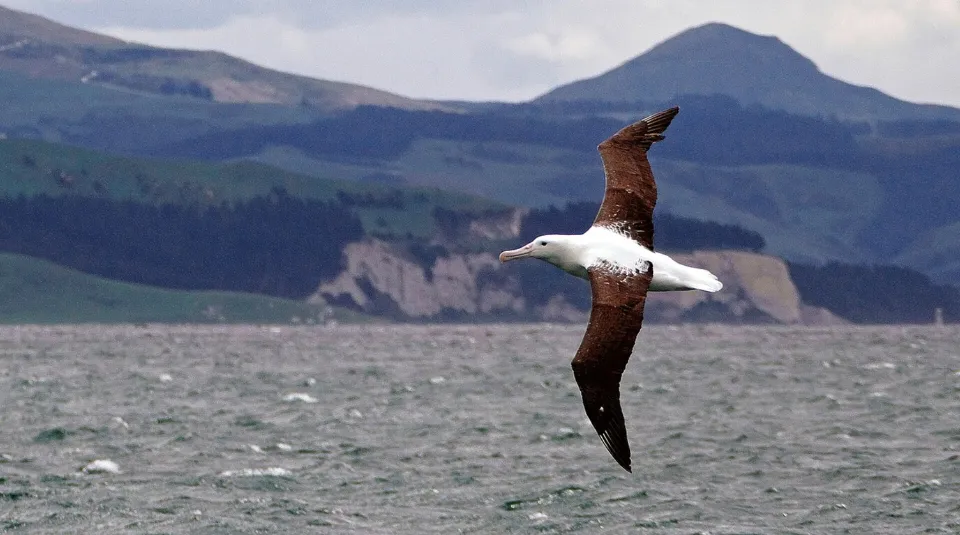
Rivalled in wingspan only by the wandering and southern royal albatrosses, the northern royal albatross is separable at sea by solidly dark chocolate-black upperwings right from fledging into old age, paired with a snowy white body, pale horn-pink bill, and a crisp black cutting edge along the upper mandible.
Although almost the entire population breeds in New Zealand’s Chatham Islands and Taiaroa Head, non-breeding birds circumnavigate the Southern Ocean clockwise to forage heavily over the Patagonian shelf break, Cape Horn, and Falkland waters — making them regular companions on voyages out of Ushuaia.
When to Spot Northern Royal Albatross (Oct–Mar)
Courtship and cliff nesting peak from November to January across the Drake Passage, Falkland Islands, South Georgia, and Peninsula headlands.
Frequently asked questions about Northern Royal Albatross
Browse all Antarctica expedition FAQsWhen is the best time to see Northern Royal Albatross in Antarctica?
Peak sighting months for Northern Royal Albatross are November, December, January. Courtship and cliff nesting peak from November to January across the Drake Passage, Falkland Islands, South Georgia, and Peninsula headlands. Compare conditions in our Early, Peak & Late Summer FAQ.
Where can you spot Northern Royal Albatross on an Antarctica cruise?
Northern Royal Albatross (Diomedea sanfordi) is primarily encountered in Drake Passage, Patagonia, Cape Horn, Falkland Islands, Campbell Island, with 963 upcoming expedition departures visiting these habitats. Key field traits: diet of Cephalopods, fish, salps & crustaceans; Flight & range: 190,000 km circumpolar biennial migration. Learn how daily Zodiac excursions and shore landings work.
How close can you approach Northern Royal Albatross under IAATO rules?
Under mandatory IAATO wildlife distance and biosecurity rules, visitors ashore must keep at least 5 metres (15 feet) from Northern Royal Albatross, give birds the right of way on colony trails, and never kneel or place gear on the snow. If a curious penguin walks closer on its own, remain still and let it pass. See our recommended camera lenses (70–200mm / 100–400mm).