| Scientific name | Phoebetria fusca |
|---|---|
| Conservation status | EN Endangered |
| Length & wingspan | 84–89 cm · 1.95–2.15 m |
| Weight | 2.1–3.4 kg |
| Primary diet | Squid, pelagic fish, crustaceans & carrion |
| Flight & range | Biennial cliff breeder · precision wedge-tail steering |
| Did you know? | Its long, diamond-wedged tail acts as an aerodynamic rudder in storm gusts, and pairs perform eerie, two-note trumpeting duets perched on narrow, tussac-draped volcanic cliff ledges. |
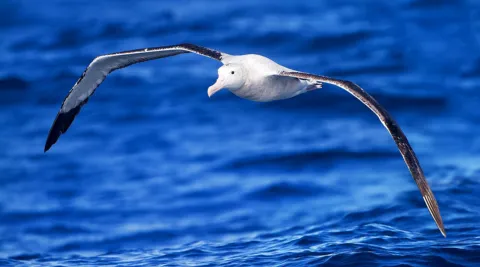
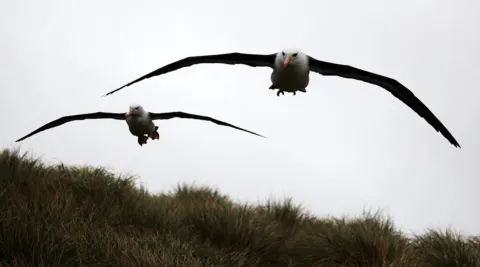
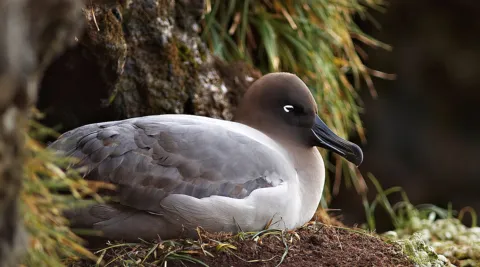
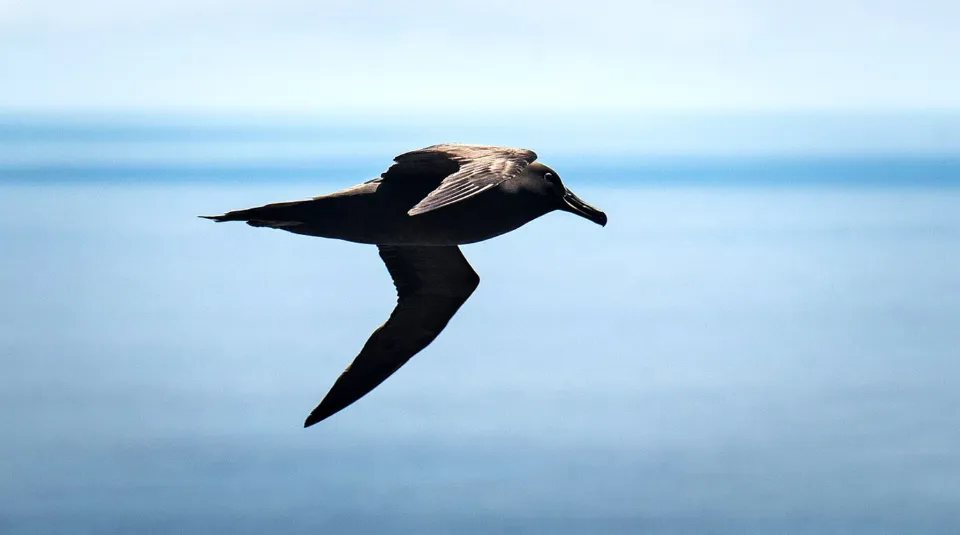
Together with the light-mantled albatross, the sooty albatross belongs to the slender-winged genus Phoebetria — birds built like high-performance sailplanes that bank effortlessly into storm troughs. Uniformly dark chocolate-sooty across back and wings rather than pale-mantled, adults show a diagnostic broken white crescent behind the eye and a vibrant lemon-yellow sulcus stripe along the lower mandible.
Favouring slightly warmer northern sub-Antarctic waters than its light-mantled cousin, it shadows ships crossing the northern Scotia Sea and Atlantic Odyssey tracks between South Georgia and Tristan da Cunha.
When to Spot Sooty Albatross (Oct–Mar)
Courtship and cliff nesting peak from November to January across the Drake Passage, Falkland Islands, South Georgia, and Peninsula headlands.
Frequently asked questions about Sooty Albatross
Browse all Antarctica expedition FAQsWhen is the best time to see Sooty Albatross in Antarctica?
Peak sighting months for Sooty Albatross are November, December, January. Courtship and cliff nesting peak from November to January across the Drake Passage, Falkland Islands, South Georgia, and Peninsula headlands. Compare conditions in our Early, Peak & Late Summer FAQ.
Where can you spot Sooty Albatross on an Antarctica cruise?
Sooty Albatross (Phoebetria fusca) is primarily encountered in Drake Passage, Scotia Sea, South Georgia, with 949 upcoming expedition departures visiting these habitats. Key field traits: diet of Squid, pelagic fish, crustaceans & carrion; Flight & range: Biennial cliff breeder · precision wedge-tail steering. Learn how daily Zodiac excursions and shore landings work.
How close can you approach Sooty Albatross under IAATO rules?
Under mandatory IAATO wildlife distance and biosecurity rules, visitors ashore must keep at least 5 metres (15 feet) from Sooty Albatross, give birds the right of way on colony trails, and never kneel or place gear on the snow. If a curious penguin walks closer on its own, remain still and let it pass. See our recommended camera lenses (70–200mm / 100–400mm).