Antarctica Unlocked

1 000 départs auprès de 14 opérateurs et 39 navires

← Tous les départs

Basecamp - Weddell Sea

Disponible

Basecamp - Weddell Sea
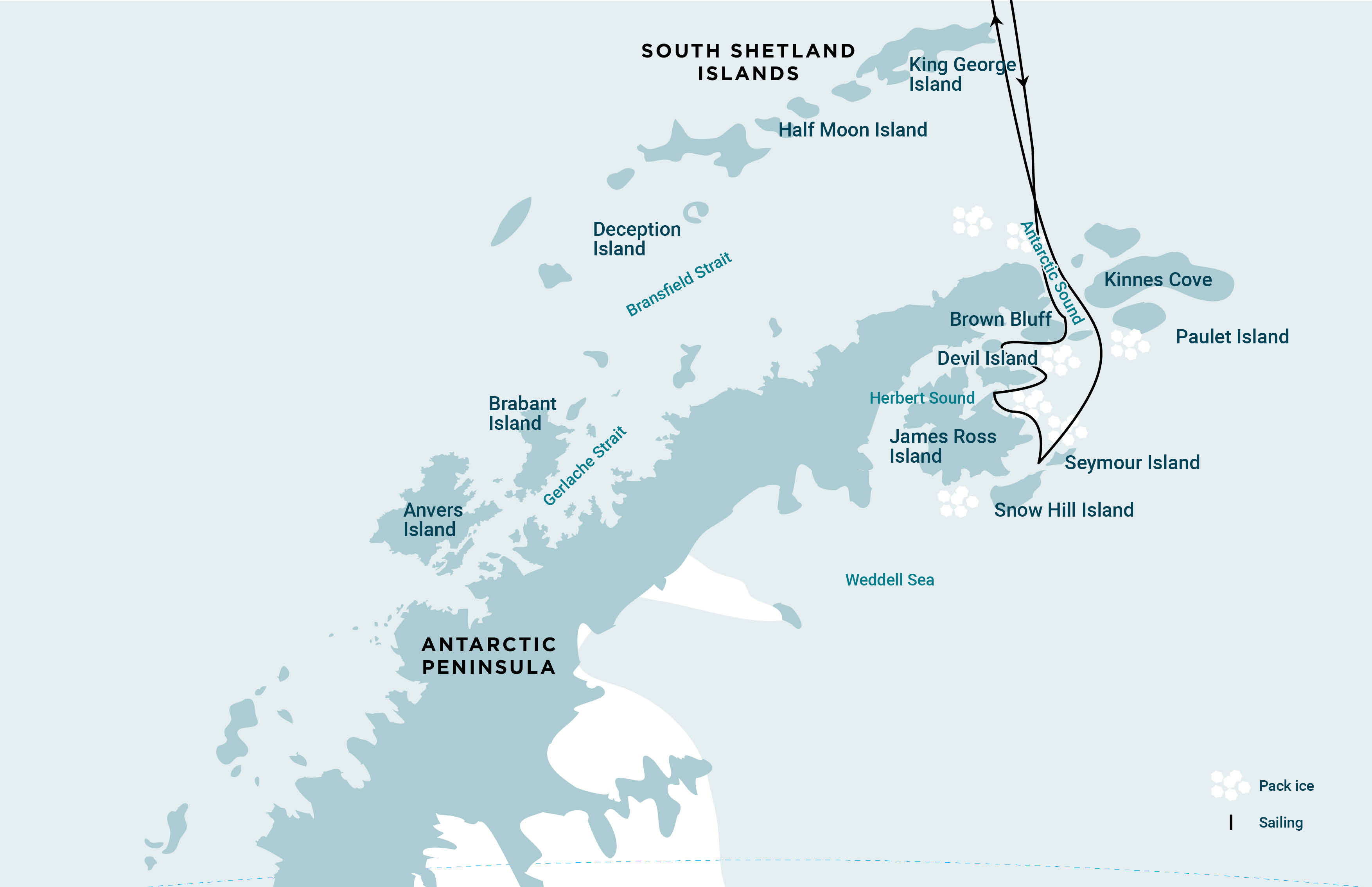
Carte de l'itinéraire — Basecamp - Weddell Sea
Carte de l'itinéraire
OpérateurOceanwide Expeditions
Navirem/v Ortelius
Taille du navire108 passagers
Départfévr. 15, 2028
Retourfévr. 27, 2028
Durée13 jours
EmbarquementUshuaia
RégionsÎles Shetland du Sud · Détroit Antarctique · Mer de Weddell · Île Snow Hill

Itinéraire

✈ King George Island ⚓ Brown Bluff ⚓ Devil Island ⚓ James Ross Island ⚓ Snow Hill Island ⚓ Seymour Island
Weddell Sea

Activités optionnelles

Camping Hiking Kayaking Mountaineering Photo Workshop Snowshoeing Basecamp

Jour par jour

Day 1 — End of the world, start of a journey

Our voyage begins where the world drops off. Ushuaia, Argentina, reputed to be the southernmost city on the planet, is located on the far southern tip of South America. Starting in the afternoon, you embark from this small resort town on Tierra del Fuego, nicknamed “The End of the World,” and sail the mountain-fringed Beagle Channel for the remainder of the evening.

Day 2-3 — Path of the polar explorers

Over the next two days on the Drake Passage, we enjoy some of the same experiences encountered by the great polar explorers who first charted these regions: cool salt breezes, rolling seas, maybe even a fin whale spouting sea spray. After passing the Antarctic Convergence – Antarctica’s natural boundary, formed when north-flowing cold waters collide with warmer sub-Antarctic seas – you are in the circum-Antarctic upwelling zone. Not only does the marine life change, the avian life changes too. Wandering albatrosses, grey-headed albatrosses, black-browed albatrosses, light-mantled sooty albatrosses, cape petrels, southern fulmars, Wilson’s storm petrels, blue petrels, and Antarctic petrels are a few of the birds you might see.

Day 4-10 — Entering the Weddell Sea

The great Weddell Sea features massive tabular icebergs, wildly dramatic landscapes, and fascinating historical sites. It is also one of the best places in Antarctica for viewing iconic wildlife like whales, seals, and rarely seen seabirds. We may visit the following locations, depending on local conditions: Antarctic Sound - Antarctic Sound is nicknamed “Iceberg Alley,” as we often see enormous tabular icebergs here. Brown Bluff - Possibly the most scenic location in the northern Antarctic Continent, Brown Bluff is characterized by sheer canyon walls, fallen boulders, and beautiful volcanic creations capped with ice. Herbert Sound - We will focus our attention on the visually impressive areas of Naze Peninsula and Comb Ridge. Devil Island - This island offers a magnificent vantage point for hikers willing to foot it to the top of the hill. Melting ice sometimes forms a waterfall dropping from the cliffs close to Cape Well-met. Erebus and Terror Gulf - Here we look for new activity opportunities and may visit Vega Island, experiencing the wilderness of Antarctica in its most remote places.

Day 11-12 — Familiar seas, familiar friends

Our return voyage is far from lonely. While crossing the Drake, we’re again greeted by the vast array of seabirds remembered from the passage south. But they seem a little more familiar to us now, and us to them.

Day 13 — There and back again

Even great adventures must eventually come to an end. It’s now time to disembark in Ushuaia with memories that will accompany you wherever your next journey lies.

Offres de cabines

Cabine Occupation Prix (par personne) Promo Disponibilité Source
Quadruple PortholeMeilleur prix quad 11 500 € disponible Oceanwide Expeditions Voir chez l'opérateur
Triple Porthole triple 12 950 € complet Oceanwide Expeditions
Twin Porthole double 14 100 € disponible Oceanwide Expeditions Voir chez l'opérateur
Twin Window double 14 750 € disponible Oceanwide Expeditions Voir chez l'opérateur
Twin Deluxe double 16 300 € disponible Oceanwide Expeditions Voir chez l'opérateur
Superior 17 100 € disponible Oceanwide Expeditions Voir chez l'opérateur

Les prix sont relevés sur les sites des opérateurs et peuvent changer — le site de l'opérateur fait foi. Relevé le août 22, 2026 06:13 UTC.

Vous préparez ce voyage ?

Tout ce qu'il faut emporter pour une expédition en Antarctique — une liste interactive à cocher au fil de vos préparatifs, à conserver via un lien personnel et à télécharger en PDF.

Ouvrir la liste de préparation

Faune sur cet itinéraire

Faune

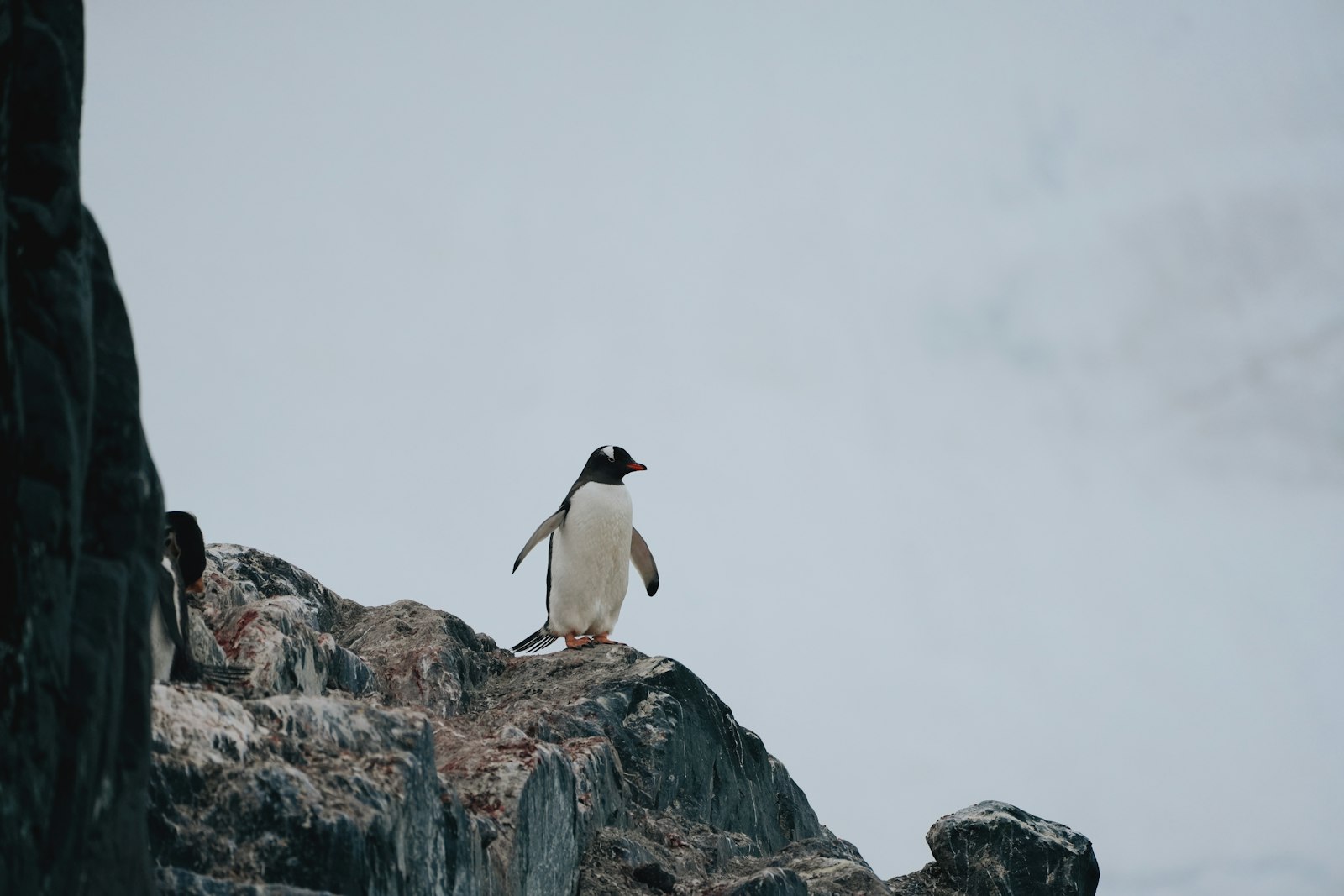
Manchot papou

Un manchot trapu au bec orange, du genre Pygoscelis, proche cousin de l'Adélie et du manchot à jugulaire. Son cri retentissant, poussé la tête renversée en arrière, résonne dans les colonies littorales où débarquent les expéditions.
Faune

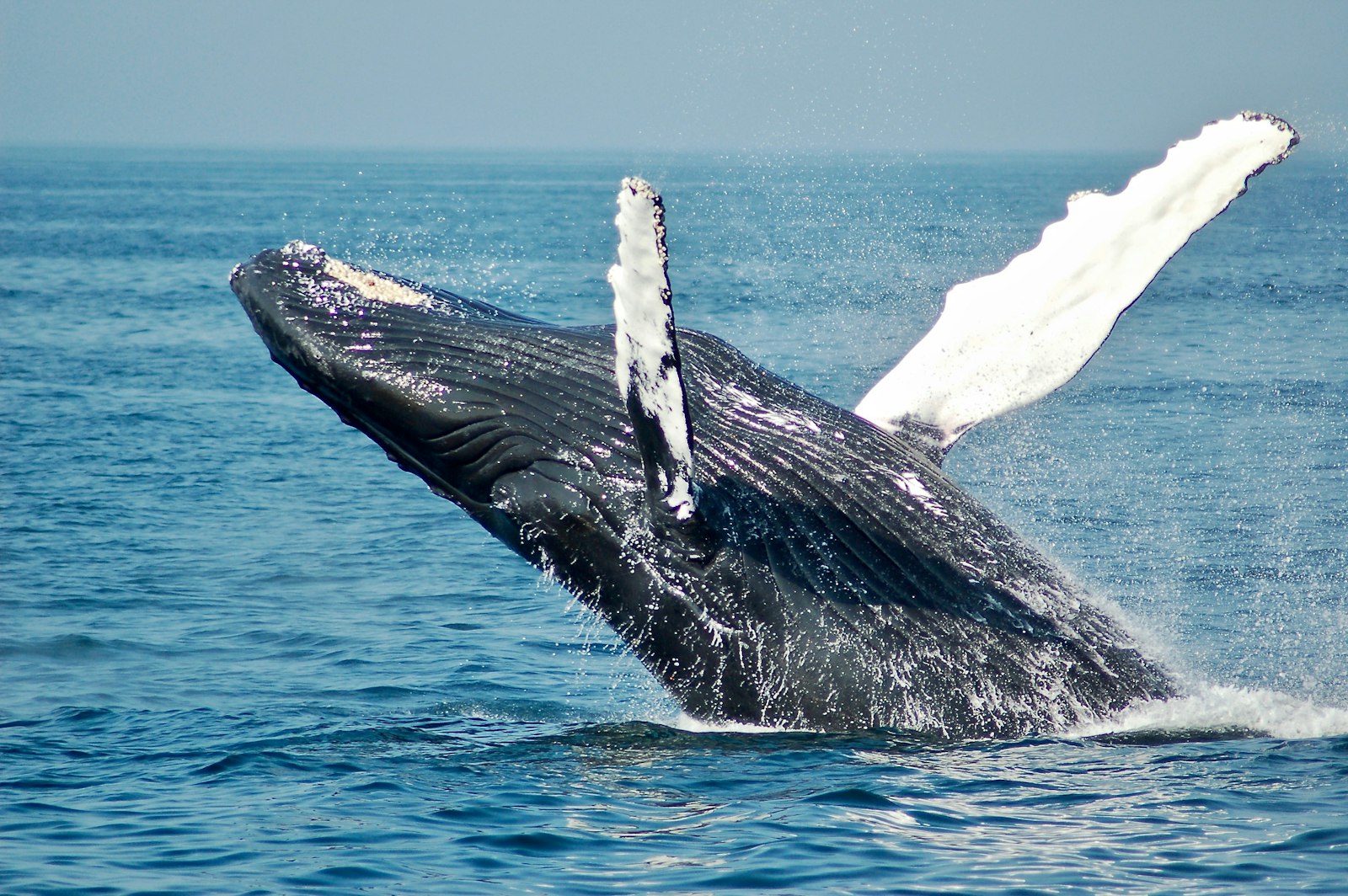
Rorqual à bosse

Une baleine à fanons de 14 à 17 mètres connue pour ses sauts et ses longues nageoires pectorales, souvent observée se nourrissant de krill en petits groupes le long de la banquise.

Faune

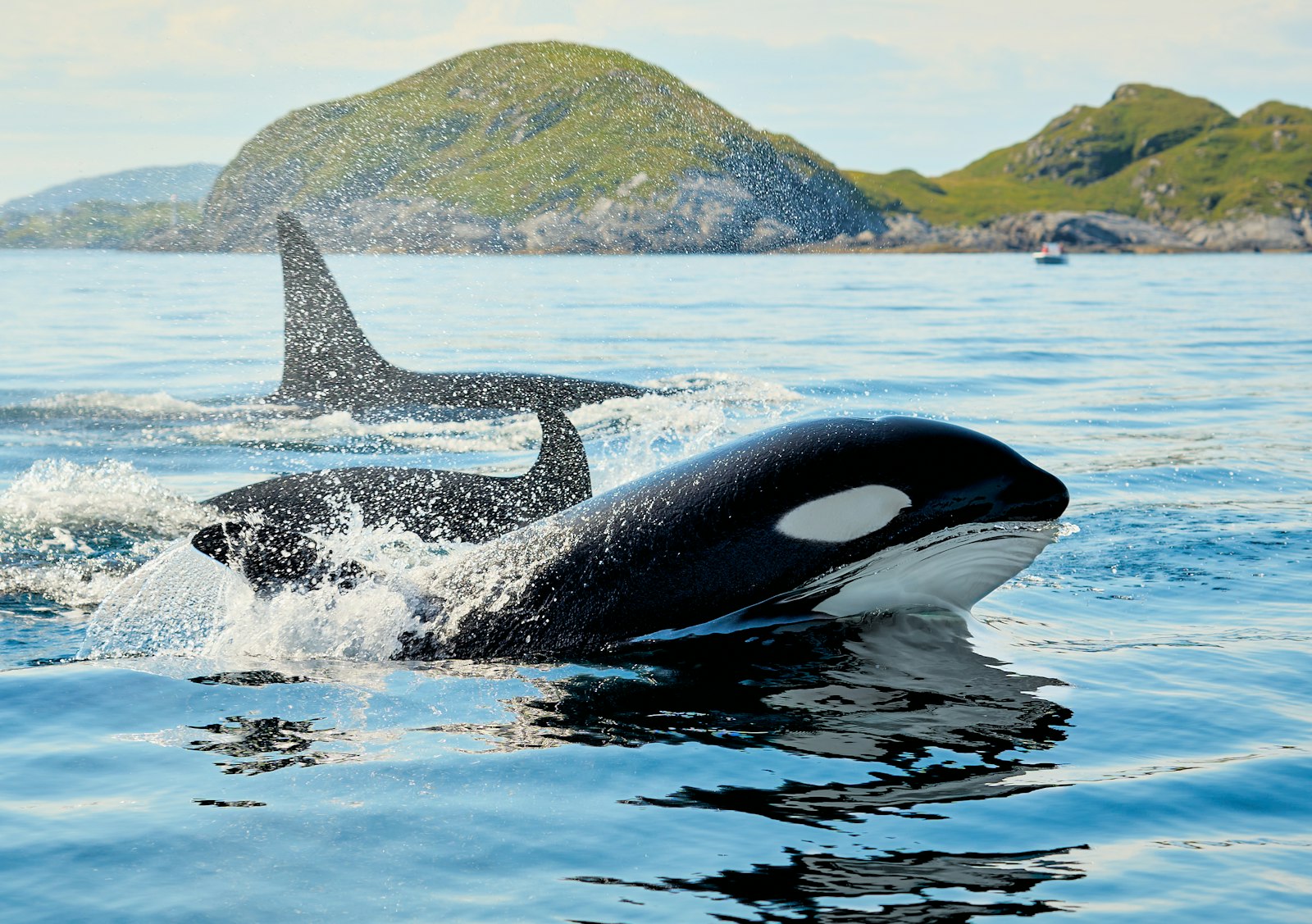
Orque

Prédateur noir et blanc reconnaissable entre tous à ses taches oculaires pâles, l'orque est le plus grand des dauphins et l'un des chasseurs les plus redoutables de l'océan. Les observations impliquent souvent une famille soudée travaillant ensemble le long de la banquise.

Faune

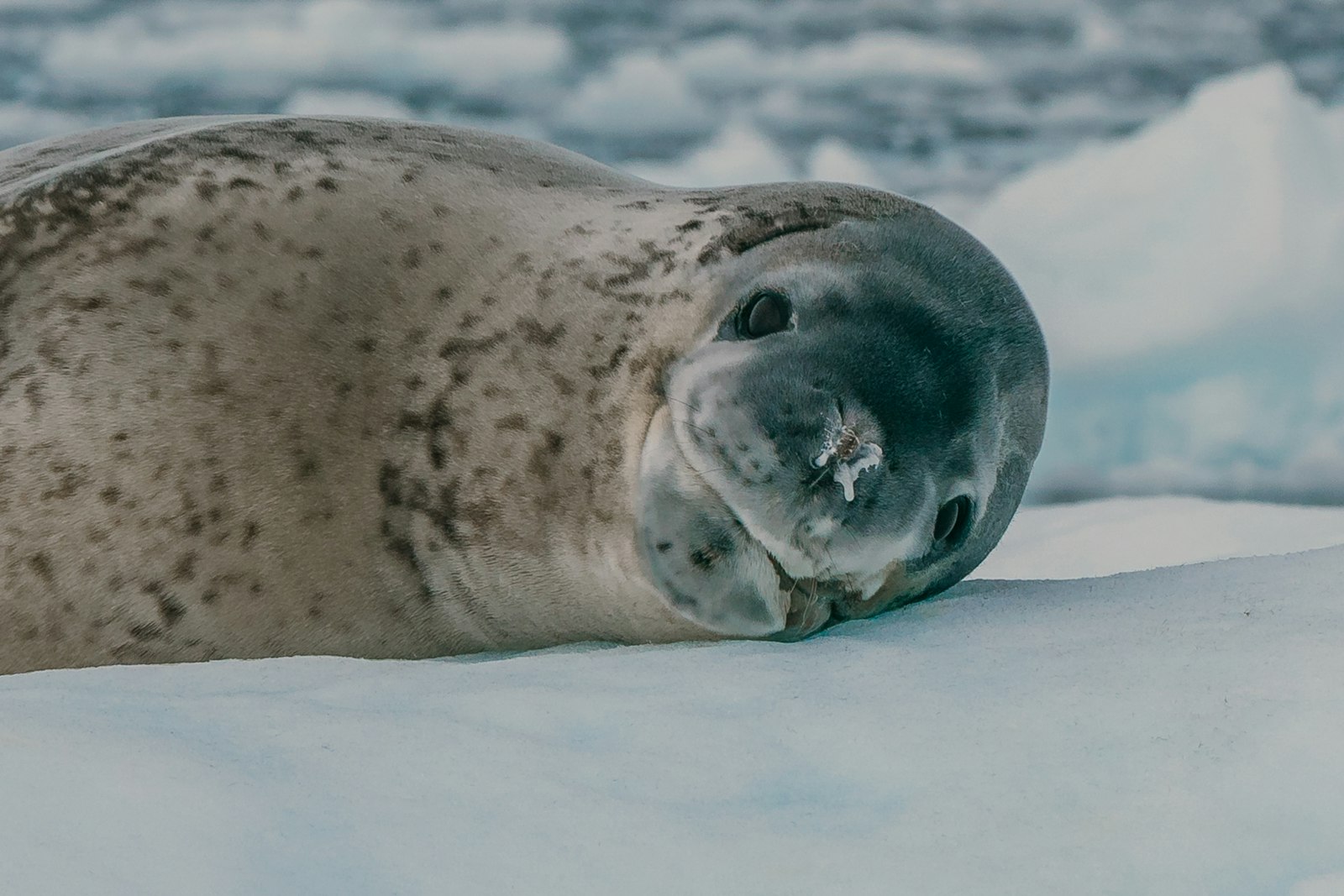
Leopard Seal

Le léopard de mer est le deuxième plus grand phoque de l'Antarctique après l'éléphant de mer, avec un corps long et musclé et un pelage tacheté rappelant celui d'un léopard. C'est le grand prédateur de la région, chassant manchots, poissons et même d'autres phoques le long de la banquise.

11 500 € par personne · Quadruple Porthole · Oceanwide Expeditions
Voir chez l'opérateur