Wildlife
Southern Right Whale
A stocky baleen whale with no dorsal fin and a head crusted in pale callosities, once hunted almost to extinction and now the whale most likely to breach or wave a fluke at passing ships. It favours the same cold, food-rich waters that expedition itineraries already follow.
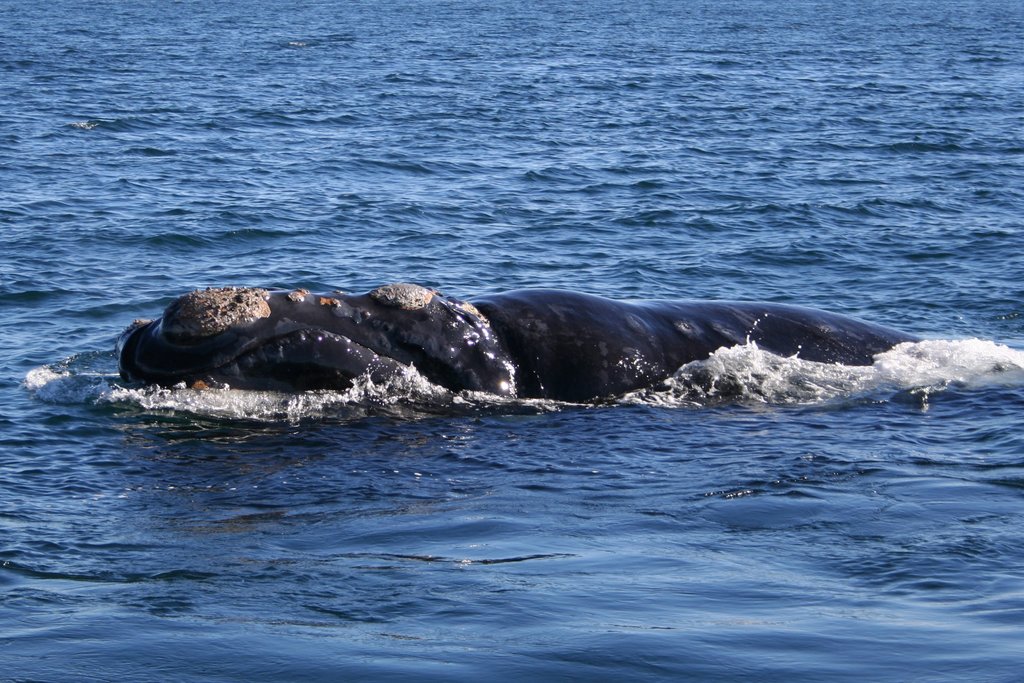
The southern right whale earned its name the grim way: slow-swimming, buoyant even when dead, and rich in oil, it was the "right" whale for eighteenth- and nineteenth-century whalers, who reduced the population to a fraction of its former size before international protection began in 1937. Illegal Soviet whaling kept the pressure on into the 1970s, but the species has since recovered at roughly 7% a year, and the current global population is estimated at around 13,600. You can tell one from a fin whale or humpback at a glance: no dorsal fin at all, a broad black back, a long arching mouth, and the pale, roughened callosities on its head that researchers use to identify individuals.
On our routes the encounters split by season. Ships working Patagonia's coast in the austral winter and spring are closest to the species' breeding and calving grounds, where mothers and calves linger in sheltered bays. Further south, the Falkland Islands sit along the migration corridor and produce sightings as whales move between temperate breeding waters and the far south. By the height of the austral summer, southern right whales are working the krill- and zooplankton-rich waters near the Antarctic Peninsula, the same feeding grounds that draw most expedition itineraries in the first place.
Worth watching for regardless of location: this is one of the more visibly playful large whales, given to breaching and to "tail sailing," where it lifts its flukes clear of the water and simply lets the wind push it along, a behaviour recorded almost nowhere else among baleen whales.
Find departures that go there →
More highlights
Wildlife
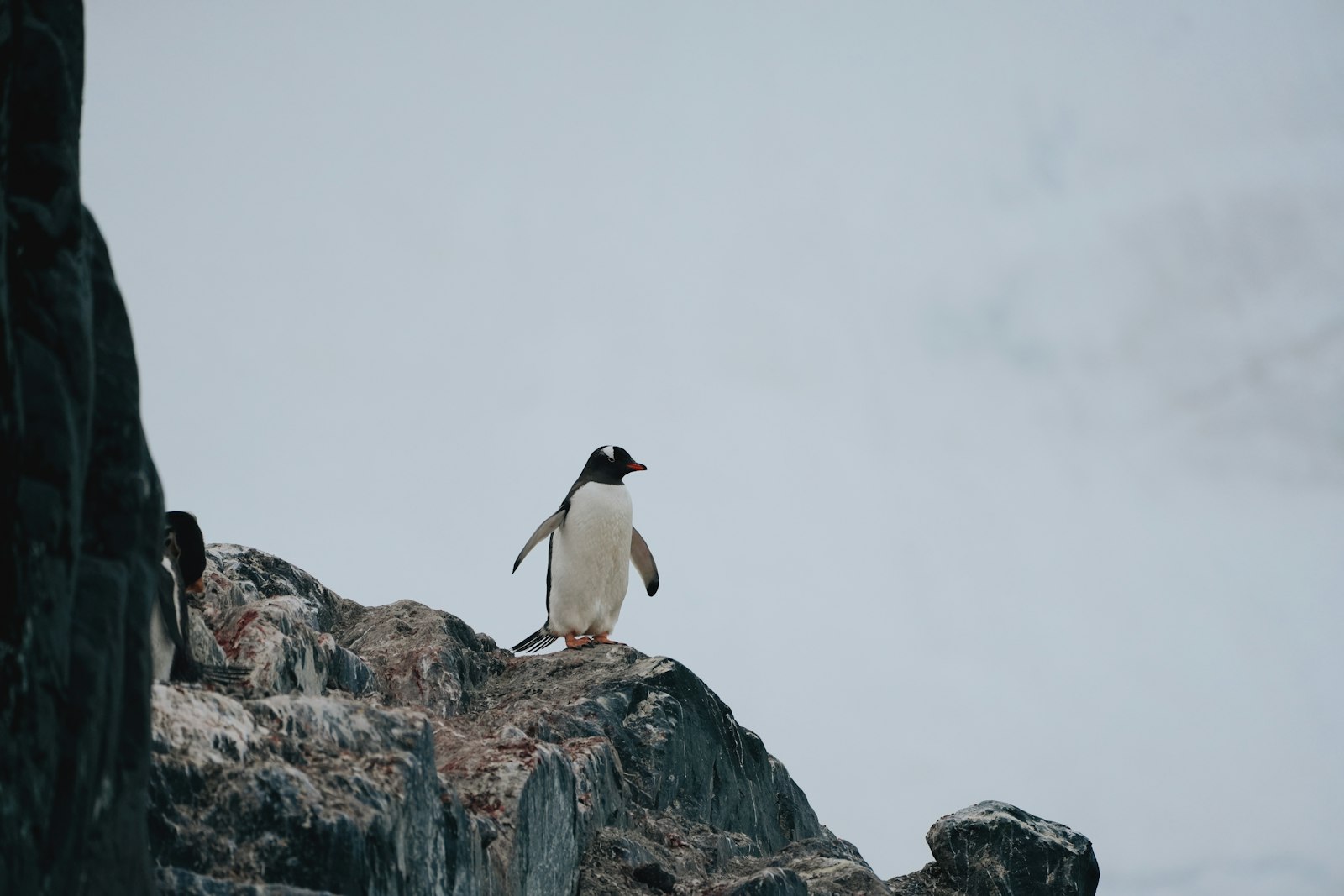
Gentoo Penguin
A stocky, orange-billed penguin of the genus Pygoscelis, closest kin to the Adélie and Chinstrap. Its loud, trumpeting call, delivered with head thrown back, carries across the shoreline colonies where expedition landings are made.
Wildlife
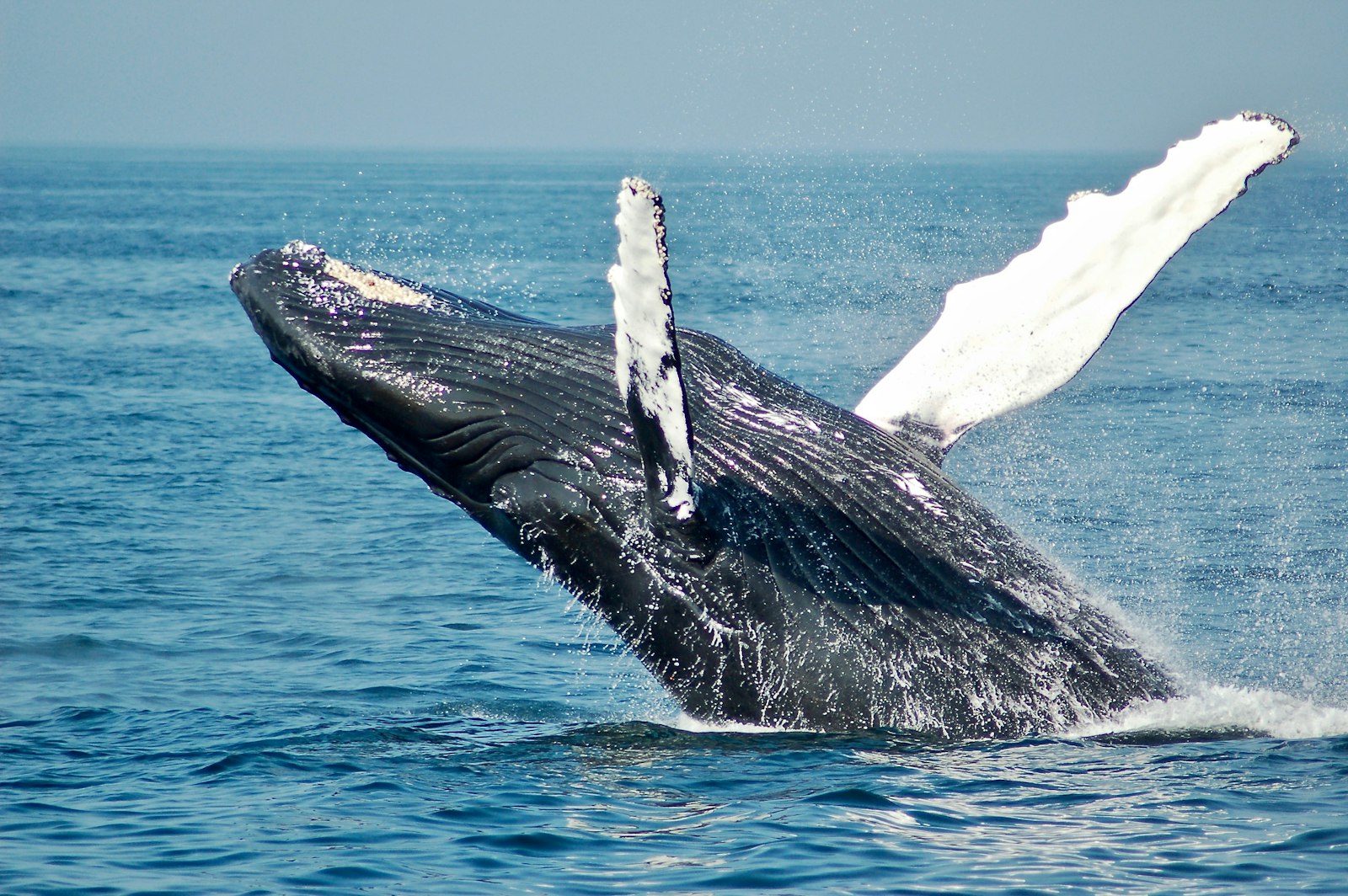
Humpback Whale
A 14–17 metre baleen whale known for breaching and long pectoral fins, often seen feeding on krill in loose groups along the ice edge.
Wildlife
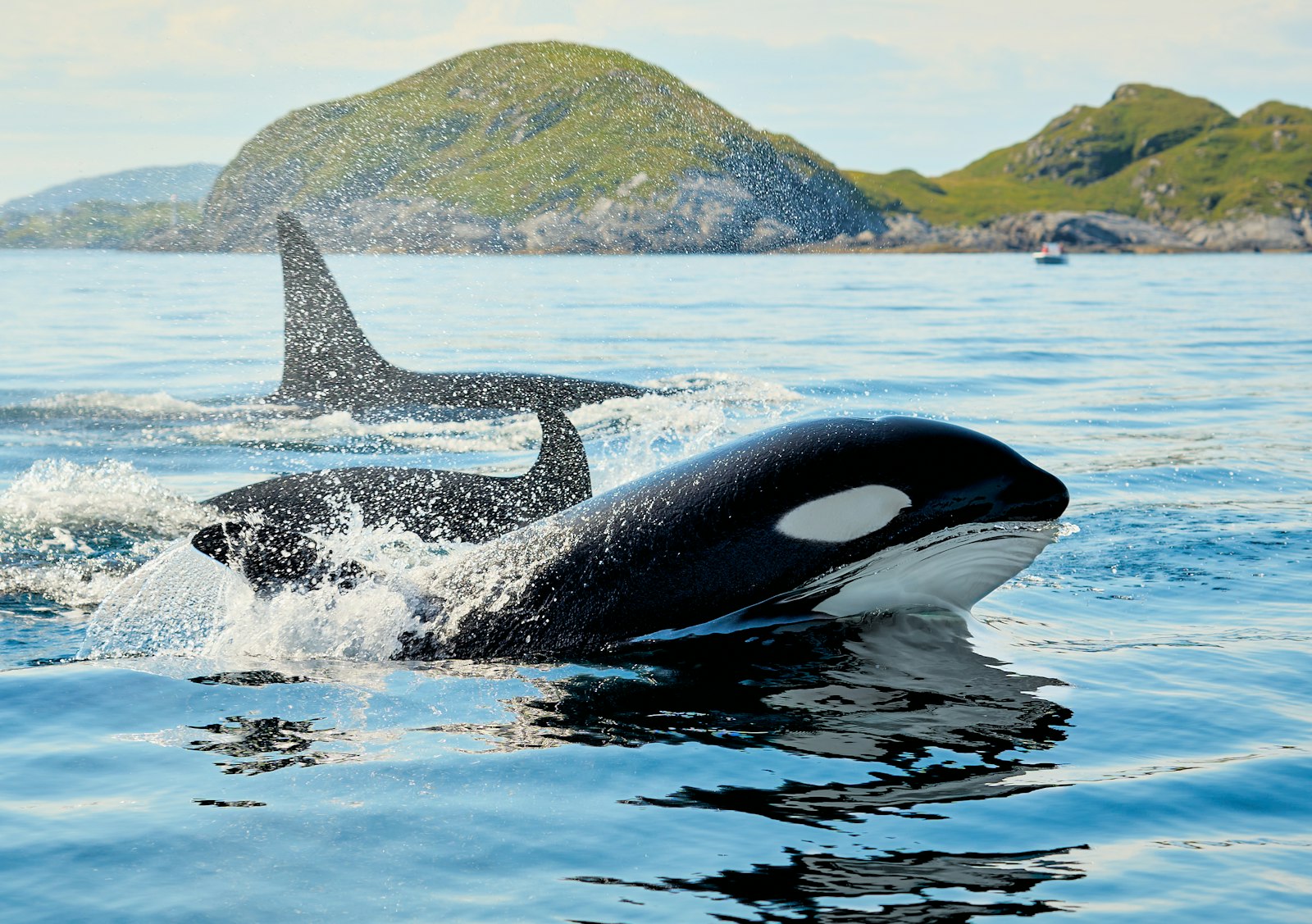
Orca
Black and white apex predator instantly recognizable by its pale eye patches, the orca is the largest of the dolphins and one of the ocean's most capable hunters. Sightings often involve a tight-knit family pod working the ice edge together.