Wildlife
Gentoo Penguin
A stocky, orange-billed penguin of the genus Pygoscelis, closest kin to the Adélie and Chinstrap. Its loud, trumpeting call, delivered with head thrown back, carries across the shoreline colonies where expedition landings are made.
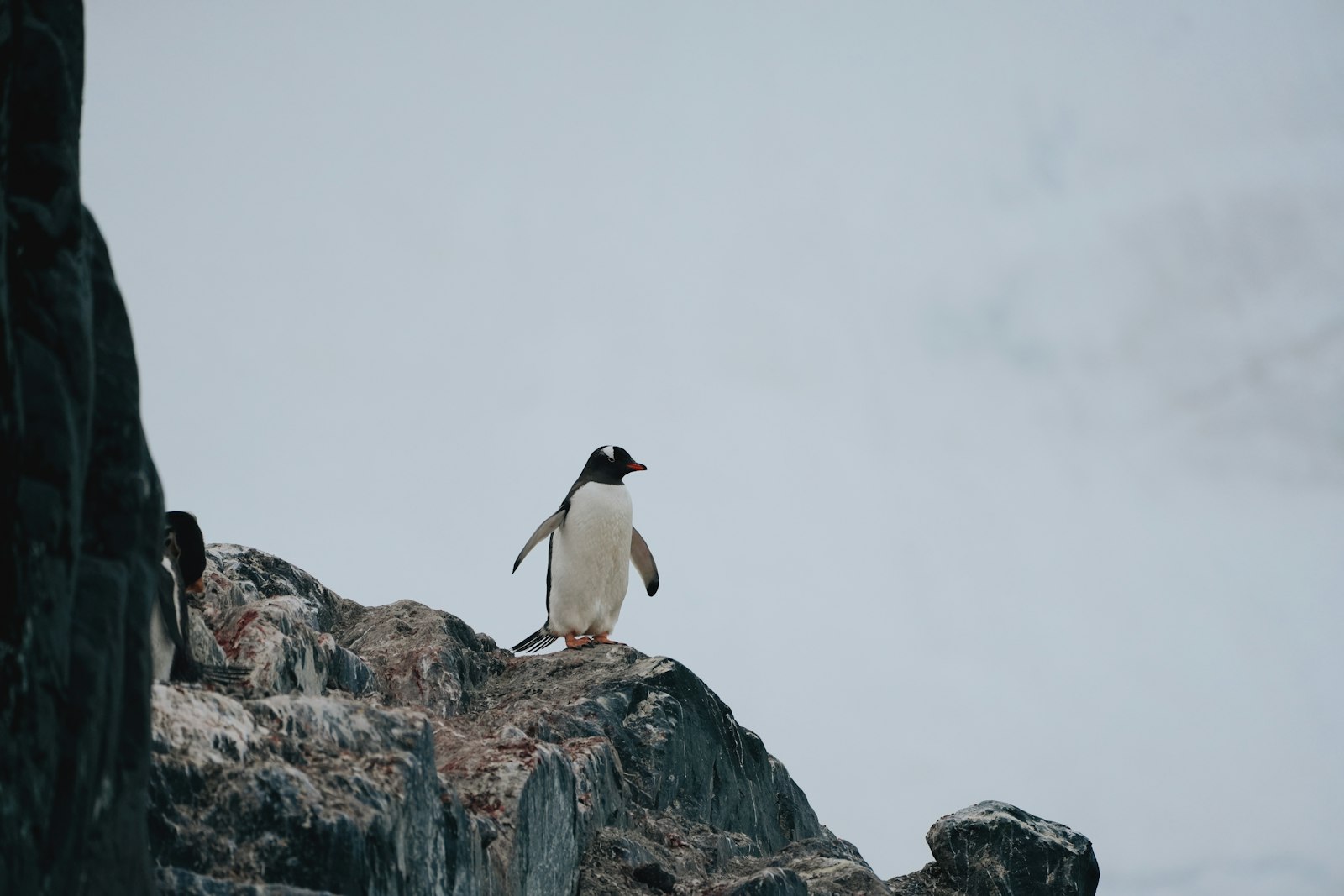
The gentoo penguin was first described in 1781 by Johann Reinhold Forster, who took his type specimen from the Falkland Islands — still one of the more reliable places on the itinerary map to find them ashore in numbers. From there the species' range fans out across the Southern Ocean, and on our voyages it turns up consistently at South Georgia and along the Antarctic Peninsula, as well as in the South Shetland Islands, South Orkney Islands, and around Anvers Island, King George Island, Deception Island, the Gerlache Strait and Bransfield Strait.
Within the genus Pygoscelis it sits alongside the Adélie and Chinstrap penguins as its closest relatives, and on mixed-species landings you may well see all three sharing the same stretch of beach or scree. What sets the gentoo apart on a still morning is the sound: a loud, trumpeting call, thrown out with the head tipped back, that carries well beyond the colony itself and is usually the first sign you are near one before you see the birds.
Guides on these routes tend to build in time at gentoo colonies precisely because the birds are approachable and vocal, making for one of the more immersive shore landings on a typical expedition itinerary.
Find departures that go there →
More highlights
Wildlife
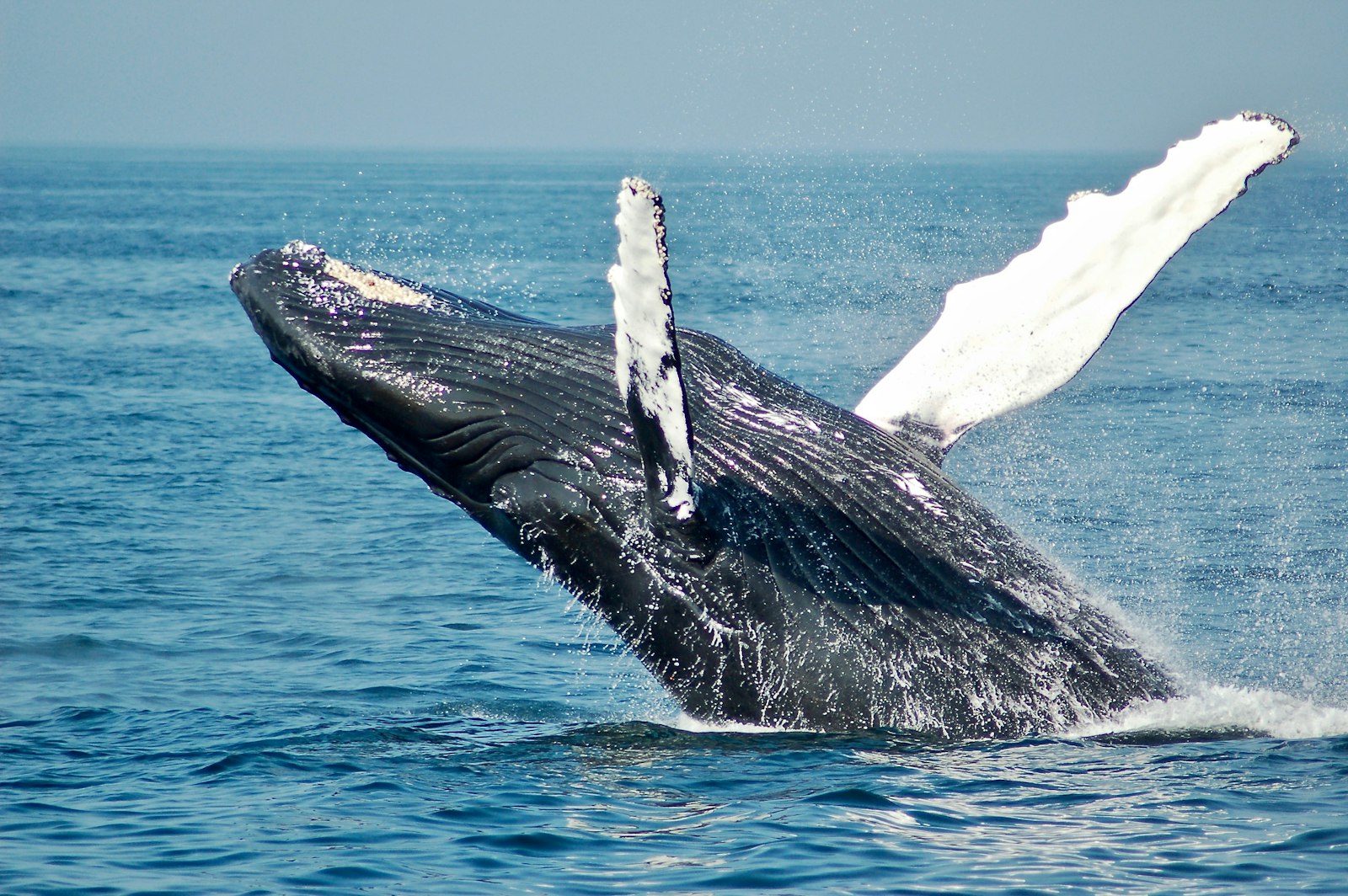
Humpback Whale
A 14–17 metre baleen whale known for breaching and long pectoral fins, often seen feeding on krill in loose groups along the ice edge.
Wildlife
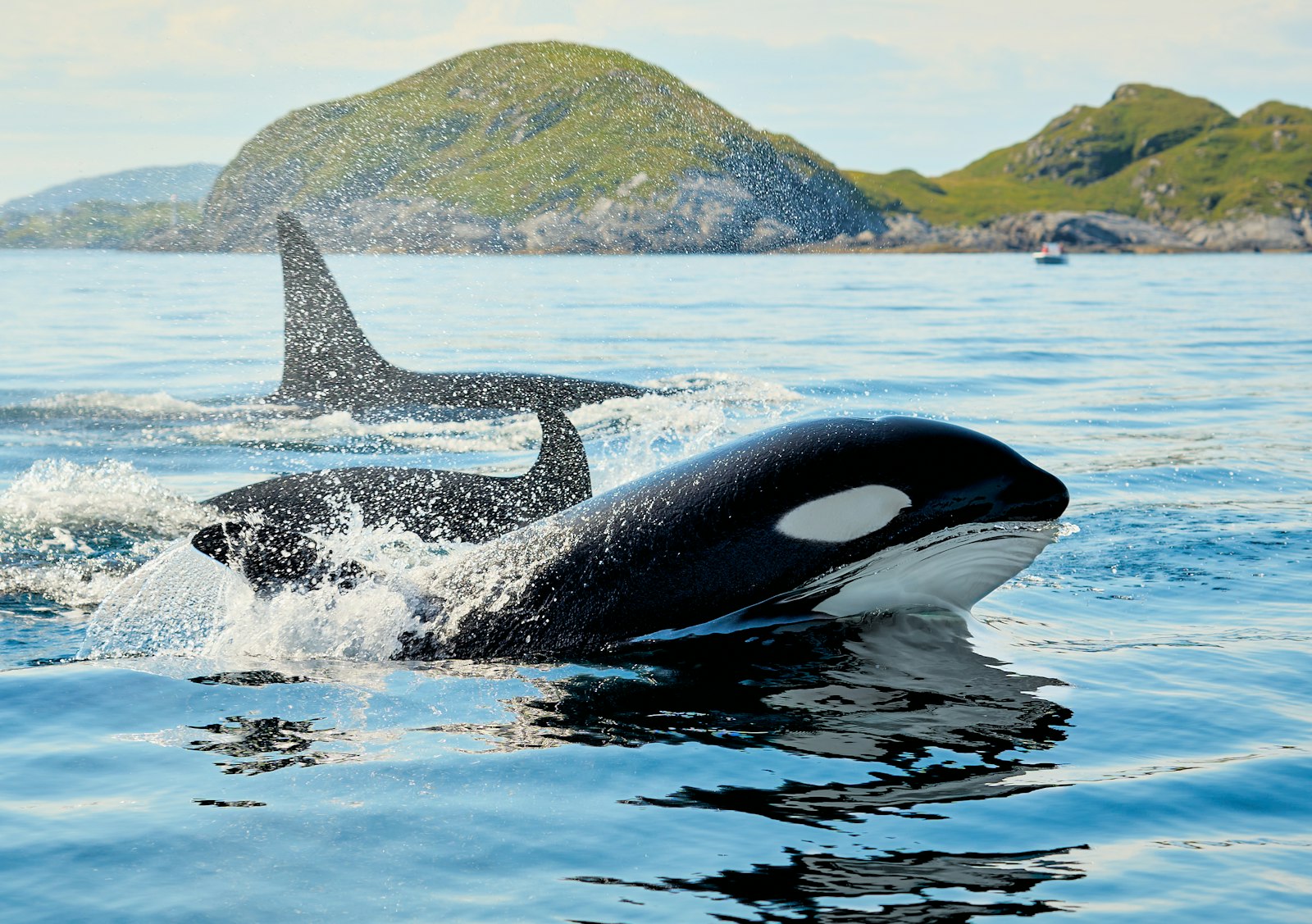
Orca
Black and white apex predator instantly recognizable by its pale eye patches, the orca is the largest of the dolphins and one of the ocean's most capable hunters. Sightings often involve a tight-knit family pod working the ice edge together.
Wildlife
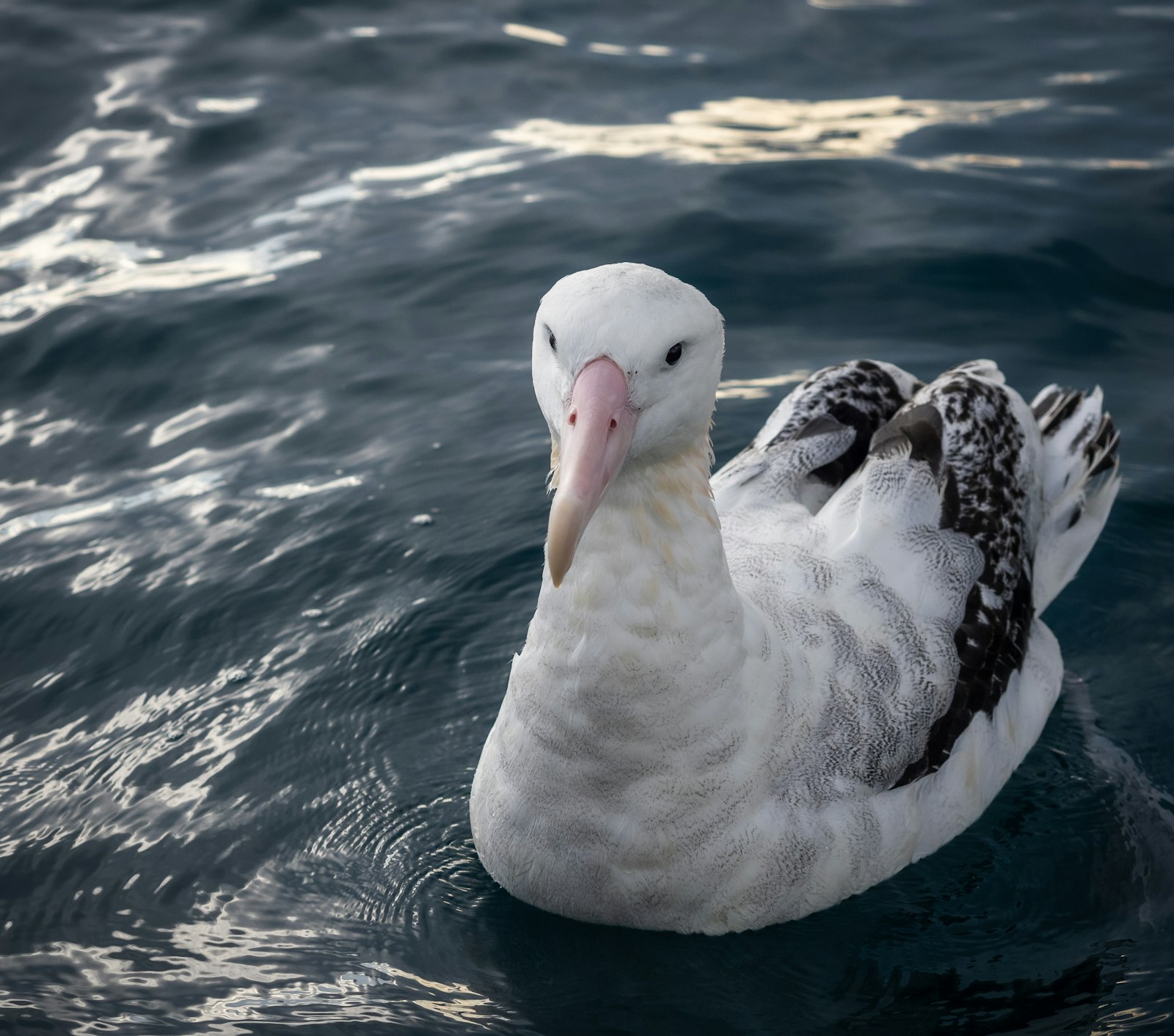
Wandering Albatross
The snowy albatross, better known as the wandering albatross, has the widest wingspan of any living bird alive today. Watch for it riding the wind for hours behind the ship without a single wingbeat.