| Scientific name | Pterodroma incerta |
|---|---|
| Conservation status | EN Endangered |
| Length & wingspan | 43 cm · 1.04 m |
| Weight | 450–580 g |
| Primary diet | Bioluminescent pelagic squid, lanternfish & crustaceans |
| Flight & range | Winter breeder on Gough & Tristan da Cunha |
| Did you know? | Almost the entire world population nests during the dark austral winter in peat burrows on Gough Island, dispersing across the South Atlantic and northern Scotia Sea after fledging. |
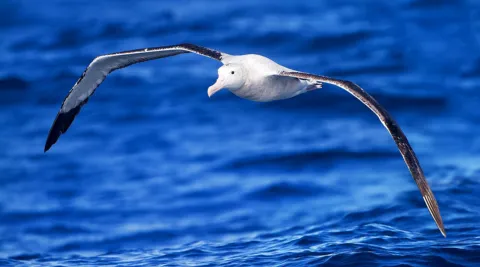
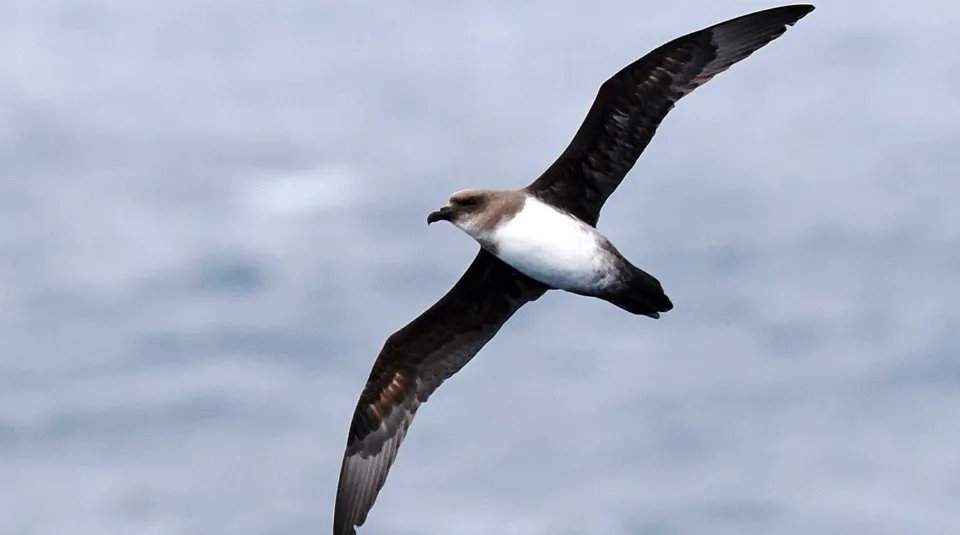
Endemic as a breeder to Gough Island and Tristan da Cunha yet ranging widely across cool South Atlantic and northern Scotia Sea waters, the large, heavy-billed Atlantic petrel is instantly told at sea by its dark chocolate hood, back, and underwings framing a dazzlingly clean white belly rectangle.
Birders lining outer decks on Falklands–South Georgia expedition itineraries watch keenly for Atlantic petrels banking effortlessly alongside shearwaters and mollymawks north of the Antarctic Convergence.
When to Spot Atlantic Petrel (Oct–Mar)
Courtship and cliff nesting peak from November to January across the Drake Passage, Falkland Islands, South Georgia, and Peninsula headlands.
Frequently asked questions about Atlantic Petrel
Browse all Antarctica expedition FAQsWhen is the best time to see Atlantic Petrel in Antarctica?
Peak sighting months for Atlantic Petrel are November, December, January. Courtship and cliff nesting peak from November to January across the Drake Passage, Falkland Islands, South Georgia, and Peninsula headlands. Compare conditions in our Early, Peak & Late Summer FAQ.
Where can you spot Atlantic Petrel on an Antarctica cruise?
Atlantic Petrel (Pterodroma incerta) is primarily encountered in Scotia Sea, South Georgia, Falkland Islands, with 205 upcoming expedition departures visiting these habitats. Key field traits: diet of Bioluminescent pelagic squid, lanternfish & crustaceans; Flight & range: Winter breeder on Gough & Tristan da Cunha. Learn how daily Zodiac excursions and shore landings work.
How close can you approach Atlantic Petrel under IAATO rules?
Under mandatory IAATO wildlife distance and biosecurity rules, visitors ashore must keep at least 5 metres (15 feet) from Atlantic Petrel, give birds the right of way on colony trails, and never kneel or place gear on the snow. If a curious penguin walks closer on its own, remain still and let it pass. See our recommended camera lenses (70–200mm / 100–400mm).