| Scientific name | Ziphius cavirostris |
|---|---|
| Conservation status | LC Least Concern |
| Body length | 5.5–7.0 m |
| Weight | 2.0–3.5 t |
| Primary diet | Deep-ocean squid, octopuses & bathypelagic fish |
| Diving & swimming | 2,992 m · 222 min (mammalian record) |
| Did you know? | Champion breath-holder of all mammals, Cuvier’s beaked whales collapse their lungs at depth, store immense myoglobin oxygen reserves in muscle, and hunt nearly 3 km down in total darkness. |
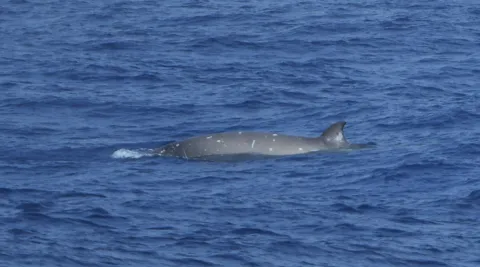
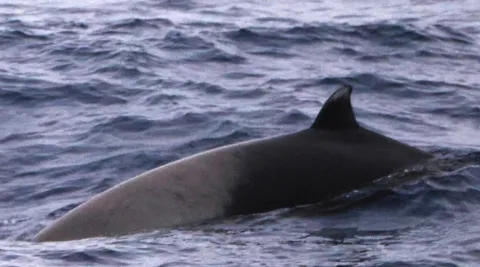
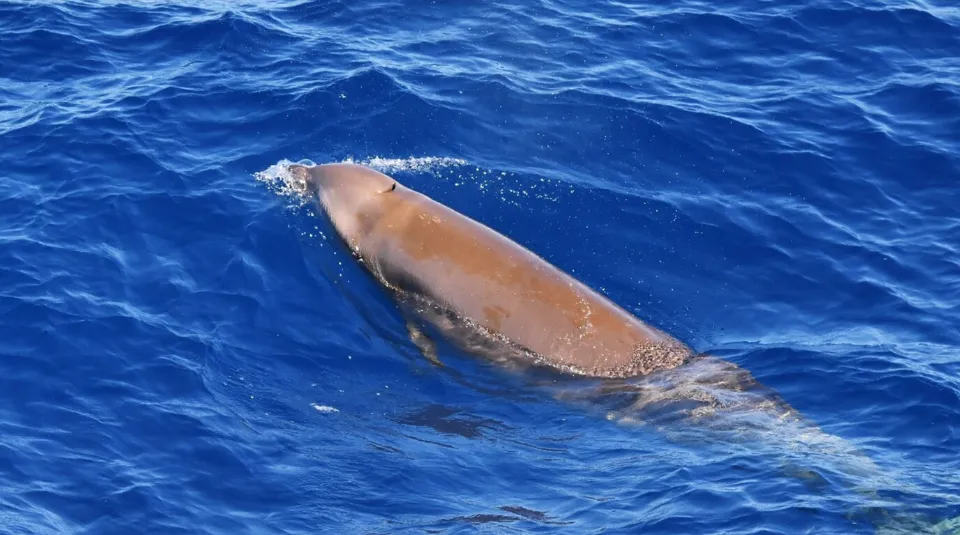
Satellite tags have clocked Cuvier’s beaked whales diving to 2,992 metres and holding their breath for over three hours — longer and deeper than any other air-breathing mammal known to science. Robust, cigar-shaped, and sporting a gently curved “smiling” jawline with a chalk-white head and back in older bulls, they hunt deep-water cephalopods along steep continental slopes.
Expedition ships crossing steep bathymetry south of Cape Horn, across the Shackleton Fracture Zone in the Drake Passage, and along the Falkland Trough occasionally catch brief glimpses of small pods rolling low at the surface between marathon dives.
When to Spot Cuvier's Beaked Whale (Oct–Mar)
Migratory baleen and toothed whales arrive in growing numbers from December, reaching peak krill-feeding density across February and March.
Frequently asked questions about Cuvier's Beaked Whale
Browse all Antarctica expedition FAQsWhen is the best time to see Cuvier's Beaked Whale in Antarctica?
Peak sighting months for Cuvier's Beaked Whale are January, February, March. Migratory baleen and toothed whales arrive in growing numbers from December, reaching peak krill-feeding density across February and March. Read our Antarctic whale-watching month guide and seasonal comparison.
Where can you spot Cuvier's Beaked Whale on an Antarctica cruise?
Cuvier's Beaked Whale (Ziphius cavirostris) is primarily encountered in Drake Passage, Cape Horn, Scotia Sea, Falkland Islands, with 949 upcoming expedition departures visiting these habitats. Key field traits: diet of Deep-ocean squid, octopuses & bathypelagic fish; Diving & swimming: 2,992 m · 222 min (mammalian record). Learn how daily Zodiac excursions and shore landings work.
How close can you approach Cuvier's Beaked Whale under IAATO rules?
Under IAATO marine mammal guidelines, ships and Zodiacs slow to no-wake speed and idle or cut engines within 30–100 metres of Cuvier's Beaked Whale, never encircling or cutting across their path — though curious whales frequently surface right beside stationary Zodiacs on their own. See our whale-watching FAQ.