| Scientific name | Mesoplodon layardii |
|---|---|
| Conservation status | LC Least Concern |
| Body length | 5.8–6.2 m |
| Weight | 1.0–1.3 t |
| Primary diet | 24+ species of small oceanic squid & deep-sea fish |
| Diving & swimming | 1,000–1,500 m · 30 cm wrap-around male tusks |
| Did you know? | In mature bulls, two strap-like lower teeth grow up and arch right over the upper beak like a muzzle so the jaws can open barely 3–4 cm — yet they vacuum in squid effortlessly by suction! |
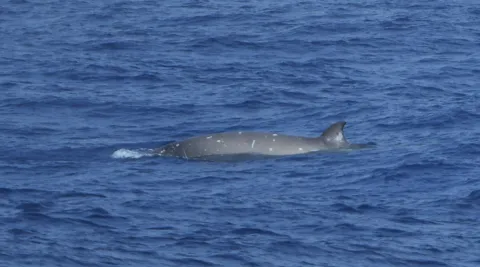
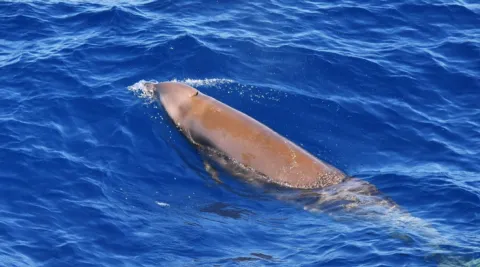
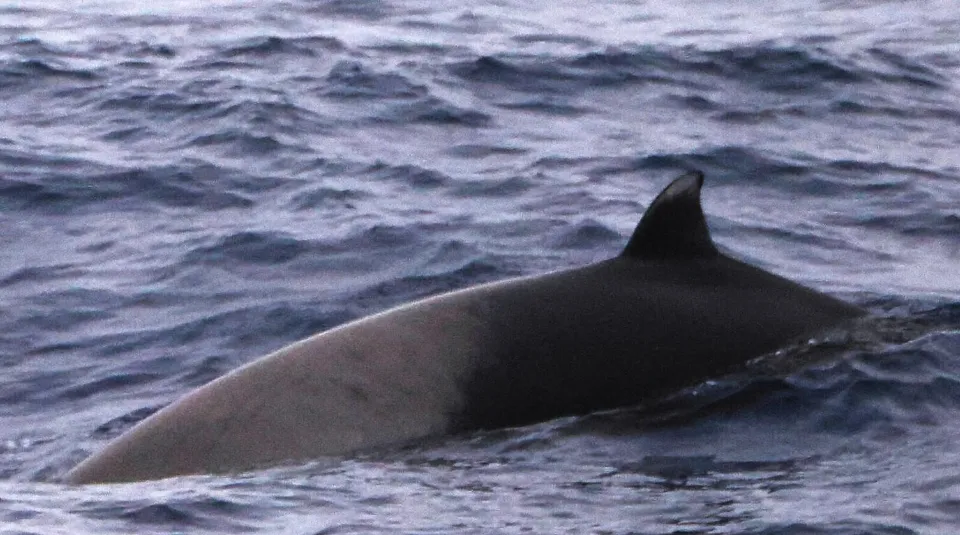
Arguably the boldest-patterned beaked whale on Earth, adult strap-toothed whales wear a contrasting white cape across the foreback against a jet-black mask and belly. Even stranger are the adult bulls’ two lower teeth, which erupt upward and curve up to 30 centimetres right over the upper beak until the jaws can barely open a few centimetres — yet they suction-feed effortlessly on deep-sea squid.
Inhabiting cool sub-Antarctic waters between 35°S and the Polar Front, they are spotted during open-ocean bridge watches across the northern Drake Passage, around the Falkland plateau, and south of New Zealand.
When to Spot Strap-Toothed Whale (Oct–Mar)
Migratory baleen and toothed whales arrive in growing numbers from December, reaching peak krill-feeding density across February and March.
Frequently asked questions about Strap-Toothed Whale
Browse all Antarctica expedition FAQsWhen is the best time to see Strap-Toothed Whale in Antarctica?
Peak sighting months for Strap-Toothed Whale are January, February, March. Migratory baleen and toothed whales arrive in growing numbers from December, reaching peak krill-feeding density across February and March. Read our Antarctic whale-watching month guide and seasonal comparison.
Where can you spot Strap-Toothed Whale on an Antarctica cruise?
Strap-Toothed Whale (Mesoplodon layardii) is primarily encountered in Drake Passage, Scotia Sea, Falkland Islands, Auckland Islands, Campbell Island, with 956 upcoming expedition departures visiting these habitats. Key field traits: diet of 24+ species of small oceanic squid & deep-sea fish; Diving & swimming: 1,000–1,500 m · 30 cm wrap-around male tusks. Learn how daily Zodiac excursions and shore landings work.
How close can you approach Strap-Toothed Whale under IAATO rules?
Under IAATO marine mammal guidelines, ships and Zodiacs slow to no-wake speed and idle or cut engines within 30–100 metres of Strap-Toothed Whale, never encircling or cutting across their path — though curious whales frequently surface right beside stationary Zodiacs on their own. See our whale-watching FAQ.