| Scientific name | Garrodia nereis |
|---|---|
| Conservation status | LC Least Concern |
| Length & wingspan | 16–19 cm · 38–40 cm |
| Weight | 28–42 g |
| Primary diet | Immature goose barnacles & planktonic crustaceans |
| Flight & range | Smallest Southern Ocean seabird |
| Did you know? | Weighing barely as much as two tablespoons of water, it weaves grass-lined tunnels directly inside overhanging skirts of giant tussac pedestals rather than digging in rock scree. |
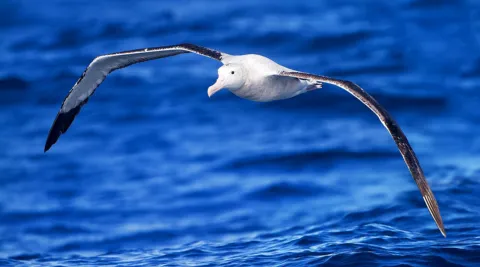
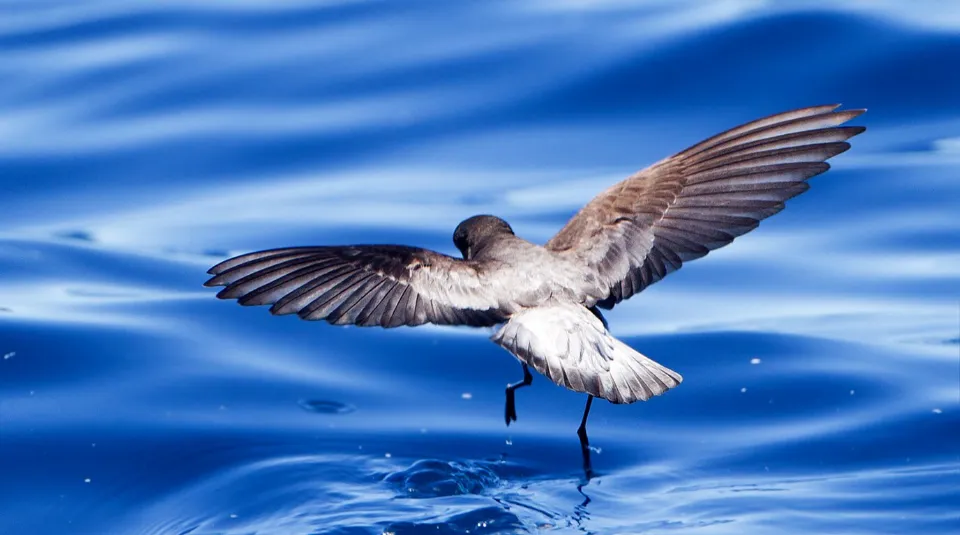
Barely 17 centimetres long and weighing little more than an ounce, the grey-backed storm petrel skips the classic white rump patch of most storm petrels in favour of a pale ash-grey lower back and rump tipped with a black tail band, paired with a crisp white belly and white underwing panels.
Uniquely tying its nesting burrows directly into skirts of dense tussac grass rather than rock scree, it patters delicately over drifting giant kelp mats off the Falkland Islands, South Georgia, and New Zealand’s sub-Antarctic islands.
When to Spot Grey-Backed Storm Petrel (Oct–Mar)
Courtship and cliff nesting peak from November to January across the Drake Passage, Falkland Islands, South Georgia, and Peninsula headlands.
Frequently asked questions about Grey-Backed Storm Petrel
Browse all Antarctica expedition FAQsWhen is the best time to see Grey-Backed Storm Petrel in Antarctica?
Peak sighting months for Grey-Backed Storm Petrel are November, December, January. Courtship and cliff nesting peak from November to January across the Drake Passage, Falkland Islands, South Georgia, and Peninsula headlands. Compare conditions in our Early, Peak & Late Summer FAQ.
Where can you spot Grey-Backed Storm Petrel on an Antarctica cruise?
Grey-Backed Storm Petrel (Garrodia nereis) is primarily encountered in Scotia Sea, South Georgia, Falkland Islands, Auckland Islands, Campbell Island, with 214 upcoming expedition departures visiting these habitats. Key field traits: diet of Immature goose barnacles & planktonic crustaceans; Flight & range: Smallest Southern Ocean seabird. Learn how daily Zodiac excursions and shore landings work.
How close can you approach Grey-Backed Storm Petrel under IAATO rules?
Under mandatory IAATO wildlife distance and biosecurity rules, visitors ashore must keep at least 5 metres (15 feet) from Grey-Backed Storm Petrel, give birds the right of way on colony trails, and never kneel or place gear on the snow. If a curious penguin walks closer on its own, remain still and let it pass. See our recommended camera lenses (70–200mm / 100–400mm).