| Scientific name | Globicephala melas edwardii |
|---|---|
| Conservation status | LC Least Concern |
| Body length | 4.5–6.7 m |
| Weight | 1.3–3.2 t |
| Primary diet | Oceanic squid, octopuses & demersal fish |
| Diving & swimming | To 800 m · up to 18 min |
| Did you know? | Despite the name, pilot whales are giant oceanic dolphins living in tight matrilineal pods where post-reproductive grandmothers stay with their sons and daughters for life. |
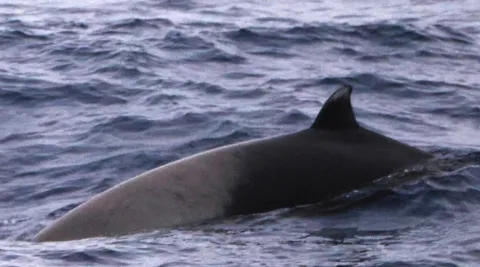
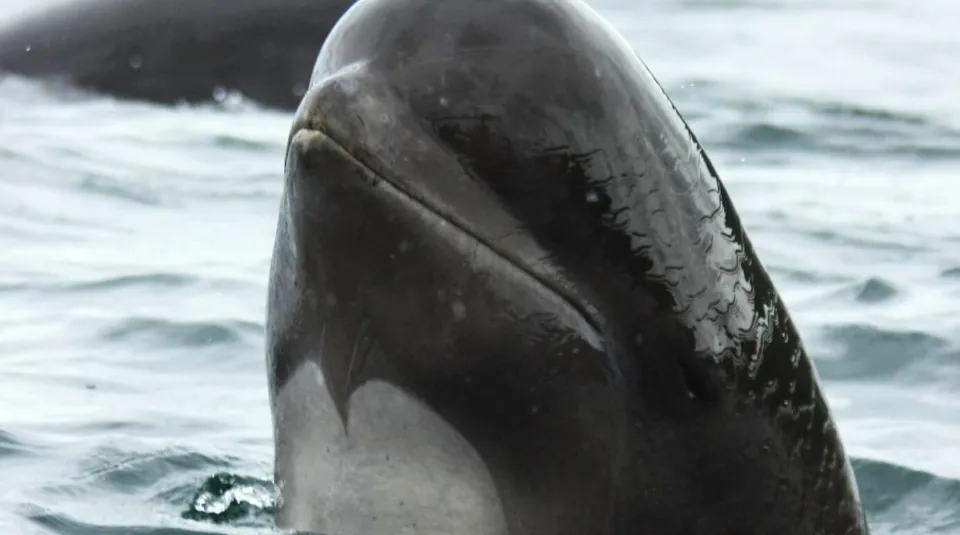
Named for their sickle-shaped pectoral flippers — stretching up to a fifth of their six-metre jet-black body length — long-finned pilot whales are large oceanic dolphins living in lifelong matrilineal pods comparable to orcas. A pale anchor-shaped patch on the chest and a grey saddle blaze behind the broad, low-slung dorsal fin confirm the identification alongside ships.
Large aggregations, often accompanied by hourglass or dusky dolphins and wheeled over by albatrosses, are classic open-ocean encounters in the northern Drake Passage, over the Falkland shelf break, and across the sub-Antarctic waters south of New Zealand.
When to Spot Long-Finned Pilot Whale (Oct–Mar)
Migratory baleen and toothed whales arrive in growing numbers from December, reaching peak krill-feeding density across February and March.
Frequently asked questions about Long-Finned Pilot Whale
Browse all Antarctica expedition FAQsWhen is the best time to see Long-Finned Pilot Whale in Antarctica?
Peak sighting months for Long-Finned Pilot Whale are January, February, March. Migratory baleen and toothed whales arrive in growing numbers from December, reaching peak krill-feeding density across February and March. Read our Antarctic whale-watching month guide and seasonal comparison.
Where can you spot Long-Finned Pilot Whale on an Antarctica cruise?
Long-Finned Pilot Whale (Globicephala melas edwardii) is primarily encountered in Drake Passage, Scotia Sea, Falkland Islands, Auckland Islands, Campbell Island, with 956 upcoming expedition departures visiting these habitats. Key field traits: diet of Oceanic squid, octopuses & demersal fish; Diving & swimming: To 800 m · up to 18 min. Learn how daily Zodiac excursions and shore landings work.
How close can you approach Long-Finned Pilot Whale under IAATO rules?
Under IAATO marine mammal guidelines, ships and Zodiacs slow to no-wake speed and idle or cut engines within 30–100 metres of Long-Finned Pilot Whale, never encircling or cutting across their path — though curious whales frequently surface right beside stationary Zodiacs on their own. See our whale-watching FAQ.