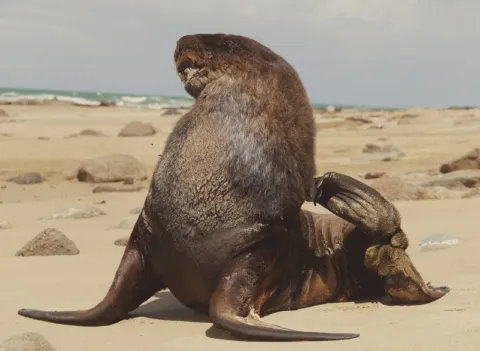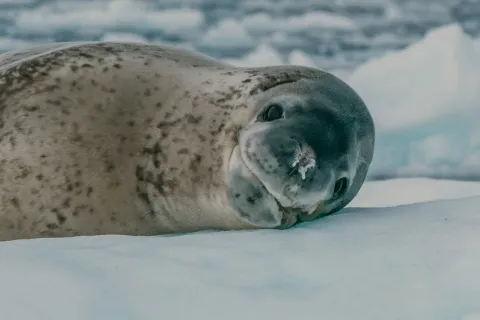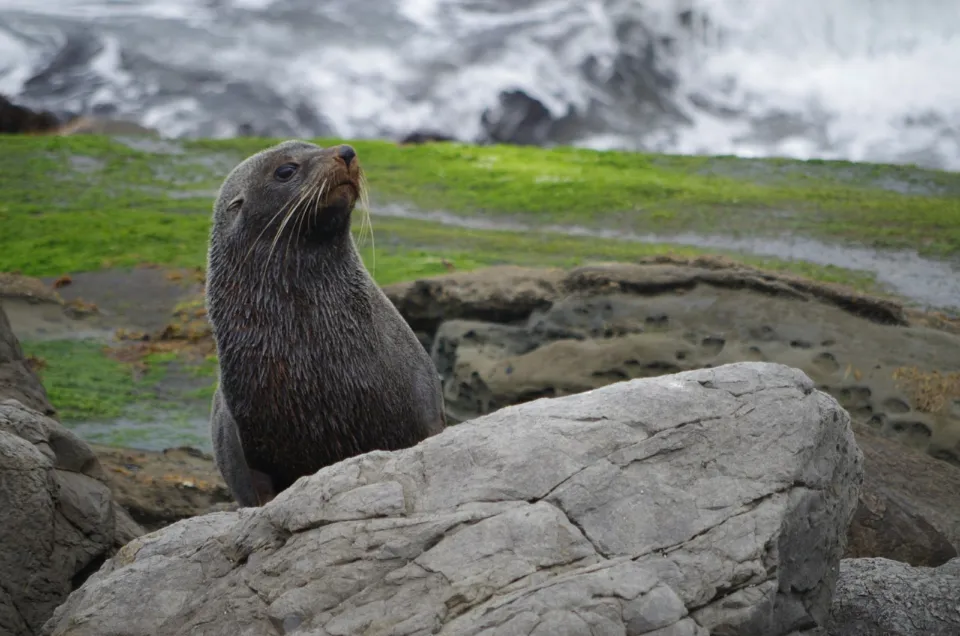
Landings on Macquarie Island, Campbell Island and the Auckland Islands are where most travellers on our voyages get a close look at Arctocephalus forsteri, the New Zealand fur seal. They tend to occupy the tussock-backed coves and boulder beaches these islands are known for, and zodiac landings often pass within a few metres of animals sunning themselves on the rocks.
The species carries several names depending on where you hear it — New Zealand fur seal to English speakers in New Zealand, kekeno in Māori, and long-nosed fur seal in the Australian population now considered genetically distinct despite near-identical build. Whatever the label, this is the same animal whose numbers were driven to near-extinction after human, and later European, arrival in New Zealand and Australia. Seeing established colonies on these remote islands today is a reminder of how far the recovery has come.
Expedition seasons to these southern islands generally run through the austral summer, and that is when you are most likely to encounter fur seals ashore rather than out foraging at sea.