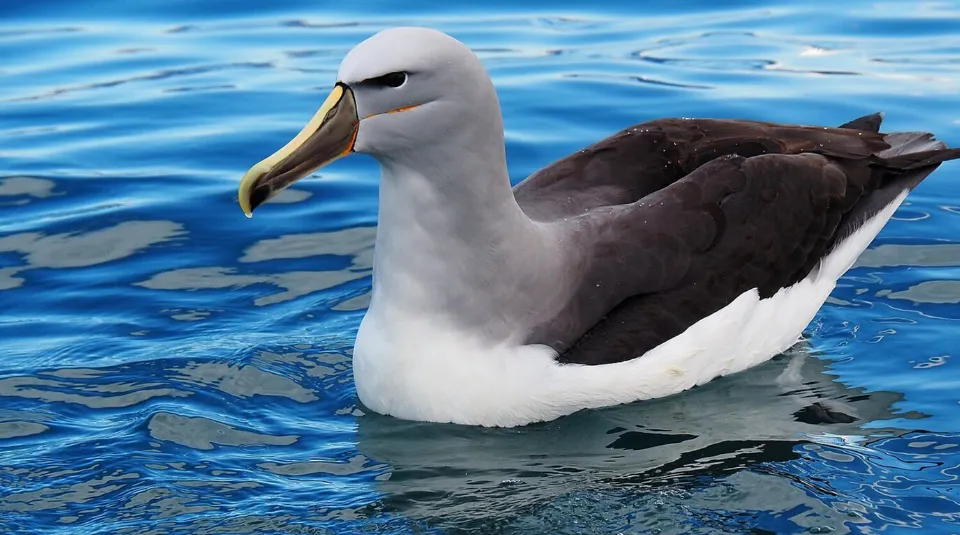
| Scientific name | Thalassarche salvini |
|---|---|
| Conservation status | VU Vulnerable |
| Length & wingspan | 90 cm · 2.45–2.56 m |
| Weight | 3.3–4.9 kg |
| Primary diet | Pelagic fish, arrow squid, krill & salps |
| Flight & range | 8,500 km Pacific crossing to Humboldt Current |
| Did you know? | Roughly 97% of the global population nests on bare, wind-scoured granite ledges of New Zealand’s tiny Bounty Islands, gluing nests together from dried mud, feathers, and guano. |
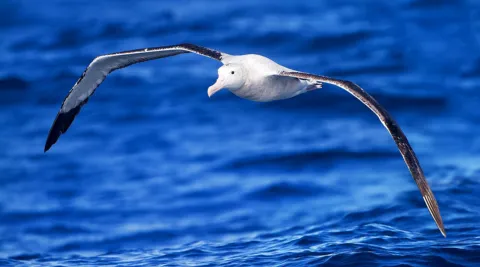
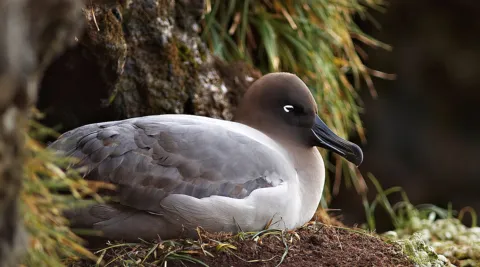
Breeding primarily on the remote granite stacks of New Zealand’s Bounty and Snares archipelagos, Salvin’s albatross wears a smooth dove-grey hood shading into a paler crown, set off by a multi-toned grey-olive bill with a pale yellow ridge and a small black spot at the tip of the lower mandible.
A powerhouse trans-Pacific migrant, it sweeps across sub-Antarctic New Zealand routes on Ross Sea voyages and gathers in rich upwelling zones off southern Chile and western Tierra del Fuego.
When to Spot Salvin's Albatross (Oct–Mar)
Courtship and cliff nesting peak from November to January across the Drake Passage, Falkland Islands, South Georgia, and Peninsula headlands.
Frequently asked questions about Salvin's Albatross
Browse all Antarctica expedition FAQsWhen is the best time to see Salvin's Albatross in Antarctica?
Peak sighting months for Salvin's Albatross are November, December, January. Courtship and cliff nesting peak from November to January across the Drake Passage, Falkland Islands, South Georgia, and Peninsula headlands. Compare conditions in our Early, Peak & Late Summer FAQ.
Where can you spot Salvin's Albatross on an Antarctica cruise?
Salvin's Albatross (Thalassarche salvini) is primarily encountered in Cape Horn, Auckland Islands, Campbell Island, with 170 upcoming expedition departures visiting these habitats. Key field traits: diet of Pelagic fish, arrow squid, krill & salps; Flight & range: 8,500 km Pacific crossing to Humboldt Current. Learn how daily Zodiac excursions and shore landings work.
How close can you approach Salvin's Albatross under IAATO rules?
Under mandatory IAATO wildlife distance and biosecurity rules, visitors ashore must keep at least 5 metres (15 feet) from Salvin's Albatross, give birds the right of way on colony trails, and never kneel or place gear on the snow. If a curious penguin walks closer on its own, remain still and let it pass. See our recommended camera lenses (70–200mm / 100–400mm).