| Scientific name | Anas georgica georgica |
|---|---|
| Conservation status | LC Least Concern |
| Length & wingspan | 43–55 cm · 65–72 cm |
| Weight | 460–650 g |
| Primary diet | Freshwater fairy shrimp, algae, seeds & seal carrion |
| Polar adaptation | World’s only scavenging carnivorous dabbling duck |
| Did you know? | Isolated on glaciated South Georgia, this dainty dabbling duck evolved an astonishing winter survival habit — wading alongside giant petrels to feed directly on elephant-seal carcasses. |
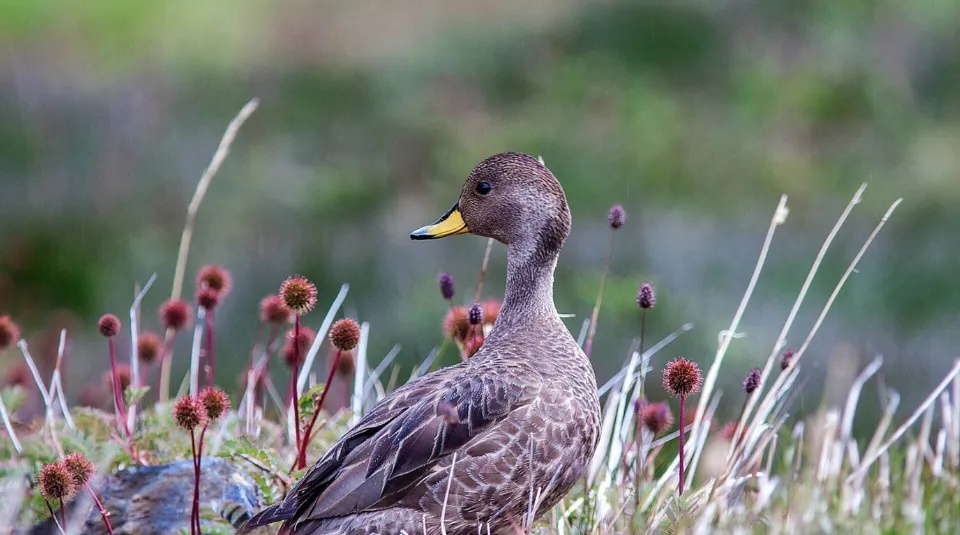
An isolated endemic subspecies of yellow-billed pintail found nowhere outside South Georgia, this dainty speckled-brown duck with a butter-yellow bill flanking a black central stripe has evolved a startling dietary twist to survive sub-Antarctic winters: alongside tussac seeds and pond invertebrates, it readily joins giant petrels and skuas to feed on elephant-seal carrion along the beaches.
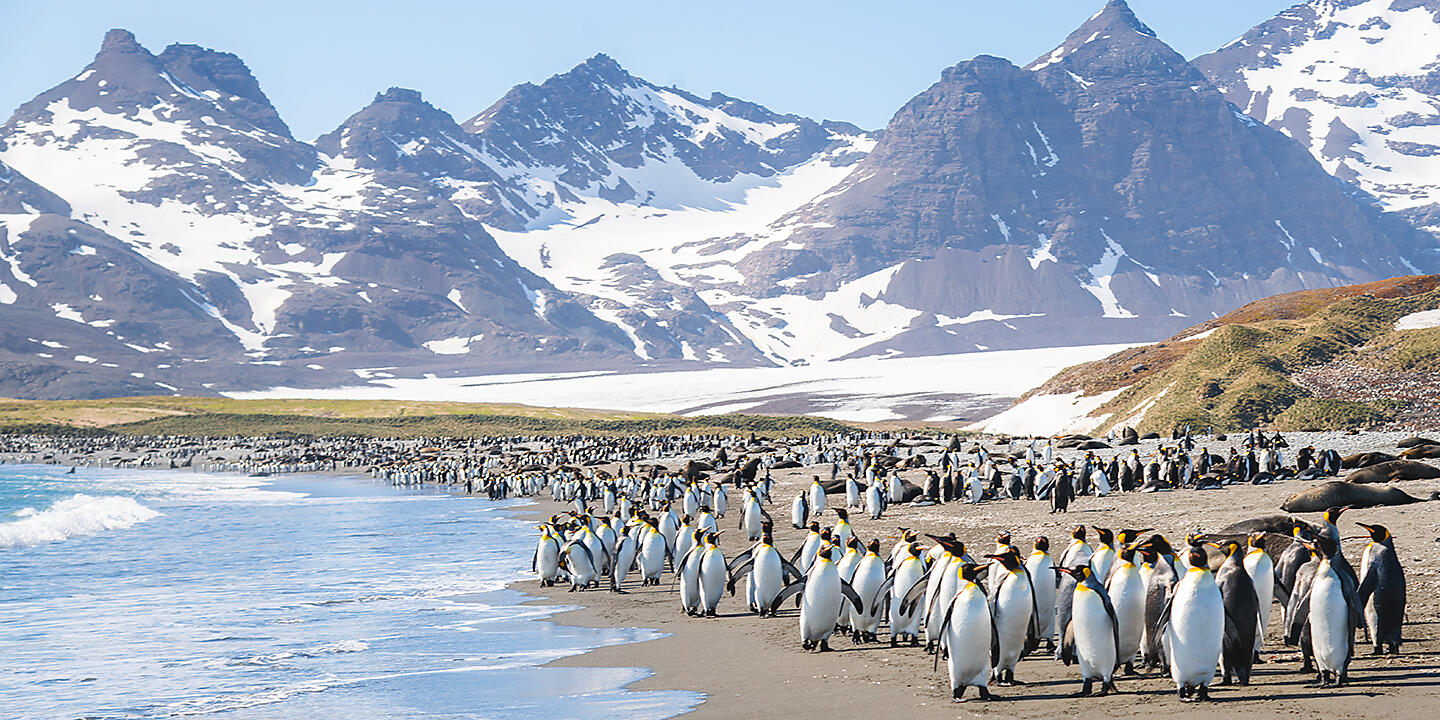
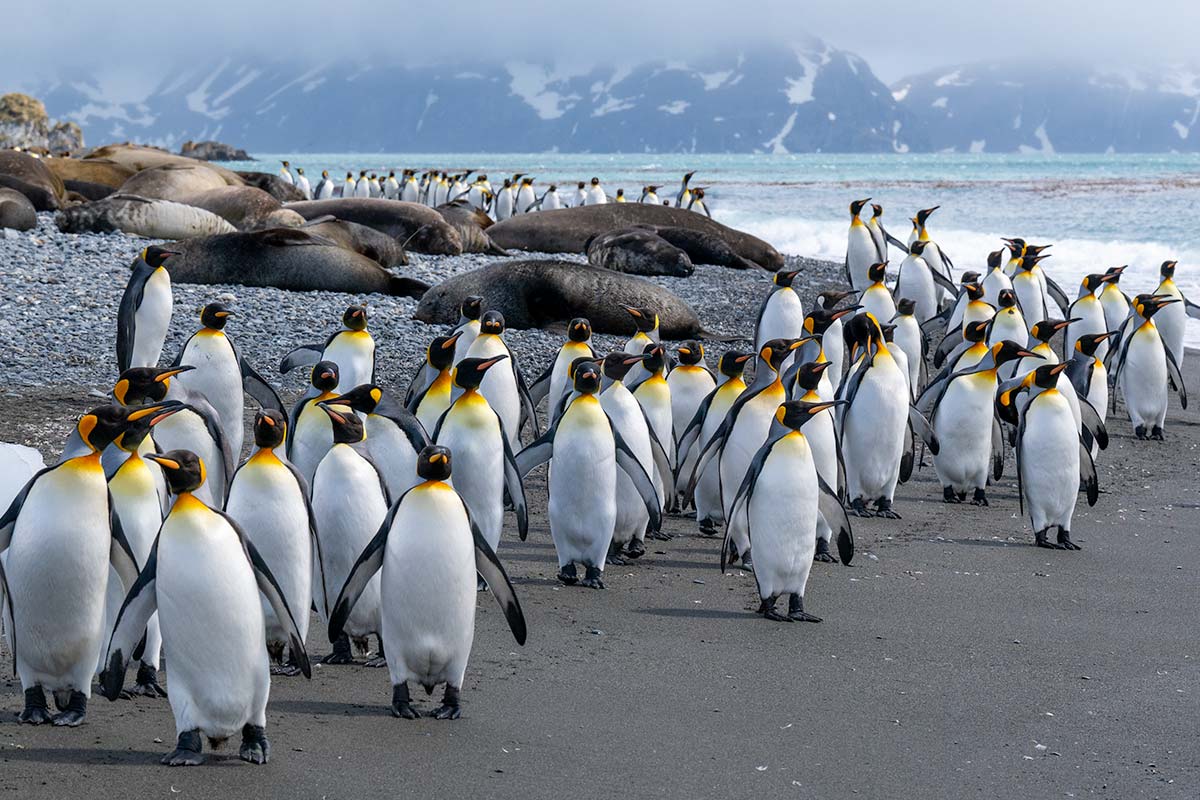
Following South Georgia’s landmark rodent-eradication project completed in 2018, pintail numbers have rebounded strongly — watch for pairs paddling meltwater tarns and weaving quietly among king penguins at Salisbury Plain, Fortuna Bay, and Grytviken.
When to Spot South Georgia Pintail (Oct–Mar)
Courtship and cliff nesting peak from November to January across the Drake Passage, Falkland Islands, South Georgia, and Peninsula headlands.
Frequently asked questions about South Georgia Pintail
Browse all Antarctica expedition FAQsWhen is the best time to see South Georgia Pintail in Antarctica?
Peak sighting months for South Georgia Pintail are November, December, January. Courtship and cliff nesting peak from November to January across the Drake Passage, Falkland Islands, South Georgia, and Peninsula headlands. Compare conditions in our Early, Peak & Late Summer FAQ.
Where can you spot South Georgia Pintail on an Antarctica cruise?
South Georgia Pintail (Anas georgica georgica) is primarily encountered in South Georgia, with 148 upcoming expedition departures visiting these habitats. Key field traits: diet of Freshwater fairy shrimp, algae, seeds & seal carrion; Polar adaptation: World’s only scavenging carnivorous dabbling duck. Learn how daily Zodiac excursions and shore landings work.
How close can you approach South Georgia Pintail under IAATO rules?
Under mandatory IAATO wildlife distance and biosecurity rules, visitors ashore must keep at least 5 metres (15 feet) from South Georgia Pintail, give birds the right of way on colony trails, and never kneel or place gear on the snow. If a curious penguin walks closer on its own, remain still and let it pass. See our recommended camera lenses (70–200mm / 100–400mm).