| Scientific name | Lissodelphis peronii |
|---|---|
| Conservation status | LC Least Concern |
| Body length | 1.8–3.0 m |
| Weight | 60–116 kg |
| Primary diet | Lanternfish, squid & mesopelagic crustaceans |
| Diving & swimming | Zero dorsal fin · 40+ km/h skipping-stone leaps |
| Did you know? | The only dolphin in the Southern Hemisphere with no dorsal fin at all, herds of hundreds bound across Polar Front swells in low, flat leaps that look from a bridge deck like skipping tuxedoed torpedoes. |
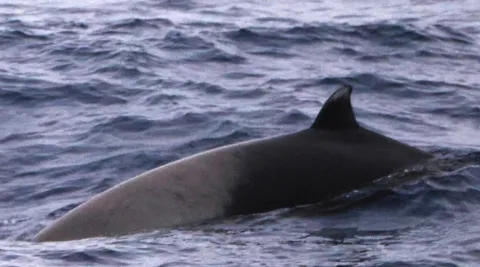
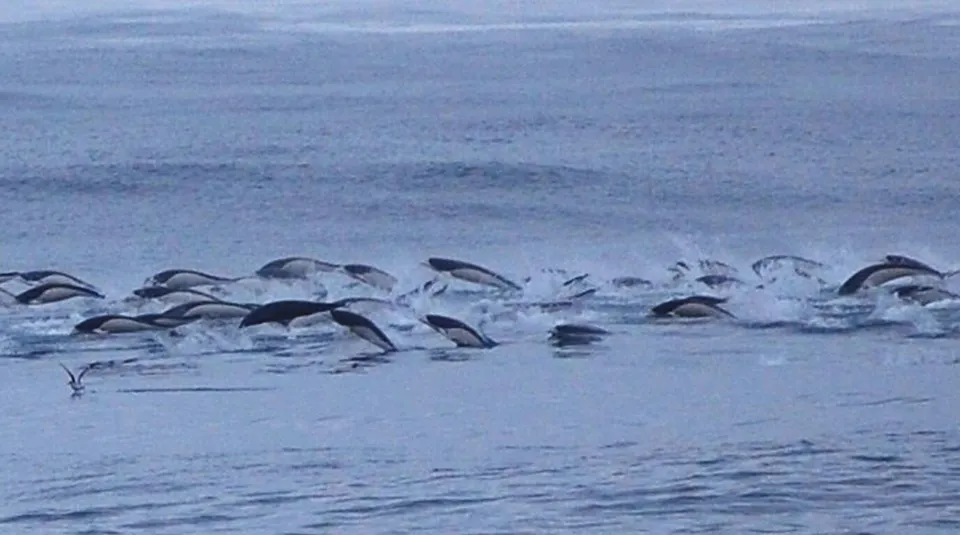
One of the most visually arresting mammals at sea, the southern right whale dolphin has no dorsal fin whatsoever — just a smooth, streamlined back cleanly bisected between velvety jet-black above and brilliant snow-white below. Travelling in fast-moving offshore herds of fifty to several hundred animals, they bound across cold swells in flat, low-angle leaps that look like skipping stones.
Strictly pelagic in deep waters bracketing the Subantarctic and Polar Fronts, they reward dedicated deck spotters crossing the Drake Passage and Scotia Sea, often associating with long-finned pilot whales.
When to Spot Southern Right Whale Dolphin (Oct–Mar)
Migratory baleen and toothed whales arrive in growing numbers from December, reaching peak krill-feeding density across February and March.
Frequently asked questions about Southern Right Whale Dolphin
Browse all Antarctica expedition FAQsWhen is the best time to see Southern Right Whale Dolphin in Antarctica?
Peak sighting months for Southern Right Whale Dolphin are January, February, March. Migratory baleen and toothed whales arrive in growing numbers from December, reaching peak krill-feeding density across February and March. Read our Antarctic whale-watching month guide and seasonal comparison.
Where can you spot Southern Right Whale Dolphin on an Antarctica cruise?
Southern Right Whale Dolphin (Lissodelphis peronii) is primarily encountered in Drake Passage, Cape Horn, Scotia Sea, Falkland Islands, with 949 upcoming expedition departures visiting these habitats. Key field traits: diet of Lanternfish, squid & mesopelagic crustaceans; Diving & swimming: Zero dorsal fin · 40+ km/h skipping-stone leaps. Learn how daily Zodiac excursions and shore landings work.
How close can you approach Southern Right Whale Dolphin under IAATO rules?
Under IAATO marine mammal guidelines, ships and Zodiacs slow to no-wake speed and idle or cut engines within 30–100 metres of Southern Right Whale Dolphin, never encircling or cutting across their path — though curious whales frequently surface right beside stationary Zodiacs on their own. See our whale-watching FAQ.