| Scientific name | Leptonychotes weddellii |
|---|---|
| Conservation status | LC Least Concern |
| Body length | 2.5–3.3 m |
| Weight | 400–600 kg |
| Primary diet | Antarctic silverfish, giant toothfish, squid & octopuses |
| Diving & swimming | 600–900 m · up to 82 min |
| Did you know? | Earth’s southernmost breeding mammal (to 77°S in McMurdo Sound), Weddell seals use forward-angled canine teeth like ice chisels to ream open breathing holes through two metres of solid fast ice. |
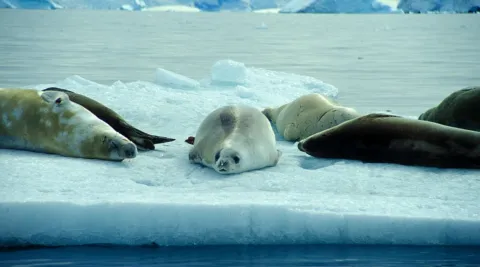
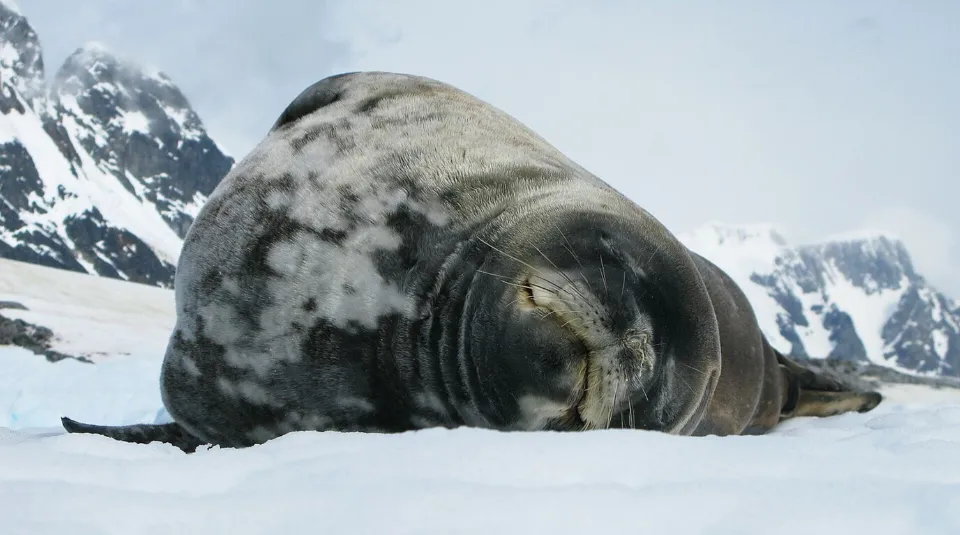
The Weddell seal takes its name from the sea where British sealing captain James Weddell's expeditions first encountered and described it in the 1820s. Travellers on the Weddell Sea route are following that same history, and the seal remains one of the more reliably seen animals along this coast, hauled out on the fast ice that forms close to the continent.
Because it favours this fast ice, often near Antarctic research stations, sightings tend to cluster wherever ships can push in close to shore-fast ice edges: along the Antarctic Peninsula, through the narrow channels of the Antarctic Sound, and further round in the Ross Sea. It is a genuinely circumpolar species, so there is no single best place to find it, only better ice conditions.
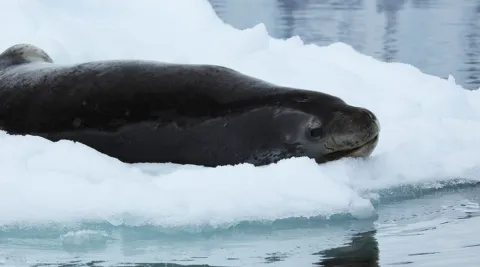
As a relatively large and abundant true seal, it is easy to pick out lying on the ice, usually solitary or in loose groups rather than dense colonies. Its biology is unusually well studied for a polar mammal, largely because it lives so close to permanent Antarctic bases, which is part of why guides on these voyages can usually explain its behaviour in more detail than most other seal species encountered en route.
When to Spot Weddell Seal (Oct–Mar)
Haul-outs along ice floes and sub-Antarctic beaches run reliably from November through February, shifting from breeding ashore to coastal foraging.
Frequently asked questions about Weddell Seal
Browse all Antarctica expedition FAQsWhen is the best time to see Weddell Seal in Antarctica?
Peak sighting months for Weddell Seal are November, December, January. Haul-outs along ice floes and sub-Antarctic beaches run reliably from November through February, shifting from breeding ashore to coastal foraging. Compare conditions in our Early, Peak & Late Summer FAQ.
Where can you spot Weddell Seal on an Antarctica cruise?
Weddell Seal (Leptonychotes weddellii) is primarily encountered in Antarctic Peninsula, Lemaire Channel, Weddell Sea, Marguerite Bay, Ross Sea, with 946 upcoming expedition departures visiting these habitats. Key field traits: diet of Antarctic silverfish, giant toothfish, squid & octopuses; Diving & swimming: 600–900 m · up to 82 min. Learn how daily Zodiac excursions and shore landings work.
How close can you approach Weddell Seal under IAATO rules?
Under mandatory IAATO wildlife distance and biosecurity rules, visitors must maintain at least 15 to 25 metres (50–80 feet) from Weddell Seal ashore or on ice floes and never walk between a seal and the water. See our polar telephoto lens recommendations.