| Scientific name | Ommatophoca rossii |
|---|---|
| Conservation status | LC Least Concern |
| Body length | 1.7–2.4 m |
| Weight | 130–215 kg |
| Primary diet | Midwater squid & silverfish |
| Diving & swimming | 400–800 m · largest eyes relative to skull of any seal |
| Did you know? | Antarctica’s rarest seal inflates its soft palate like a bagpipe resonance chamber to broadcast melodic, siren-like trills across kilometres of consolidated pack ice without opening its mouth. |
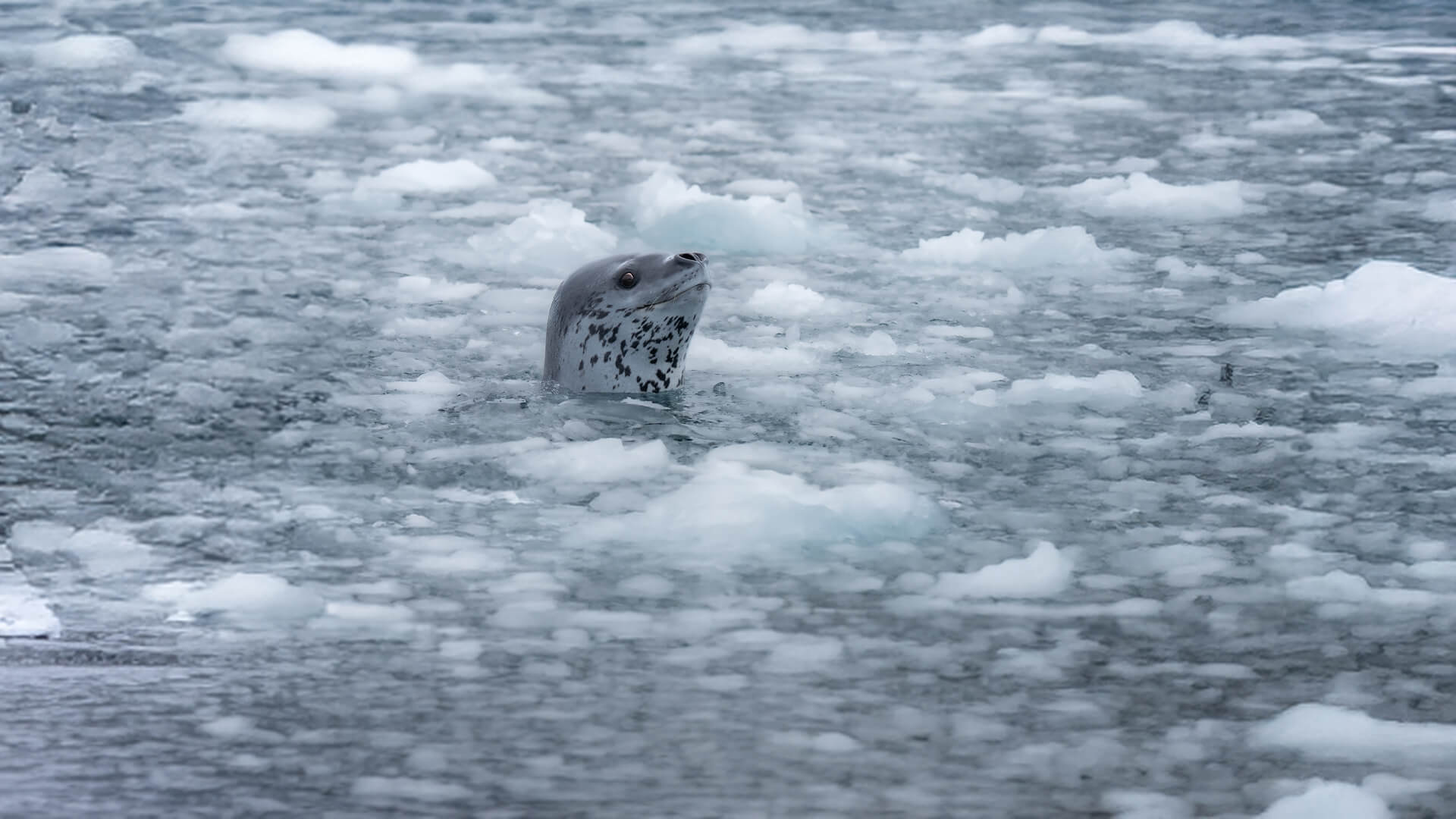
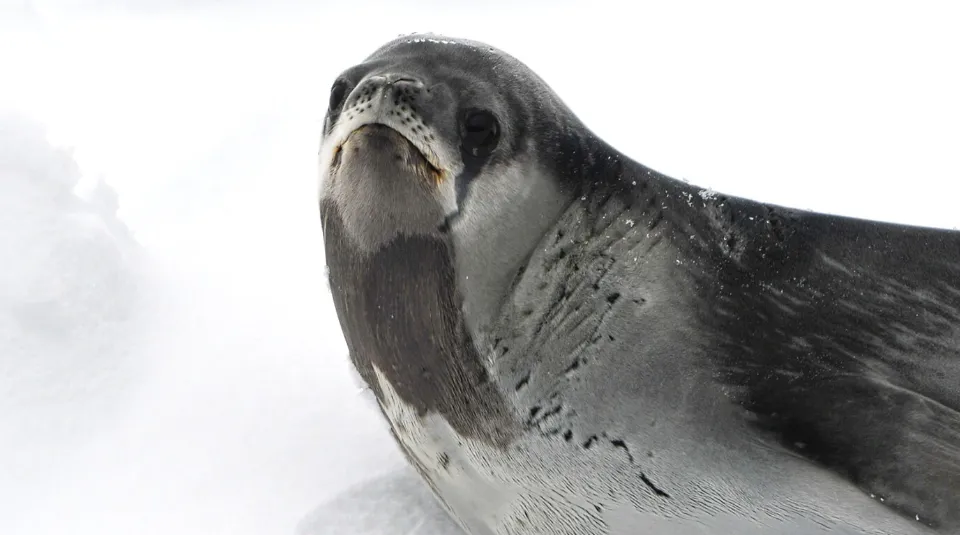
Completing the quartet of true Antarctic ice seals alongside the Weddell, crabeater, and leopard seal, the Ross seal is a genuine trophy sighting even for veteran polar naturalists. Short-snouted with huge dark eyes adapted for hunting squid in the mesopelagic twilight zone and bold dark streaks running down the throat and chest, it tilts its head skyward and inflates its throat when approached, emitting haunting, melodic chirps and sirens that carry through ice and water.
Because Ross seals favour dense interior pack ice far from the open coast, the highest odds of spotting one hauled out solo on a heavy floe come aboard icebreakers pushing deep into the Ross Sea, eastern Weddell Sea, or Bellingshausen Sea below the Antarctic Circle in January and February.
When to Spot Ross Seal (Oct–Mar)
Sightings concentrate in January–February when ships can push deeper into consolidated pack ice along the Weddell, Bellingshausen, and Ross seas.
Frequently asked questions about Ross Seal
Browse all Antarctica expedition FAQsWhen is the best time to see Ross Seal in Antarctica?
Peak sighting months for Ross Seal are January, February. Sightings concentrate in January–February when ships can push deeper into consolidated pack ice along the Weddell, Bellingshausen, and Ross seas. Compare conditions in our Early, Peak & Late Summer FAQ.
Where can you spot Ross Seal on an Antarctica cruise?
Ross Seal (Ommatophoca rossii) is primarily encountered in Antarctic Circle, Weddell Sea, Bellingshausen Sea, Ross Sea, with 340 upcoming expedition departures visiting these habitats. Key field traits: diet of Midwater squid & silverfish; Diving & swimming: 400–800 m · largest eyes relative to skull of any seal. Learn how daily Zodiac excursions and shore landings work.
How close can you approach Ross Seal under IAATO rules?
Under mandatory IAATO wildlife distance and biosecurity rules, visitors must maintain at least 15 to 25 metres (50–80 feet) from Ross Seal ashore or on ice floes and never walk between a seal and the water. See our polar telephoto lens recommendations.