Antarctic Marine Mammals: The World of Whales and Seals
Quark Expeditions · 11 days · Buenos Aires, Argentina → Ushuaia
| Operator | Quark Expeditions |
|---|---|
| Available departures | 2 2 available of 3 scheduled |
| Typical duration | 11 days · Buenos Aires, Argentina → Ushuaia |
| Price range (per person, USD) | $14,453 – $22,201 |
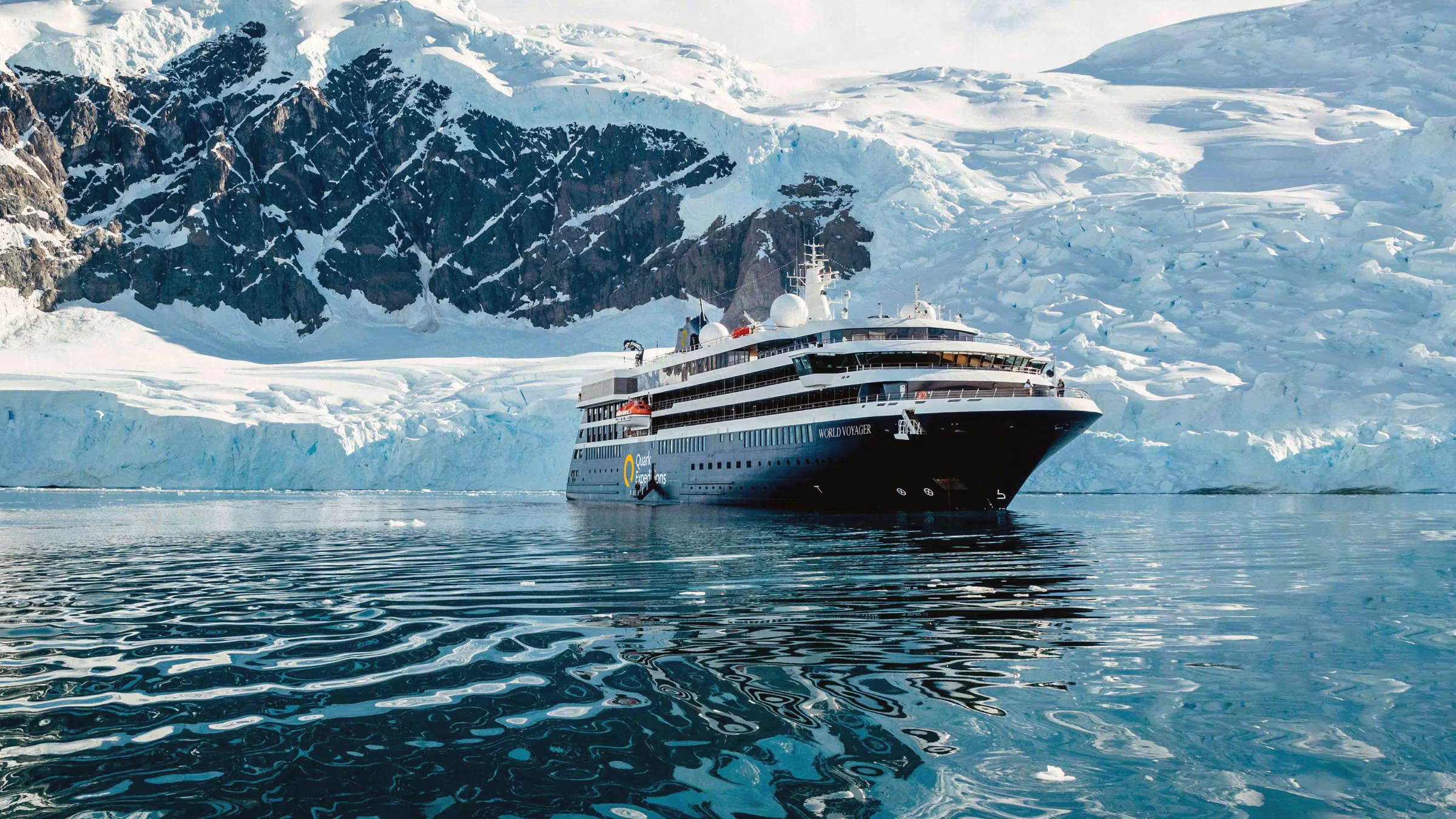
| ships | World Voyager |
| Prices last verified | 48-hour verification methodology |
Upcoming departures — Antarctic Marine Mammals: The World of Whales and Seals
| Departure | Ship | Duration | Availability | From | Action |
|---|---|---|---|---|---|
| Mar 5, 2027 – Mar 15, 2027 | World Voyager · 168 guests | 11 days | Available |
$14,551
|
|
| Mar 3, 2028 – Mar 13, 2028 | World Voyager · 168 guests | 11 days | Sold out | — | |
| Mar 5, 2029 – Mar 15, 2029 Best price | World Voyager · 168 guests | 11 days | Available |
$14,453
|
Day by day
Itinerary and landing sites are indicative and subject to change based on weather, sea ice, and wildlife conditions.
DAY 1 Arrive in Buenos Aires, Argentina
Upon arriving in this fascinating South American city, known for its vibrant Argentinian culture, European architecture and cosmopolitan vibe, you will independently transfer to your pre- expedition hotel night, included in the Charter Flight and Hotel Package.
DAY 2 Fly to Ushuaia and Embark
After an early breakfast at the hotel, the group will transfer to the airport and board our private charter flight to Ushuaia, Argentina. Upon arrival, you will be transferred from the airport to a central downtown location to enjoy time on your own to explore this quaint port town before making your way to the designated meeting spot near the pier, where you will be transferred to the ship for embarkation. After a late afternoon embarkation, we will sail along the historic Beagle Channel, which transects the Tierra del Fuego archipelago in the extreme south of South America. Expect an air of anticipation as you depart—the next time you see land, you’ll be in the remote Antarctic wilderness.
DAY 3 At Sea: Drake Passage Southbound
Crossing the 800-km Drake is considered a rite of passage for many travelers. Traversing this legendary waterway means you’ll experience the Antarctic Convergence, where the cold, northward- flowing Antarctic waters meet the warmer, southward-flowing water of the sub-Antarctic. The mixing of cold and warm waters creates a nutrient-rich feeding ground, especially for whales and other marine mammals. Guests are encouraged to keep binoculars close at hand—and to be prepared for Expedition Team members to announce any whale sightings. The team of guest scientists will be introduced early in the voyage. Ari Friedlaender, who co-developed this itinerary, and members of his team from the Friedlaender Lab, are global authorities on the underwater behavior and ecology of marine mammals, particularly whales. Guests will also meet a research associate with the Happywhale platform, which enables citizens to upload their whale photos to help identify species and, possibly, individual whales. (See bios, page 13).
DAY 4 At Sea: Sailing Toward Antarctica
The second day of your Drake Passage crossing is an ideal time to attend scheduled polar presentations that will enhance your Antarctic experience. It’s also an excellent opportunity to visit the Science Hub on Deck 4 (see page 5), an instrumental part of your voyage. Spend time on deck watching for whales, which increase in number as we approach the Peninsula—and remember to upload your whale photos to the Happywhale platform.
DAYS 5–7 Antarctic Peninsula
The timing of this voyage maximizes opportunities to observe various whale species along the Antarctic Peninsula. After the ice recedes in October and November, the food chain begins to reestablish itself. Whales, seals and other marine mammals are drawn to these rich feeding grounds—especially for the krill. By February and March, these creatures, which have been intensely feeding, are satiated and relaxed, making them more easier to spot. In addition to the Zodiac and paddling excursions, we plan to spend a lot of time on the outer decks and other vantage points on the ship to spot—and photograph—wildlife. We’ll spend our days in key marine mammal habitats of the Gerlache Strait and remote inner glacial bays. Over the next three days, we aim to explore whale hotspots such as Charlotte Bay, Portal Point, Graham Passage, Errera Channel, Cuverville Island, Andvord Bay, Fournier Bay and Dallmann Bay. Past whale sightings in these areas have included minke, humpback, fin, orca and the elusive, deep-diving Arnoux’s beaked whale. Antarctic Marine Mammals: The World of Whales & Seals is our only itinerary during which we’ll deploy hydrophones— underwater microphones that detect and record sound below the surface. You will have opportunities—during Zodiac cruises and paddling programs—to accompany Friedlaender Lab scientists as they deploy hydrophones to monitor and study marine mammal behavior, such as the vocalizations of whales. Four scientists will accompany guests in Zodiacs, with one hydrophone shared between two groups. Speakers will enable participants to listen for and, hopefully, hear whale sounds beneath the ocean surface. Engaging with scientists who are actively collecting and collating data that can be shared in real time on the water, and, through digital visual aids, brings marine biology to life in a way that transcends the water line. This activity is also available to World Voyager guests who join the Stand-Up Paddle Boarding (SUP) program. In addition to the citizen science programming, this itinerary will also feature the wonders of Antarctica: penguins, seals, immense glaciers, snowcapped mountains, icebergs, shore landings, and the polar plunge.
DAY 8 South Shetlands
Rounding out our marine mammal experiences, we hope to witness southern elephant seals in the rugged and fabled South Shetland Islands. We’ll also keep our fingers crossed for sightings of fin whales. We’ll explore this geological and historic archipelago while prioritizing shore landings, which offer further opportunities for wildlife sightings. Arriving in March allows us the rare opportunity to potentially explore key excursion sites such as Hannah Point, which is deemed a Restricted Area from early to mid-season. Massive populations of elephant seals and southern giant petrels make for awe-inspiring experiences. As with any expedition, shore landings along the coast are dependent on favorable weather.
DAY 9 At Sea: Drake Passage Northbound
Today is the start of the journey back across the Drake Passage. This is an excellent opportunity to spend more time engaging with the Friedlaender Lab scientists, or attend one of the scheduled polar presentations.
DAY 10 At Sea: Last Sailing Day
Today is your last opportunity to visit Quark Expeditions’ new Science Hub and contribute to citizen science that will support marine mammal conservation efforts. In the words of Sir David Attenborough: “No one will protect what they don’t care about. And no one will care about what they have never experienced.”
DAY 11 Disembark in Ushuaia and Fly to Buenos Aires
You will arrive in Ushuaia in the morning and disembark after breakfast. Guests will be transferred to the airport for the return group charter flight to Buenos Aires.
Seasonality & monthly starting prices
Ships operating this itinerary
Activities
54 included in fare 1 optional add-on
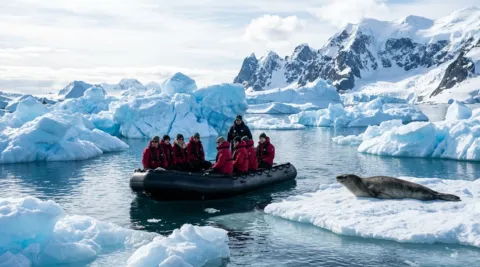
Zodiac cruising
Navigate deep into shallow coves, iceberg labyrinths, and alongside sheer glacier fronts where ships cannot reach, observing leopard seals lounging on floating floes.
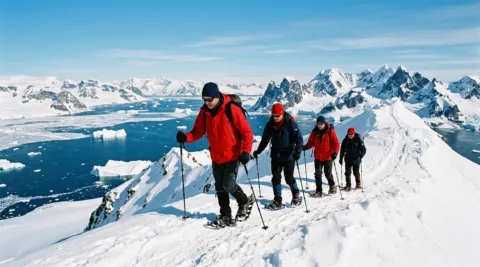
Hiking & snowshoeing
Crunch through pristine snow up glaciated ridges and volcanic vantage points for breathtaking 360° panoramas over iceberg-choked straits and penguin rookeries.
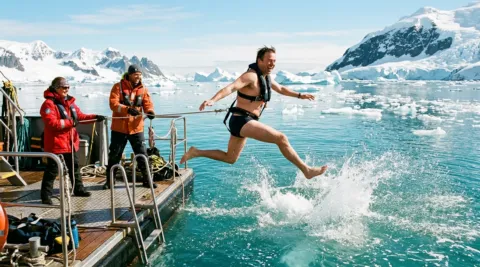
Polar plunge
Take the leap of a lifetime directly into near-freezing Antarctic waters from a Zodiac, ship gangway, or geothermal black beach for the ultimate polar badge of honor.
Photography
Specialized workshops and excursions guided by professional polar photographers to capture the ethereal midnight sun, dynamic wildlife action, and sculpted blue ice.
Kayaking & paddling
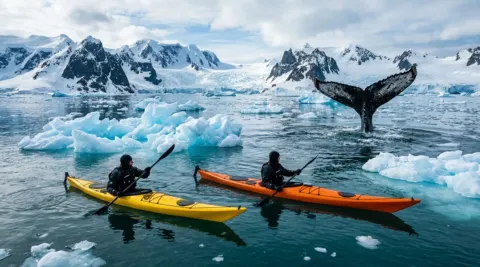
Paddle in near-silence through mirror-calm glacial bays, drifting alongside iridescent ice sculptures and listening to the deep exhales of surfacing humpback whales.
Visited Regions
4Drake Passage
Rite of Passage • Albatross Alley
South Shetland Islands
Volcanic Isles • Penguin Rookeries & Calderas
Anvers Island
Palmer Archipelago • Glacial Vistas & Palmer Station
Lemaire Channel
Kodak Gap • Kilometer-High Glaciated Chasm
More Antarctic itineraries by Quark Expeditions
6Antarctic Explorer: Discovering the 7th Continent
Drake Passage · South Shetland Islands · Anvers Island · Lemaire Channel
Antarctic Express: Fly the Drake
Drake Passage · King George Island · South Shetland Islands · Antarctic Peninsula · Lemaire Channel · Anvers Island · Antarctic Circle
Antarctic Express: Fly South, Sail North
King George Island · South Shetland Islands · Anvers Island · Lemaire Channel · Antarctic Peninsula · Drake Passage
Antarctic Express: Sail South, Fly North
South Shetland Islands · Anvers Island · Lemaire Channel · King George Island · Drake Passage
Emperor Penguin Quest: Expedition to Snow Hill
Drake Passage · South Shetland Islands · Snow Hill Island
Antarctic Peninsula: Crossing the Circle
Drake Passage · South Shetland Islands · Bransfield Strait · Anvers Island · Lemaire Channel · Antarctic Circle · Antarctic Peninsula
Wildlife on this route
Penguins
Gentoo Penguin
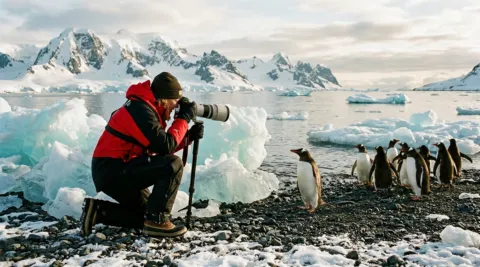
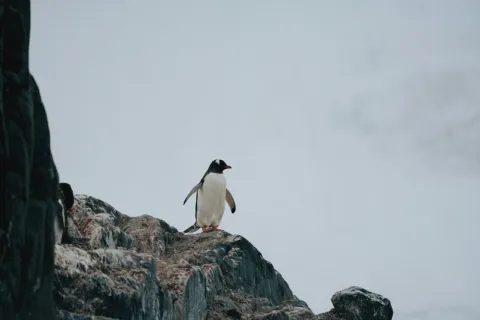
A stocky, orange-billed penguin of the genus Pygoscelis, closest kin to the Adélie and Chinstrap. Its loud, trumpeting call, delivered with head thrown back, carries across the shoreline colonies where expedition landings are made.
Whales & Dolphins
Humpback Whale
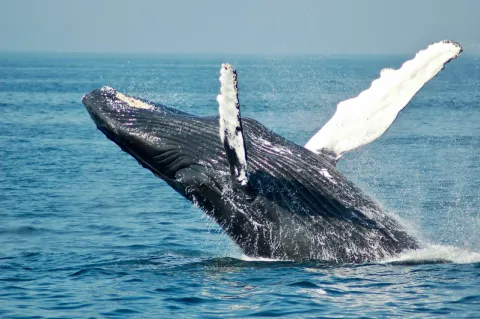
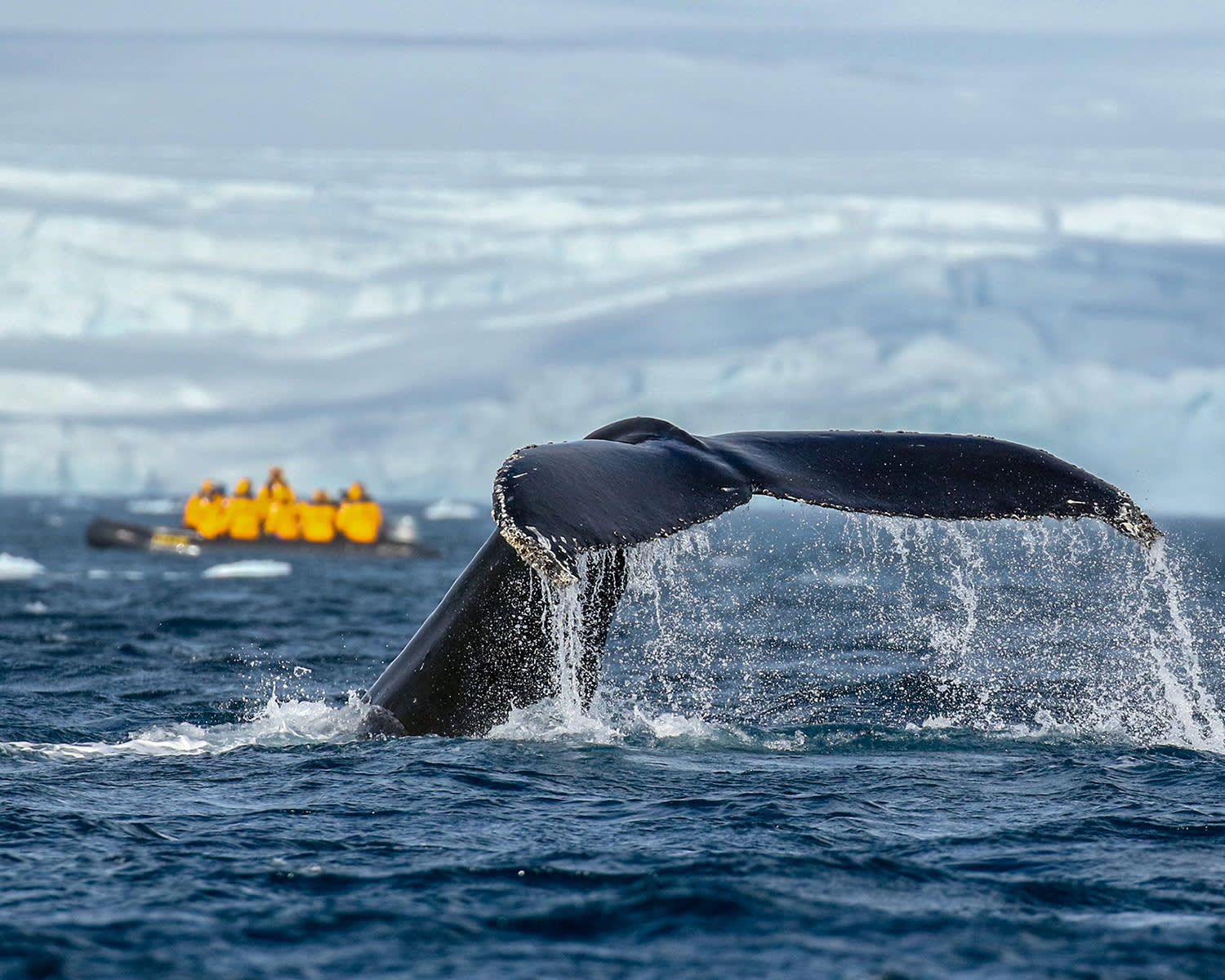
A 14–17 metre baleen whale known for breaching and long pectoral fins, often seen feeding on krill in loose groups along the ice edge.
Whales & Dolphins
Orca
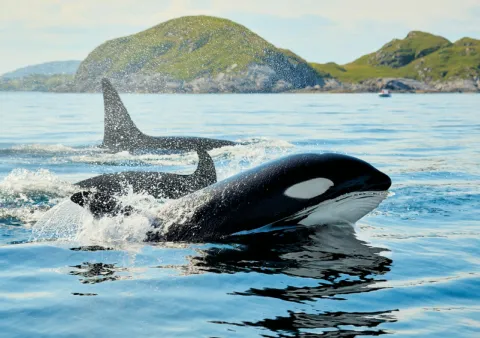
Black and white apex predator instantly recognizable by its pale eye patches, the orca is the largest of the dolphins and one of the ocean's most capable hunters. Sightings often involve a tight-knit family pod working the ice edge together.
Albatrosses & Seabirds
Wandering Albatross
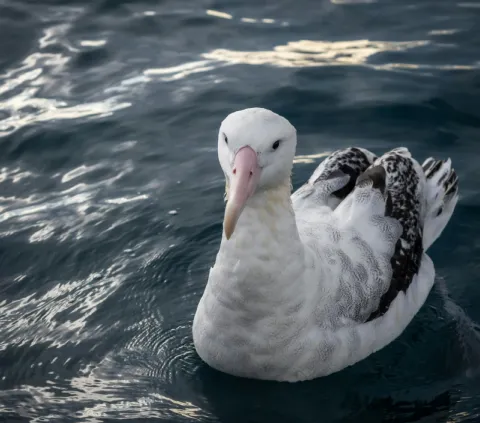
The snowy albatross, better known as the wandering albatross, has the widest wingspan of any living bird alive today. Watch for it riding the wind for hours behind the ship without a single wingbeat.