| Scientific name | Euphausia superba |
|---|---|
| Conservation status | LC Least Concern |
| Body length | 4.5–6.2 cm |
| Weight | 1–2 g |
| Primary diet | Phytoplankton diatoms & sea-ice microalgae |
| Polar adaptation | 300–500 million t total biomass |
| Did you know? | During lean Antarctic winters without phytoplankton blooms, krill can shrink their own bodies by moulting into smaller exoskeletons and survive more than 200 days without food. |
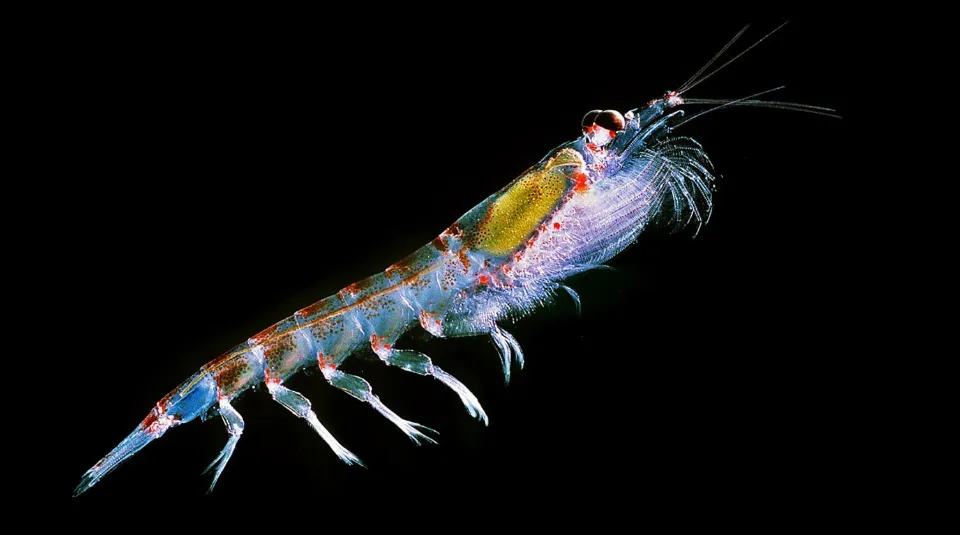
Everything iconic in Antarctica — blue and humpback whales, crabeater and fur seals, Adélie and chinstrap penguins, albatrosses, and squid — runs directly or indirectly on Euphausia superba. Growing to six centimetres with glowing bioluminescent photophores and feathery thoracic legs that filter microscopic ice algae from beneath winter sea ice, Antarctic krill aggregate into dense swarms spanning kilometres and containing an estimated 300 to 500 million tonnes of biomass across the Southern Ocean.
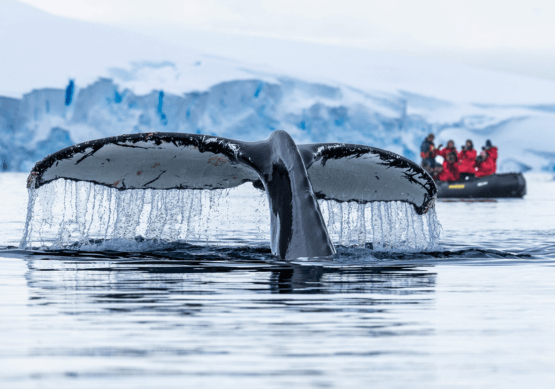
On expedition cruises through the Gerlache Strait, Bransfield Strait, and South Georgia, brick-pink surface patches of krill — and stained pink guano across penguin rookeries — signal imminent feeding frenzies of bubble-netting humpbacks and porpoising penguins.
When to Spot Antarctic Krill (Oct–Mar)
Southern Ocean summer daylight drives massive phytoplankton and krill blooms from December through February across polar upwelling zones.
Frequently asked questions about Antarctic Krill
Browse all Antarctica expedition FAQsWhen is the best time to see Antarctic Krill in Antarctica?
Peak sighting months for Antarctic Krill are December, January, February. Southern Ocean summer daylight drives massive phytoplankton and krill blooms from December through February across polar upwelling zones. Compare conditions in our Early, Peak & Late Summer FAQ.
Where can you spot Antarctic Krill on an Antarctica cruise?
Antarctic Krill (Euphausia superba) is primarily encountered in Antarctic Peninsula, South Shetland Islands, Gerlache Strait, Weddell Sea, South Georgia, with 986 upcoming expedition departures visiting these habitats. Key field traits: diet of Phytoplankton diatoms & sea-ice microalgae; Polar adaptation: 300–500 million t total biomass. Learn how daily Zodiac excursions and shore landings work.
How close can you approach Antarctic Krill under IAATO rules?
Under mandatory IAATO wildlife distance and biosecurity rules, visitors ashore must keep at least 5 metres (15 feet) from Antarctic Krill, give birds the right of way on colony trails, and never kneel or place gear on the snow. If a curious penguin walks closer on its own, remain still and let it pass. See our recommended camera lenses (70–200mm / 100–400mm).