| Scientific name | Mesonychoteuthis hamiltoni |
|---|---|
| Conservation status | LC Least Concern |
| Body length | 9–10 m |
| Weight | 300–495 kg |
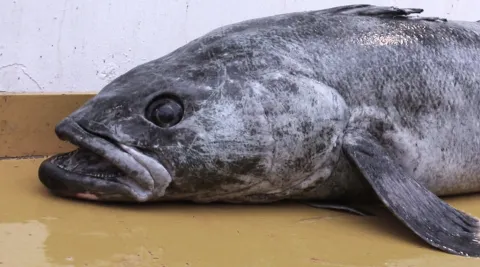
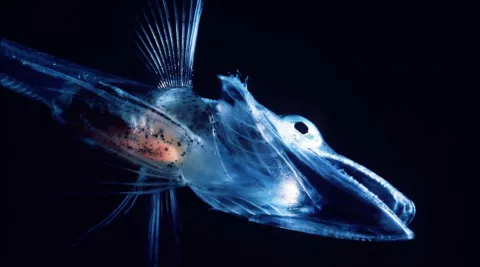
| Primary diet | Antarctic toothfish, sleeper sharks & deep-sea squid |
| Diving & swimming | 1,000–2,200 m · 27 cm eyes (largest on Earth) |
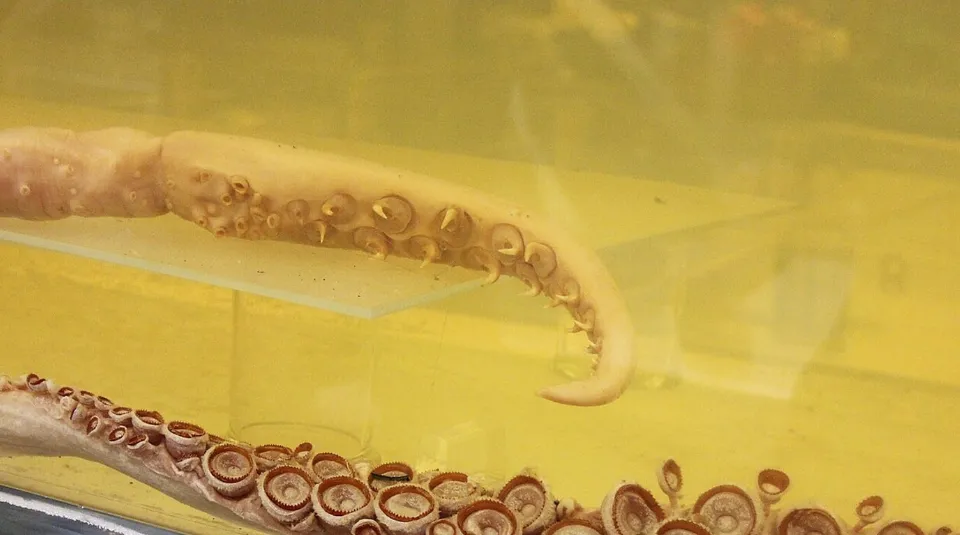
| Did you know? | Heaviest invertebrate on the planet, its dinner-plate-sized eyes carry built-in biological “headlights” (photophores) and its tentacle clubs wield swivelling three-pointed hooks. |
Outweighing even the giant squid at nearly 500 kilograms and spanning up to ten metres in deep Antarctic waters south of the Polar Front, the colossal squid (Mesonychoteuthis hamiltoni) possesses the largest eyes ever recorded in the animal kingdom — dinner-plate orbs 27 centimetres wide evolved to spot the bioluminescent outline of approaching sperm whales in pitch darkness a kilometre down. Its tentacle clubs carry swivelling three-pointed hooks rather than simple suction rings.
While living adults patrol mesopelagic depths of the Ross Sea and Scotia Sea unseen from the surface, circular hook scars across the foreheads of surfacing bull sperm whales and beaks studied at sub-Antarctic research stations testify to epic deep-ocean battles straight below expedition ships.
When to Spot Colossal Squid (Oct–Mar)
Southern Ocean summer daylight drives massive phytoplankton and krill blooms from December through February across polar upwelling zones.
Frequently asked questions about Colossal Squid
Browse all Antarctica expedition FAQsWhen is the best time to see Colossal Squid in Antarctica?
Peak sighting months for Colossal Squid are December, January, February. Southern Ocean summer daylight drives massive phytoplankton and krill blooms from December through February across polar upwelling zones. Compare conditions in our Early, Peak & Late Summer FAQ.
Where can you spot Colossal Squid on an Antarctica cruise?
Colossal Squid (Mesonychoteuthis hamiltoni) is primarily encountered in Drake Passage, Scotia Sea, South Georgia, Ross Sea, with 955 upcoming expedition departures visiting these habitats. Key field traits: diet of Antarctic toothfish, sleeper sharks & deep-sea squid; Diving & swimming: 1,000–2,200 m · 27 cm eyes (largest on Earth). Learn how daily Zodiac excursions and shore landings work.
How close can you approach Colossal Squid under IAATO rules?
Under mandatory IAATO wildlife distance and biosecurity rules, visitors ashore must keep at least 5 metres (15 feet) from Colossal Squid, give birds the right of way on colony trails, and never kneel or place gear on the snow. If a curious penguin walks closer on its own, remain still and let it pass. See our recommended camera lenses (70–200mm / 100–400mm).