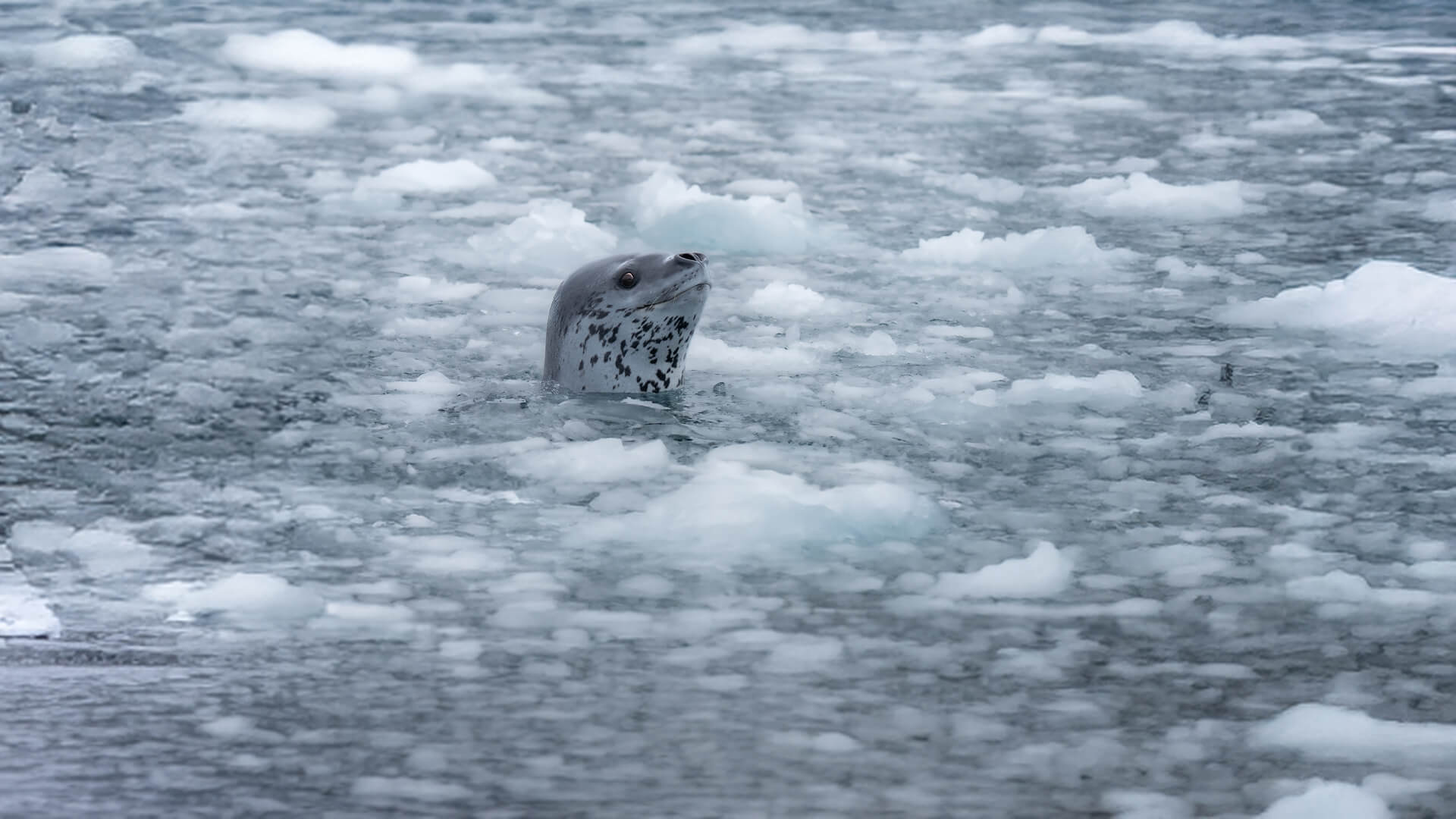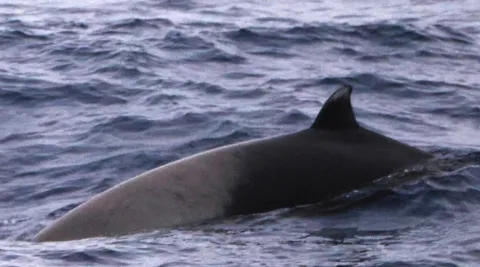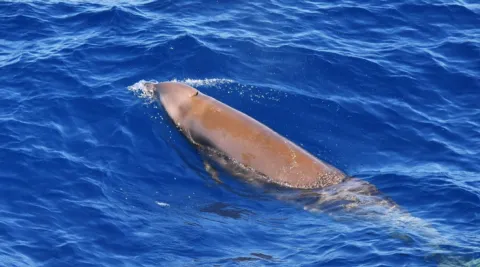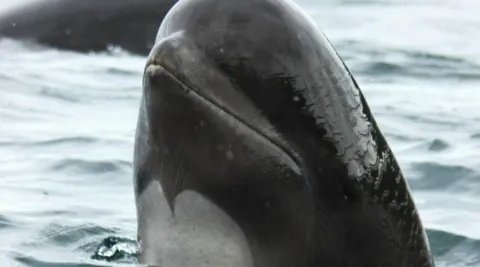
| Scientific name | Lagenorhynchus obscurus |
|---|---|
| Conservation status | LC Least Concern |
| Body length | 1.6–2.1 m |
| Weight | 70–100 kg |
| Primary diet | Fuegian sprat, anchovy, hake & squid |
| Diving & swimming | To 150 m · cooperative spinning backflips |
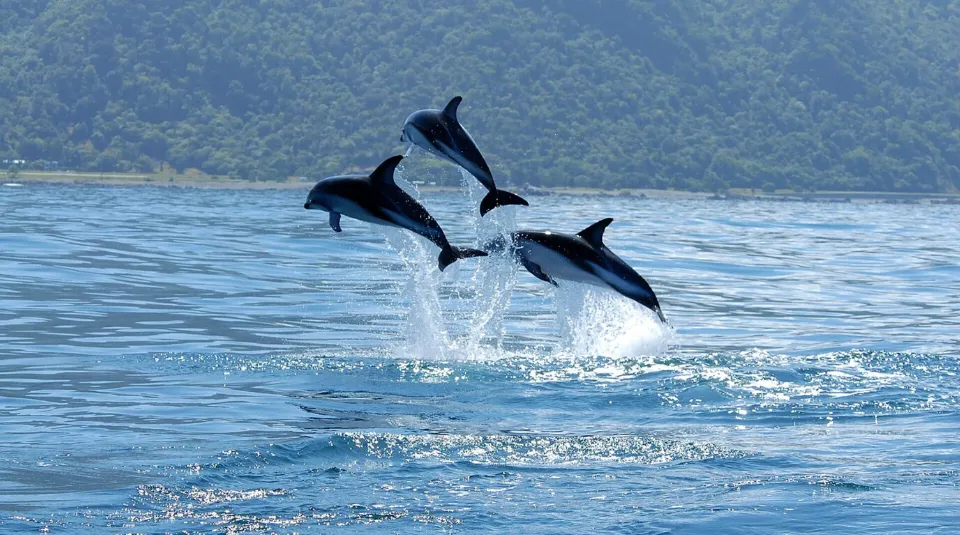
| Did you know? | Dusky dolphins execute three distinct aerial leap styles — clean head-first re-entries while travelling, noisy side-slaps to herd baitballs, and high spinning backflips for social signalling. |
Compact, bluff-snouted, and painted in sweeping charcoal-grey and porcelain-white brush strokes along the flanks, the dusky dolphin is arguably the most acrobatic cetacean in the Southern Hemisphere. Cooperative pods herd baitballs of Fuegian sprat and squid toward the surface, taking turns leaping in high spinning backflips whose percussive slaps recruit neighbouring dolphins from kilometres away.
On embarkation days out of Puerto Madryn, Ushuaia, or Bluff, and around coastal bays of the Falkland Islands, dusky dolphins regularly sprint across the waves to surf an expedition ship’s bow pressure wave.
When to Spot Dusky Dolphin (Oct–Mar)
Migratory baleen and toothed whales arrive in growing numbers from December, reaching peak krill-feeding density across February and March.
Frequently asked questions about Dusky Dolphin
Browse all Antarctica expedition FAQsWhen is the best time to see Dusky Dolphin in Antarctica?
Peak sighting months for Dusky Dolphin are January, February, March. Migratory baleen and toothed whales arrive in growing numbers from December, reaching peak krill-feeding density across February and March. Read our Antarctic whale-watching month guide and seasonal comparison.
Where can you spot Dusky Dolphin on an Antarctica cruise?
Dusky Dolphin (Lagenorhynchus obscurus) is primarily encountered in Beagle Channel, Tierra del Fuego, Patagonia, Cape Horn, Falkland Islands, Auckland Islands, with 711 upcoming expedition departures visiting these habitats. Key field traits: diet of Fuegian sprat, anchovy, hake & squid; Diving & swimming: To 150 m · cooperative spinning backflips. Learn how daily Zodiac excursions and shore landings work.
How close can you approach Dusky Dolphin under IAATO rules?
Under IAATO marine mammal guidelines, ships and Zodiacs slow to no-wake speed and idle or cut engines within 30–100 metres of Dusky Dolphin, never encircling or cutting across their path — though curious whales frequently surface right beside stationary Zodiacs on their own. See our whale-watching FAQ.