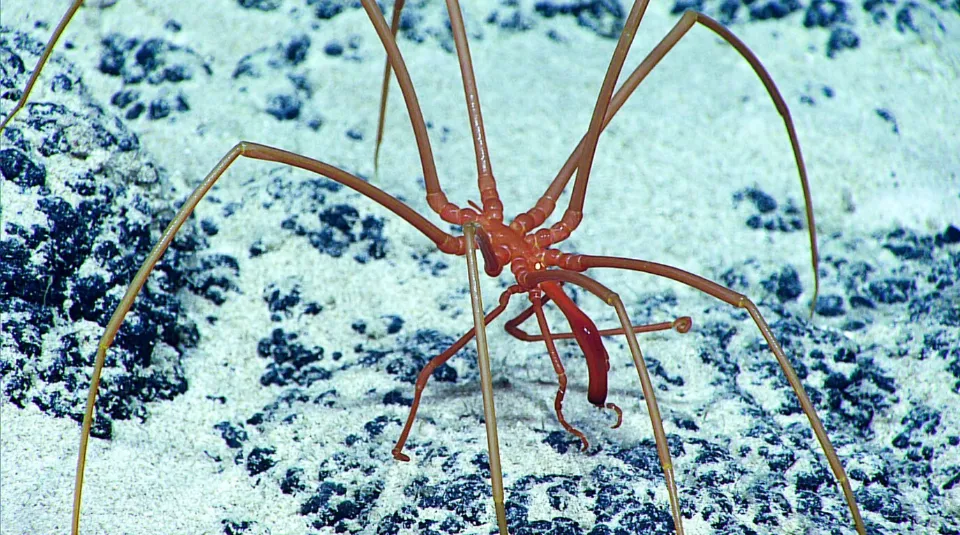
| Scientific name | Colossendeis megalonyx |
|---|---|
| Conservation status | LC Least Concern |
| Body length | 25–50 cm |
| Weight | 20–80 g |
| Primary diet | Sea anemones, hydroids, soft corals & sponges |
| Polar adaptation | Cutaneous leg breathing · polar gigantism |
| Did you know? | Not a true spider at all, its central body is so wafer-thin that its digestive tract and reproductive organs branch down inside its eight stilt-like legs, absorbing oxygen straight through porous cuticle. |
Whereas temperate sea spiders (pycnogonids) barely exceed the size of a fingernail, freezing oxygen-saturated Antarctic waters unlock “polar gigantism”: Colossendeis sea spiders grow leg spans of 25 to 50 centimetres across! With bodies so slender that digestive organs extend down into their eight spindly legs and oxygen diffuses directly across porous cuticle without gills, they stride slowly over glass sponges and soft corals probing prey with a tubular proboscis.
A signature highlight for drysuit divers and shipboard ROV benthic livestreams in sheltered bays of the Antarctic Peninsula and Ross Sea, they reveal the unexpectedly lush, colourful invertebrate gardens thriving beneath sea ice.
When to Spot Giant Antarctic Sea Spider (Oct–Mar)
Southern Ocean summer daylight drives massive phytoplankton and krill blooms from December through February across polar upwelling zones.
Frequently asked questions about Giant Antarctic Sea Spider
Browse all Antarctica expedition FAQsWhen is the best time to see Giant Antarctic Sea Spider in Antarctica?
Peak sighting months for Giant Antarctic Sea Spider are December, January, February. Southern Ocean summer daylight drives massive phytoplankton and krill blooms from December through February across polar upwelling zones. Compare conditions in our Early, Peak & Late Summer FAQ.
Where can you spot Giant Antarctic Sea Spider on an Antarctica cruise?
Giant Antarctic Sea Spider (Colossendeis megalonyx) is primarily encountered in Antarctic Peninsula, South Shetland Islands, Weddell Sea, Ross Sea, with 943 upcoming expedition departures visiting these habitats. Key field traits: diet of Sea anemones, hydroids, soft corals & sponges; Polar adaptation: Cutaneous leg breathing · polar gigantism. Learn how daily Zodiac excursions and shore landings work.
How close can you approach Giant Antarctic Sea Spider under IAATO rules?
Under mandatory IAATO wildlife distance and biosecurity rules, visitors ashore must keep at least 5 metres (15 feet) from Giant Antarctic Sea Spider, give birds the right of way on colony trails, and never kneel or place gear on the snow. If a curious penguin walks closer on its own, remain still and let it pass. See our recommended camera lenses (70–200mm / 100–400mm).