Wildlife
Imperial Shag
A black-and-white cormorant with a startling ring of blue skin around each eye, nesting in dense colonies on bare coastal rock. Look for it wherever cliffs meet water, often perched stiff-winged like a heraldic emblem.
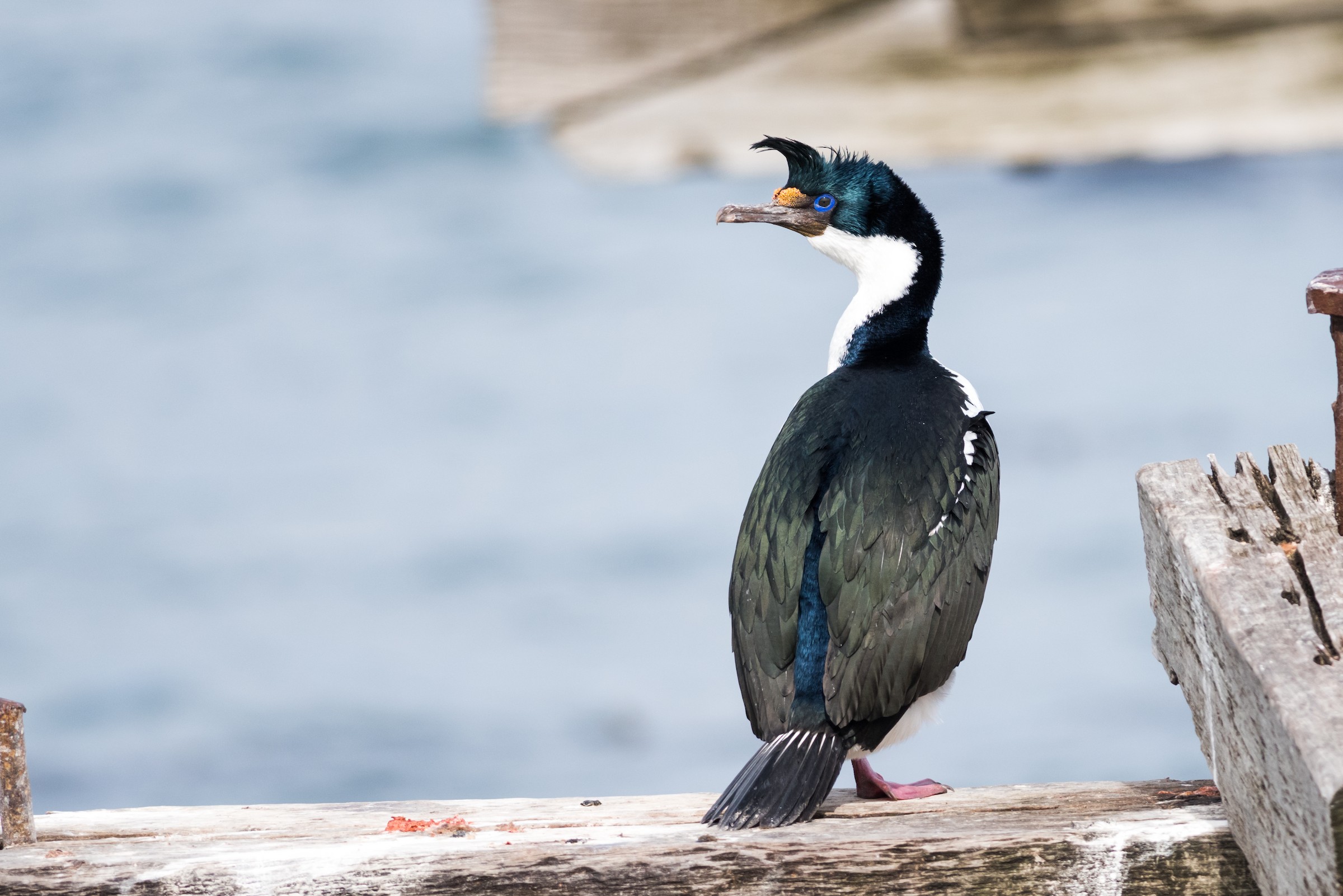
You'll pick out the imperial shag long before you learn its name: a tight-packed colony of black-and-white bodies on a guano-streaked ledge, each bird with an improbable rim of cobalt skin around the eye. It's this feature that gives the species its other common name, the blue-eyed shag, and once you've spotted one pair up close through binoculars you'll start seeing them everywhere along the coast. In the Falkland Islands they nest on low rocky points within easy reach of a Zodiac landing, often alongside rockhopper penguins, and are one of the more approachable seabirds on the itinerary.
Further south, colonies turn up on the exposed shorelines of South Georgia and along the cliffs of the Beagle Channel, where the birds are often seen diving from the water's surface rather than standing on rock. The species also breeds inland, on some of the larger lakes of Patagonia, a habit unusual among cormorants and worth asking your expedition guide about if you're cruising that stretch of coast. Its range runs from southern South America across the Subantarctic islands to the Antarctic Peninsula itself, so sightings are possible across almost the entire length of a typical voyage.
Taxonomists still argue over exactly how many species or subspecies this group contains, and you may hear naturalists on board refer to it as Phalacrocorax atriceps rather than Leucocarbo atriceps — both names are in current use. Whatever the label, the bird itself is easy enough to recognise: sharply divided black upperparts and white underparts, a slim neck held upright, and that unmistakable blue eye-ring.
Find departures that go there →
More highlights

Activity
Mountaineering & ski touring
Mountaineering and ski touring take small groups off the ship onto Antarctic slopes and ridgelines, roped up or on skins, away from the usual landing sites. It trades the zodiac cruise for a slower, physical read of the same white terrain.
Activity
Camping
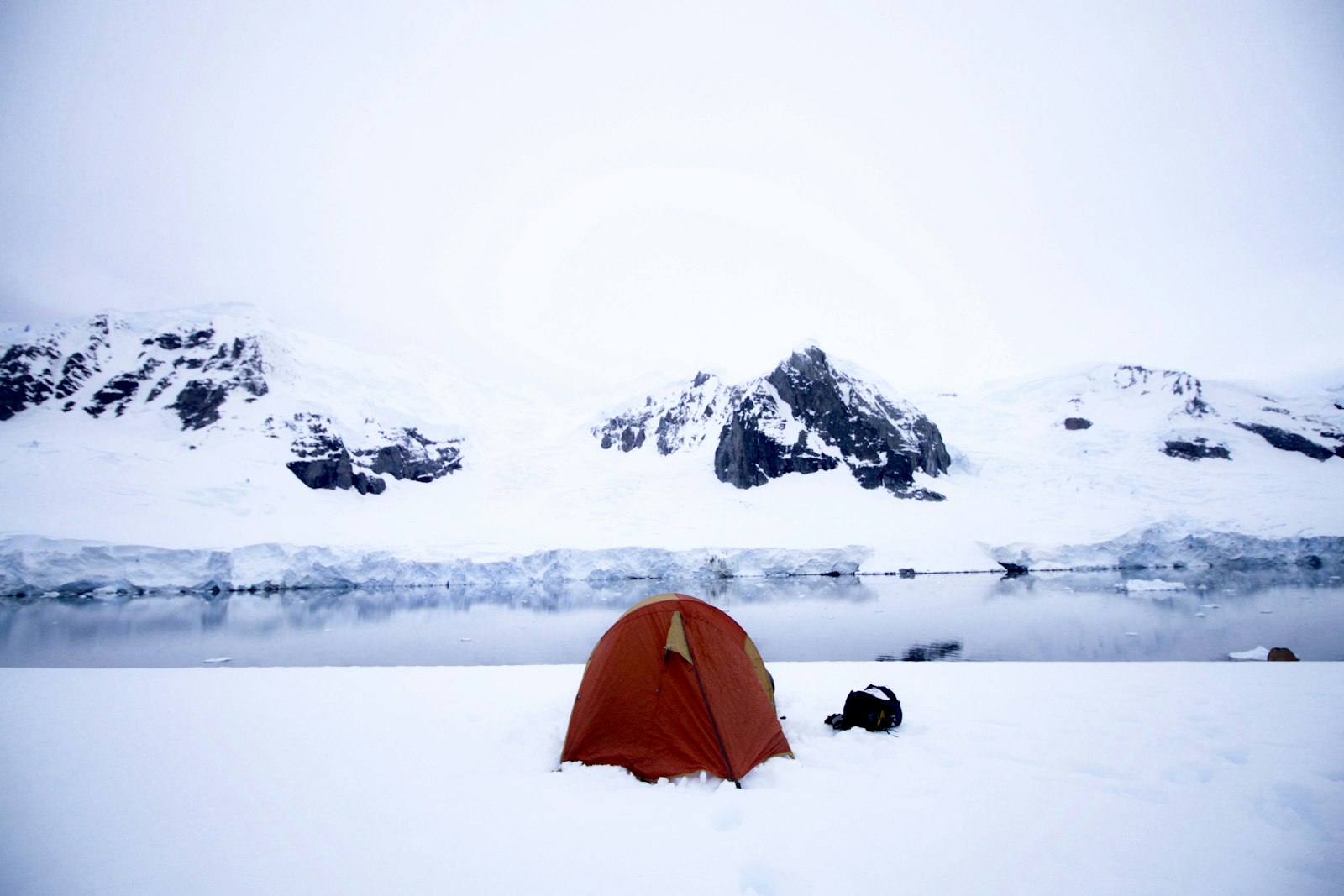
Camping on the Antarctic continent means sleeping in a bivy bag directly on the snow, under a sky that rarely goes fully dark in summer. It runs on select nights when conditions allow, with places limited by each ship's shore permit.
Wildlife
Gentoo Penguin
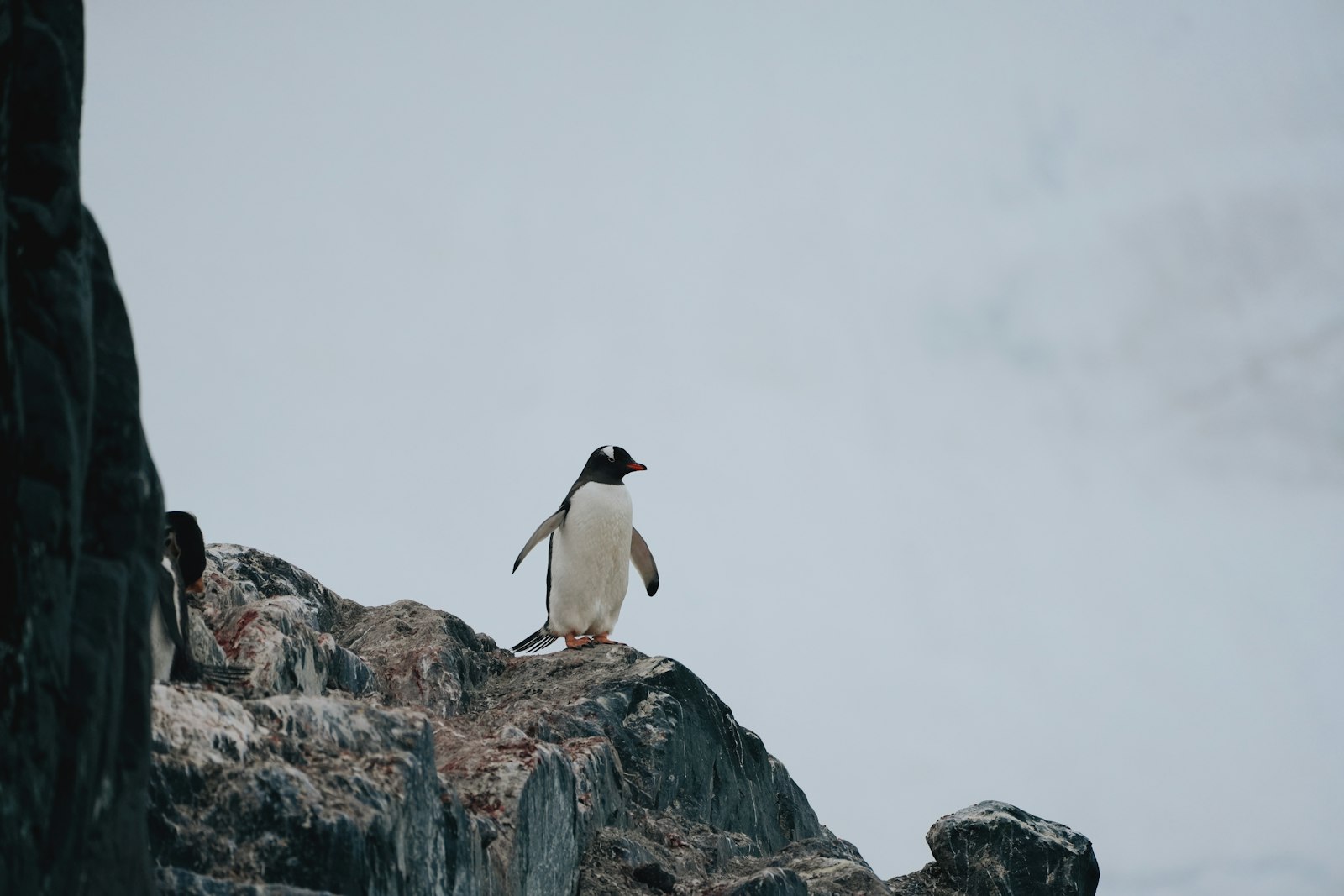
A stocky, orange-billed penguin of the genus Pygoscelis, closest kin to the Adélie and Chinstrap. Its loud, trumpeting call, delivered with head thrown back, carries across the shoreline colonies where expedition landings are made.